

Junte-se a nós em uma viagem ao mundo dos livros!
Adicionar este livro à prateleira
Grey
Deixe um novo comentário Default profile 50px
Grey
Assine para ler o livro completo ou leia as primeiras páginas de graça!
All characters reduced
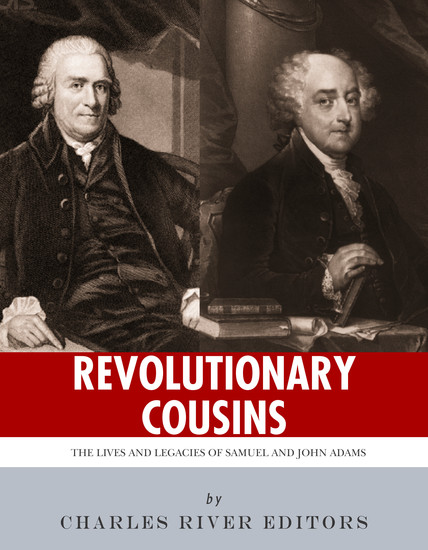
Revolutionary Cousins - The Lives and Legacies of Samuel and John Adams - cover
LER

Revolutionary Cousins - The Lives and Legacies of Samuel and John Adams

Editors Charles River

Editora: Charles River Editors

  • 0
  • 0
  • 0

Sinopse

"The liberties of our Country, the freedom of our civil constitution are worth defending at all hazards: And it is our duty to defend them against all attacks.” – Samuel Adams
 
The American Revolution had no shortage of compelling characters with seemingly larger than life traits, including men like the multi-talented Benjamin Franklin, the wise Thomas Jefferson, the mercurial John Adams and the stoic George Washington. But no Revolutionary leader has been as controversial as Samuel Adams, who has been widely portrayed over the last two centuries as America’s most radical and fiery colonist.
 
Among his contemporaries, Adams was viewed as one of the most influential colonial leaders, a man Thomas Jefferson himself labeled “truly the Man of the Revolution” and the one who the Boston Gazette eulogized as the “Father of the American Revolution.” Adams was an outspoken opponent of British taxes in the 1760s, one of Boston’s hardest working writers and orators, a leader of the Boston Caucus, active in the Sons of Liberty, and a political leader who organized large gatherings in settings like Faneuil Hall and the Old South Meeting House. When cousin John Adams was an Ambassador to France during the Revolution, he had to explain that he was not the “famous” Adams.
 
At the same time, Adams’s zeal for his cause was unquestioned and unrivaled. During the Revolution, Adams exhorted his countrymen, "If ye love wealth greater than liberty, the tranquility of servitude greater than the animating contest for freedom, go home from us in peace. We seek not your counsel, nor your arms. Crouch down and lick the hand that feeds you; May your chains set lightly upon you, and may posterity forget that ye were our countrymen." Today historians believe that Adams’s legacy as a radical firebrand came from the British, who naturally viewed Adams as an incendiary troublemaker, and it is widely believed that important events like the Boston Massacre and Boston Tea Party were incorrectly attributed to the sway Adams held over the town. The exaggeration of Adams as the one man who could control a mob took hold, and even as modern historians try to recast Adams in a more moderate light, he continues to be remembered as the American Revolution’s most ardent patriot.
 
Naturally, Adams’s reputation and activities before and during the Revolution have come to dominate the history books and Americans’ perceptions of him, so many remain unfamiliar with his post-war life. In fact, Adams was one of the most instrumental leaders in Massachusetts, helping draft the state’s constitution during the Revolution and becoming one of its earliest governors after the Revolution.
 
John Adams has become one of the more popular presidents in history relatively recently, but it was not always so. For most of his life he was seen as a bit of an outsider, different from his fellow first presidents in his temperament, birth, life and politics.  Adams and his son were the only presidents out of the first seven who were born north of the Mason Dixon line, and he was not an easy man to understand or work with.  Not only did he have few friends, but he also often fell into long term quarrels with those he had. 
 
Politically, Adams shared Washington’s preference for Britain as well as his preference of non-interference.  However, while he was certainly the more significant man in his work and his governing, he could never seem to move out of Washington’s shadow.  Even worse, his presidency was seen as threatening to the very essence of American liberty with the Alien and Sedition Acts, and his loss to Jefferson in 1800 was a repudiation of the Federalists that left Jeffersonians in power until John Quincy Adams was elected in 1824. His presidency is still viewed relatively unfavorably.
Disponível desde: 03/06/2025.
Comprimento de impressão: 81 páginas.

Outros livros que poderiam interessá-lo

  • Sound N’ Fury - Rock N’ Roll Stories - cover

    Sound N’ Fury - Rock N’ Roll...

    Alan Niven

    • 0
    • 1
    • 0
    Most rock ’n’ roll books are a bore. They all have the same narrative arc and are aimed at the dwindling following that now follows an artist that has long passed their AARP date. 
    		 
    Sound N’ Fury does not have a story arc. It is a collection of anecdotes, like a record comprised of various tracks — each one has its point and purpose. Alan Niven, who guided Guns N’ Roses from the gutter of Los Angeles to Wembley Stadium, shares stories from his remarkable life as a manager with an immediacy delivered by an extraordinary recall of dialogue. Readers will encounter not just Guns N’ Roses (who have sold almost 10 million tickets to their shows) but The Rolling Stones, Aerosmith, Clarence Clemons, Whitesnake, Elton John, and others who came from humble origins and experienced fame known only to few. Small-town minds collided with worldwide adulation, expectations, and demands. The results are amusing, affirming, and, predictably, disastrous. Keep in mind that rock ’n’ roll is God’s occupation for the unemployable.
    		 
    Written with a crisp and fluid style, the magnificence and idiocy of the music world will dance off the pages and engross even those who are not rock fans.
    Ver livro
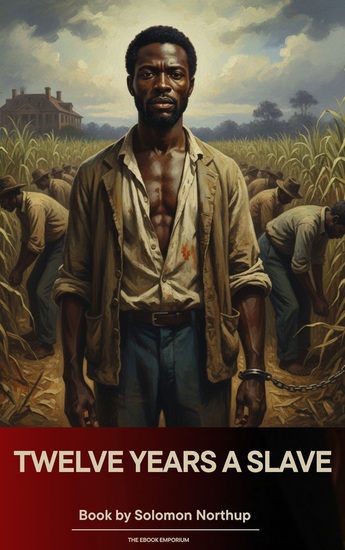
  • Twelve Years a Slave - cover

    Twelve Years a Slave

    Solomon Northup

    • 0
    • 1
    • 0
    "They can take your freedom, but they cannot take your identity."
    
    In 1841, Solomon Northup was a professional violinist and family man living in Saratoga Springs, New York. After being lured to Washington D.C. with the promise of work, he was drugged, shackled, and stripped of his name. For the next twelve years, he was passed from master to master in the bayous of Louisiana, enduring the sadistic cruelty of men like Edwin Epps while witnessing the quiet heroism of his fellow enslaved people. Twelve Years a Slave is a visceral, unflinching look at the "peculiar institution" through the eyes of a man who knew both the dignity of liberty and the agony of the lash. It remains a foundational text of American history and a testament to the endurance of the human spirit.
    
    The Mechanics of Oppression: Northup provides a meticulous, almost journalistic description of the economics and daily operations of the slave trade. He details the cultivation of cotton and sugar, the social hierarchies of the plantation, and the psychological warfare used to keep human beings in subjection.
    
    A Quest for Justice: The narrative is propelled by Northup's secret attempts to communicate with his family in the North. His eventual rescue is a heart-stopping moment of tension and triumph, highlighting the legal and social complexities of a divided nation where a man's status as "property" or "person" could depend entirely on the color of his skin and the geography of his location.
    
    Why It Is a Vital Classic: While many narratives were edited to suit political agendas, Northup's account is praised for its stark realism and descriptive power. It provides names, dates, and locations that were later verified by historians, making it one of the most credible and devastating indictments of slavery ever written.
    
    Bear witness to the truth. Purchase "Twelve Years a Slave" today.
    Ver livro
  • The Boy Who Survived Auschwitz - cover

    The Boy Who Survived Auschwitz

    Adriana Lerman

    • 1
    • 1
    • 0
    Levi Lerman was a cheerful and lively boy from the town of Ostrowiec. He was only fourteen years old when his life took an unimaginable turn with the outbreak of World War II in 1939, when the Nazi forces invaded Poland and occupied his hometown.
    Over a painful six-year period, Levi endured a harsh life in the Ostrowiec ghetto, suffered devastating losses, performed exhausting forced labor, and survived countless transfers to concentration camps, including the extermination camp of Auschwitz-Birkenau.
    In the middle of this torment, a single light guided him through the darkness: his unbreakable determination to live and to protect his father—a strength that helped him survive against all odds.
    Ver livro
