¡Acompáñanos a viajar por el mundo de los libros!
Añadir este libro a la estantería
Grey
Escribe un nuevo comentario Default profile 50px
Grey
Suscríbete para leer el libro completo o lee las primeras páginas gratis.
All characters reduced
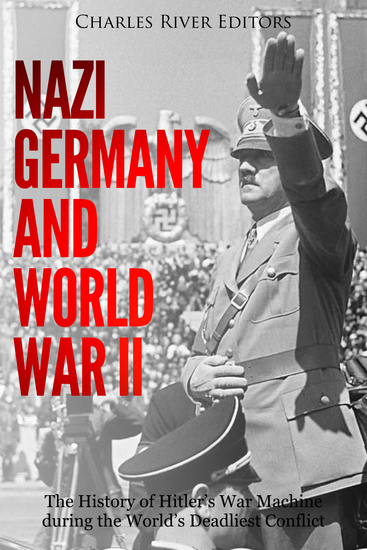
Nazi Germany and World War II - The History of Hitler’s War Machine during the World’s Deadliest Conflict - cover

Nazi Germany and World War II - The History of Hitler’s War Machine during the World’s Deadliest Conflict

Editors Charles River

Editorial: Charles River Editors

  • 0
  • 0
  • 0

Sinopsis

Munich is widely reviled today and is held up as the epitome of appeasement, but historians still debate its effects on the Second World War, as well as Neville Chamberlain's character and motivations. Some believe the attempted appeasement of Nazi Germany hastened, or even caused, the mayhem occupying the next seven years. Others believe that the pact merely failed to alter war's inevitable arrival in either direction. Historians and authors alternately interpret Chamberlain as a bumbling, arrogant fool, a strong-willed statesman who simply miscalculated the nature of Hitler and Nazi Germany, or even a man with dictatorial ambitions surreptitiously inserting himself into the Fuhrer's orbit and prevented from further damaging democracy only by his fall and death from bowel cancer. Another possible interpretation, with considerable documentary support, asserts Chamberlain wished to enlist Germany's aid against the state most Europeans perceived as the true threat of the era, the Soviet Union.
 
Europe’s attempts to appease him, most notably at Munich in 1938, failed, as Nazi Germany swallowed up Austria and Czechoslovakia by 1939. Italy was on the march as well, invading Albania in April of 1939. The straw that broke the camel's back, however, was Germany's invasion of Poland on September 1 of that year.  Two days later, France and Great Britain declared war on Germany, and World War II had begun in earnest.
 
Of course, as most people now know, the invasion of Poland was merely the preface to the Nazi blitzkrieg of most of Western Europe, which would include Denmark, Belgium, and France by the summer of 1940. The resistance put up by these countries is often portrayed as weak, and the narrative is that the British stood alone in 1940 against the Nazi onslaught, defending the British Isles during the Battle of Britain and preventing a potential German invasion.
 
At the beginning of 1941, it was unclear whether the Allies would be able to remain in the war for much longer. British Prime Minister Winston Churchill had already immortalized the men of the Royal Air Force with one of the West’s most famous war-time quotes, but the potential of a German invasion of Britain still loomed. With the comfort of hindsight, historians now suggest that the picture was actually more complex than that, but the Battle of Britain, fought throughout the summer and early autumn of 1940, was unquestionably epic in scope. The largest air campaign in history at the time, the vaunted Nazi Luftwaffe sought to smash the Royal Air Force, but thankfully, the RAF stood toe to toe with the Luftwaffe and ensured Hitler’s planned invasion was permanently put on hold. The Allied victory in the Battle of Britain inflicted a psychological and physical defeat on the Luftwaffe and Nazi regime at large, and as the last standing bastion of democracy in Europe, Britain would provide the toehold for the June 1944 invasion of Europe that liberated the continent. For those reasons alone, the Battle of Britain was one of the decisive turning points of history’s deadliest conflict.
Disponible desde: 01/05/2025.
Longitud de impresión: 666 páginas.
Otros libros que te pueden interesar

  • Napoleon and the French Revolution - Exploring the Impact of the French Revolution on Western Europe - cover

    Napoleon and the French...

    History Retold

    • 0
    • 0
    • 0
    Ah, dear reader, are you prepared to embark on a journey most intriguing and delightful, filled with wit, charm, and the exquisite allure of a time gone by? 
    Allow us to introduce you to an exploration of the French Revolution, the enigmatic Napoleon Bonaparte, and the tragically misunderstood Marie Antoinette. 
    This splendid book will transport you to an era of wealth, corruption, and rebellion, where the intoxicating perfume of revolution filled the air, and the fate of empires was decided by the whims of fortune. 
    As you peruse this marvellous tome, you will encounter:The story of the French Revolution, an enchanting dance of politics and passion that forever altered the course of history.A portrayal of Napoleon Bonaparte, the man who rose from the ashes of revolution to conquer the heart of Europe.The tale of Marie Antoinette, a queen of unparalleled grace and charm, who found herself ensnared in the tangled web of her own demise. 
    This book serves as a window into the world of the French Revolution, Napoleon Bonaparte, and Marie Antoinette.  
    Don't miss your chance to uncover the secrets of a time that shaped our world in countless ways. 
    Get your copy of Today!
    Ver libro
  • Time Management For Teens And College Students - The Ultimate Guide for Balancing School and Life for Teens and Young Adults - cover

    Time Management For Teens And...

    Kara Ross

    • 0
    • 0
    • 0
    Are you a high school student, soon to be graduated and heading off to college or to work full time? Are you in college and not sure how to manage the time you do have while going to college? Are you a parent looking for a good introduction to time management for your son or daughter?If you want to learn how you can better manage your time as a young adult, then keep reading! 
    Time management is a challenge for everyone, but it is particularly daunting for teens and college students. Effective time-management skills are essential to succeed in today's fast-paced culture at home, school, and life.My goal in writing this book is to provide support and guidance to develop and implement time management skills. And in doing so, I’ve included a lot of information. So, before you dive in, I wanted to remind you of a few things: The book is meant as a guide, one to pick up again and again whether to learn a new set of skills or just for a refresher course. To get the most out of the book, you need to go through it at your own pace, on your own time, and in your own way. 
    It mау ѕееm daunting аt fіrѕt, but learning these skills are absolutely achievable. In this book, уоu’ll learn thе fоllоwіng:How to achieve your study and life goals;How to get the results you want;How to manage your time effectively;How to optimize your productivity;How to prioritize your coursework;Effective ways to avoid procrastination;How to achieve a good study/life balance;Time management tools to help you manage your time ;AND SO MUCH MORE! 
    If you've been struggling to get it all done, keep reading to learn more about time management and how to make the most of your day. Then you'll be able to live a more balanced life, with time for your family, friends, and your health as well.
    Ver libro
  • Troubling the Water - The Urgent Work of Radical Belonging - cover

    Troubling the Water - The Urgent...

    Ben McBride

    • 0
    • 0
    • 0
    From one of the most courageous and visionary leaders of our time comes Troubling the Water, an immersive book about the violence and injustice that threaten to drown us all. Ben McBride recounts how he first waded into the water: from the Kill Zone in Oakland, where he moved with his young family, to the uprising in Ferguson, to the moral impoverishment of the white evangelical church. In the truth-telling tradition of Bryan Stevenson and Bishop William Barber, McBride leads us right into the fury and fragmentation of our moment, and then steadies us once we're there. 


    What would it take to truly belong to each other? Radical belonging, McBride argues, means looking at our implicit biases, at our faulty understandings of power, and at how we "other"—or "same"—people. Sometimes it even means troubling the waters—speaking hard truths in situations that appear calm but that cloak injustice. 


    With a blend of provocation and good humor, McBride leads us beyond inaction on the one hand and polemic on the other. What results is an indelible manifesto—a troublemaking reverend's call to the most urgent task of our time. As inequality, racism, and alienation weaken our common life, well-meaning people ask: What do I need to do to create a world where all can belong? But McBride asserts that instead, we need to ask: Who do I need to become?
    Ver libro
  • The Late Medieval Scottish Parliament - Politics and the three Estates 1424–1488 - cover

    The Late Medieval Scottish...

    Roland Tanner

    • 0
    • 0
    • 0
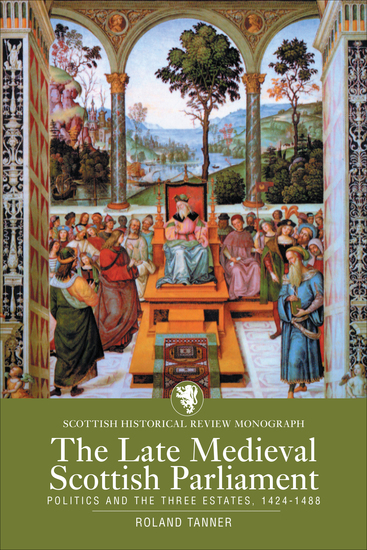
    In this ground-breaking study of the medieval parliament, Roland Tanner gives the Scottish Parliament a human face by examining the actions and motives of those who attended. In the past, the Scottish Parliament was seen as a weak and ineffective institution – damned because of its failure to be more like its English counterpart. But Roland Tanner shows that the old picture of weakness is far from accurate. In its very different way, the Scottish Parliament was every bit as powerful as the English institution. The ‘Three Estates’ (the clergy, nobility and burgh representatives who attended Parliament) were able to wield a surprising degree of control over the Crown during the fifteenth century. For instance, they threatened to lock James I’s taxation in a box to which he, the king, would have no access, made James II swear not to alter acts of Parliament, and prevented him from using his own lands and wealth as patronage for his supporters, and forbade James III to leave the country.  Roland Tanner has avoided a dry constitutional approach. Instead he has sought to bring Parliament to life through the people who attended, the reasons why they attended, and the complex interactions which occurred when all the most wealthy, powerful and ambitious people in the kingdom gathered in one place.
    Ver libro
  • Christian Life in the Greco-Roman City - The Civic and Architectural Contexts of Early Christianity - cover

    Christian Life in the...

    Jason Borges

    • 0
    • 0
    • 0
    Explore the Archaeological Evidence Behind Early Christianity in Ancient Roman Cities 
     
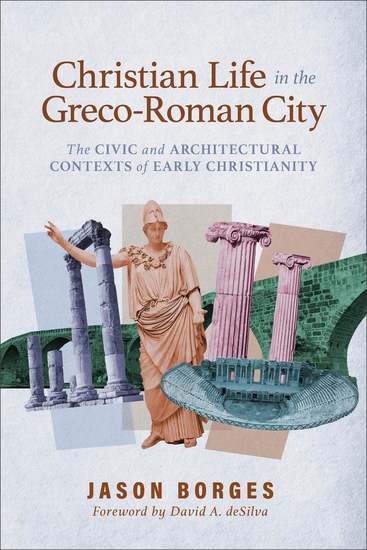
    In this fascinating book, Jason Borges offers an original and engaging analysis of life in the Greco-Roman city as seen through its public spaces: 
     
    ● agoras 
    ● temples 
    ● baths 
    ● prisons 
    ● theaters 
    ● libraries 
    ● cemeteries 
     
    Drawing on primary sources and archeological evidence, he explores how these seven key civic structures shaped the lives, writings, and theology of early Christians. 
     
    From lively agoras to magnificent temples and luxurious baths, civic buildings were more than just physical settings for everyday life; they were spaces imbued with social and political meaning. Informed by the author's research and his experience leading tours to ancient sites, this book explores how early Christians interacted with and understood their urban environment. The result is fresh insight into the cultural background of the New Testament and other early Christian writings. 
     
    Each chapter explains a specific structure, provides an extant example, and discusses its significance for reading the New Testament. The book includes black and white images, informative diagrams, and a foreword by David A. deSilva. 
     
    This helpful supplementary textbook illuminates the architectural and civic background of the New Testament and early Christianity so that readers can better understand the writings and theology of early Christians.
    Ver libro
  • Chain of Command - The Road from 9 11 to Abu Ghraib - cover

    Chain of Command - The Road from...

    Anónimo

    • 0
    • 0
    • 0
    Since September 11, 2001, Seymour M. Hersh has riveted readers -- and outraged the Bush Administration -- with his stories in The New Yorker magazine, including his breakthrough pieces on the Abu Gharaib prison scandal. Now, in Chain of Command, he brings together this reporting, along with new revelations, to answer the critical question of the last three years: how did America get from the clear morning when hijacked airplanes crashed into the World Trade Center and the Pentagon to a divisive and dirty war in Iraq? 
    Hersh established himself at the forefront of investigative journalism thirty-five years ago when he broke the news of the massacre in My Lai, Vietnam, for which he won a Pulitzer Prize. Ever since, he's challenged America's power elite by publishing the stories that others can't or won't tell. 
    In Chain of Command, Hersh takes an unflinching look behind the public story of President Bush's ""war on terror"" and into the lies and obsessions that led America into Iraq. With an introduction by The New Yorker's editor, David Remnick, Chain of Command is a devastating portrait of an Administration blinded by ideology and of a President whose decisions have made the world a more dangerous place for America. 
    Read by Peter Friedman
    Ver libro