Junte-se a nós em uma viagem ao mundo dos livros!
Adicionar este livro à prateleira
Grey
Deixe um novo comentário Default profile 50px
Grey
Assine para ler o livro completo ou leia as primeiras páginas de graça!
All characters reduced
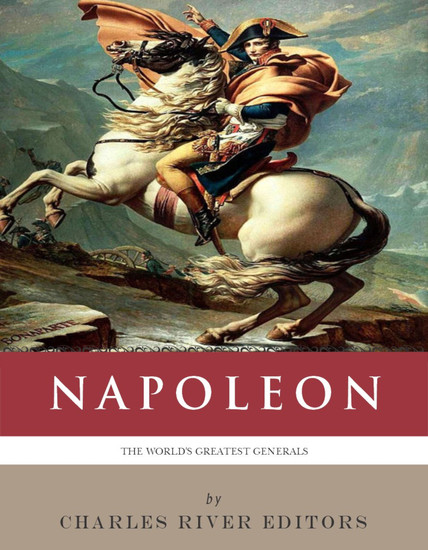
Napoleon - cover
LER

Napoleon

Editors Charles River

Editora: Charles River Editors

  • 0
  • 0
  • 0

Sinopse

“Courage cannot be counterfeited. It is the one virtue that escapes hypocrisy.” – Napoleon
 
When historians are asked to list the most influential people of the last 200 years, a handful of names might vary, but there is no question that the list will include Napoleon Bonaparte (1769-1821), the most successful French leader since Charlemagne and widely acknowledged one of the greatest generals ever. Indeed, Napoleon was likely the most influential man of the 19th century, leaving an indelible mark on everything from the strategy and tactics of warfare to the Napoleonic Code that drafted laws across the continent. To defeat Napoleon, the Europeans had to form large coalitions multiple times, which helped bring about the entangling alliances that sparked World War I after Europe was rebuilt following Waterloo and the Congress of Vienna. Napoleon’s influence on the United States was also palpable. To finance his endeavors, he struck a deal with President Thomas Jefferson that became the Louisiana Purchase, and it was Napoleonic warfare that was used throughout the Civil War, leading to massive casualties because the weaponry of the 1860s was now more advanced than the tactics of 1815.
 
When Napoleon died at St. Helena, he still engendered fear and distaste among the Europeans, but the man and his legacy continued to be held in awe across the world. In Napoleon’s time, emperors and leaders still hoped to become the next Julius Caesar. After the Napoleonic Era, emperors and generals hoped to become the next Napoleon. For the next century, military leaders and even civilians struck Napoleonic poses when having their pictures taken, and phrases like “Napoleonic complex” and “meeting one’s Waterloo” are now common phrases in the English lexicon. It would be truly impossible to envision or understand geopolitics in the West over the last two centuries without Napoleon.
 
With the passage of time, Napoleon’s legacy has had time to crystallize, but the legends, myths, and controversies about the man and his empire continue to swirl. Was he really short? Did his men shoot the nose off the Sphinx? Was he a good chess player? Was he poisoned by the British? In the rush to analyze his stunningly successful military record or question whether he was very short or a great chess player, people often overlook his political reign and personality. The World’s Greatest Generals: The Life and Career of Napoleon Bonaparte addresses the controversies, myths, legends and battles, but it also humanizes a man who famously dominated most of the European continent while loving an indomitable woman whose political calculations matched if not surpassed his. Along with pictures of Napoleon and other important people, places and events in his life, you will learn about the French emperor like you never have before, in no time at all.  
Disponível desde: 04/05/2025.
Comprimento de impressão: 49 páginas.

Outros livros que poderiam interessá-lo

  • A Jane Austen Year - Celebrating 250 years of Jane Austen - cover

    A Jane Austen Year - Celebrating...

    House Jane Austen's

    • 1
    • 2
    • 0
    This beautifully illustrated book charts the life, works and legacy of one of the world's most beloved authors, offering a seasonal guide to Jane Austen's life through the objects that surrounded her, the personal letters and manuscripts that she created, and the events that shaped her life and understanding.
    It is created by Jane Austen's House - the enchanting Hampshire cottage where her genius flourished, now a museum that attracts tens of thousands of visitors every year - and reveals highlights from the museum's collection.
    Arranged over the course of a calendar year, from snowy scenes in January to festive recipes in December, specially commissioned photography of Austen's home and possessions are brought together with extracts from her books, reproductions of her letters, and stories of her life throughout the seasons. Highlights include affectionate letters to her sister Cassandra, the story of the publication of the first edition of Pride and Prejudice, and the 'topaze crosses' that inspired Mansfield Park.
    Read this book for a unique and intimate insight into Jane Austen's world. Dip into it as you will, or visit each month, and enjoy a full year of Austen – her life, works and letters, people and objects she knew, and of course her idyllic, inspiring home.
    Ver livro
  • Hidden History of Rudolf Diesel - A Mysterious Case of the World’s Greatest Inventor and His Mysterious Disappearance on the Eve of World War I - cover

    Hidden History of Rudolf Diesel...

    Louis Malone

    • 0
    • 1
    • 0
    Rudolf Diesel is a name known across the world, stamped onto engines that power ships, trains, factories, and entire economies. Yet the man behind that name has largely vanished from history, reduced to a technical footnote or a single unresolved mystery. This book restores Rudolf Diesel to the center of his own story.More than a biography, The Hidden History of Rudolf Diesel is a deeply researched narrative that uncovers the inventor, the thinker, and the idealist behind one of the most influential technologies ever created. It traces Diesel’s journey from his early intellectual formation and revolutionary ideas about efficiency and energy, through the brutal realities of industrial power, legal conflict, and personal exhaustion, to his unexplained disappearance aboard a ship in 1913, just months before Europe plunged into World War I.At the heart of this story is Rudolf Diesel’s forgotten vision. Diesel did not design his engine merely to improve machinery. He believed efficiency was a moral principle. He envisioned decentralized energy, renewable fuels, and technological systems that empowered communities rather than concentrating control in the hands of governments and corporations. History would take his invention in a very different direction.The book examines the competing theories surrounding Diesel’s disappearance, including suicide, accident, and assassination, with clarity and restraint. Instead of chasing sensational conclusions, it reveals why the mystery has never been fully resolved and what that uncertainty tells us about power, innovation, and silence. It also follows what happened after Diesel was gone, as his engine became militarized, absorbed into global conflict, and transformed into a tool of industrial war, while his ideas were quietly discarded.Drawing powerful parallels between Diesel’s era and our own, this book speaks directly to modern readers living in a world shaped by rapid technological change, corporate dominance, and unresolved ethical questions. It asks who controls innovation, what happens to inventors who challenge existing systems, and how progress can lose its moral compass when efficiency is separated from responsibility.The Hidden History of Rudolf Diesel is for readers who enjoy intellectual history, investigative biography, and stories that challenge simple explanations. It is a portrait of a man ahead of his time, a mystery that refuses easy answers, and a warning that still matters today.This is not just the story of how Rudolf Diesel disappeared.It is the story of what happened when his ideas did.
    Ver livro