¡Acompáñanos a viajar por el mundo de los libros!
Añadir este libro a la estantería
Grey
Escribe un nuevo comentario Default profile 50px
Grey
Suscríbete para leer el libro completo o lee las primeras páginas gratis.
All characters reduced
Benedict Arnold & Ethan Allen - The Revolutionary War’s Most Controversial Leaders - cover

Benedict Arnold & Ethan Allen - The Revolutionary War’s Most Controversial Leaders

Editors Charles River

Editorial: Charles River Editors

  • 0
  • 0
  • 0

Sinopsis

The story of Ethan Allen and his Green Mountain Boys is one of those delightful tales that American schoolchildren hear about in school, but it is also one that is much more interesting to read about in older age. Unlike revered Founding Fathers such as George Washington and Thomas Jefferson, who came from Virginian plantations, Allen was a rough and tumble frontiersman more likely to fight than talk. And yet, he was in no way a dullard, but instead as well-read as many of his contemporaries and more so than the average man of his day. His family story reads almost like a cheap novel, from his heretic father to his hotheaded brothers and his shrewish first wife. By the time he was 30 years old, Allen had run up a significant list of skirmishes with law, something most of his fellow Revolutionary War heroes managed to avoid. Unlike Washington, who received his military training as a soldier in the famous British Army, Allen learned to fight in the backwoods of what is now Vermont, struggling alongside others for independence years before Jefferson wrote the Declaration of Independence.
 
When the American Revolutionary War broke out in earnest, Green did not go to state leaders to ask for a commission to fight; instead, Connecticut officials came to him, and it led to his involvement in the capture of Fort Ticonderoga, a successful but controversial operation that found Allen having to work with none other than Benedict Arnold over who would lead the attack on the British fort.
 
While that success suggested an instinct for battle, Allen would suffer setbacks, and eventually he was captured and held prisoner by the British for nearly two years. Fortunately, the two years he spent as a captive with the British were not wasted, for when he returned home, he joined the people of the newly formed Republic of Vermont and worked towards making it an independent state. Though it took years of work both honorable and underhanded, he ultimately succeeded and remains held in the highest esteem by many in the state of Vermont to this day.
 
On October 7, 1777, Benedict Arnold rode out against orders and led an American assault against British forces led by General John Burgoyne in one of the climactic battles and ultimate turning point of the war at Saratoga. Near the end of the most important American victory of the Revolution, Arnold’s leg was shattered by a volley that also hit his horse, which fell on the leg as well.
 
Arnold would later remark that he wish the shot had hit him in the chest. If it had, he would be remembered as one of America’s greatest war heroes, and probably second only to George Washington among the generals of the Revolution. In fact, when Arnold was injured at the height of his success in October 1777, he had been the most successful leader of American forces during the war to date. Arnold had been instrumental in the seizure of Fort Ticonderoga in 1775, he constructed the first makeshift American navy to defend Lake Champlain and delay British campaigning in 1776, and he was the principal leader at Saratoga in 1777. Even his unsuccessful campaign to Quebec in the winter of 1775 is remembered primarily for the amazing logistical feats undertaken by Arnold and his men to even reach the target.
 
History has accorded Arnold his fair share of credit for the fighting he participated in from 1775-1777. The problem is his contemporaries did not. Arnold was better on the field than any other American general in those years, but his mercurial personality rubbed some the wrong way, and other self-promoting generals, from Ethan Allen to Horatio Gates, credited themselves with success at Arnold’s expense. Meanwhile, the Second Continental Congress frequently if inadvertently slighted Arnold, failing to duly promote him in a timely fashion and failing to pay him four years of back pay even as he spent his own private fortune training, equipping, and feeding his army and navy. 
Disponible desde: 01/05/2025.
Longitud de impresión: 68 páginas.

Otros libros que te pueden interesar

  • Albert Einstein - One of the Greatest Physicists of All Time - cover

    Albert Einstein - One of the...

    Kelly Mass

    • 0
    • 0
    • 0
    Albert Einstein was a theoretical physicist who was born in Germany and is mainly considered one of the finest physicists of perpetuity. Even though Einstein is best acknowledged for developing the principle of relativity, he also contributed considerably to the development of quantum mechanics. 
    The 2 foundations of contemporary physics are relativity and quantum mechanics. His mass-- energy equivalence formula, E = mc2, has been called "the world's most well-known formula" simply because it is originated from theory of relativity. His work is well noted for having actually impacted science philosophy. He won the Nobel Reward in Physics in 1921 "for his services to theoretical physics, especially for his discovery of the law of the photoelectric influence," which was an important turning point in the development of quantum theory. 
    "Einstein" ended up being associated with "genius" as a consequence of his intellectual accomplishments and originality. 
    Let’s explore the world and brain of this genius in this comprehensive guide.
    Ver libro
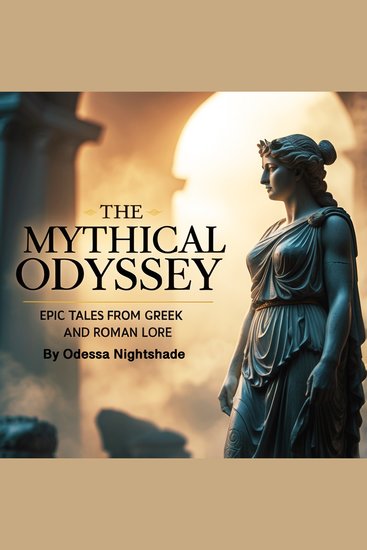
  • The Mythical Odyssey - Epic Tales from Greek and Roman Lore - cover

    The Mythical Odyssey - Epic...

    Odessa Nightshade

    • 0
    • 0
    • 0
    Greek and Roman mythology have shaped the foundations of Western storytelling, philosophy, and culture. These ancient tales, passed down through oral tradition and later recorded in literary works, offer insights into the values, fears, and aspirations of early civilizations. From grand cosmic battles to intimate tales of love and betrayal, mythology provided explanations for the unknown, offering a lens through which people understood the forces of nature, the origins of humanity, and the complexities of the divine.  
      
    At the heart of these myths lies a shared heritage, where Greek legends influenced Roman adaptations, blending gods, heroes, and moral lessons into a unified tradition. The Romans, deeply admiring Greek culture, adopted much of its mythology, renaming deities and incorporating new interpretations that reflected their own beliefs and societal structure. While Zeus became Jupiter, and Aphrodite transformed into Venus, the core themes remained intact—struggles for power, quests for glory, and the enduring consequences of mortal actions.  
      
    The power of myth extends far beyond antiquity. Stories of gods and heroes continue to resonate, inspiring literature, art, and modern media. From Shakespearean tragedies to contemporary films and novels, the motifs of Greek and Roman mythology persist, illustrating timeless themes of ambition, fate, and redemption. Whether through the trials of Heracles, the cunning of Odysseus, or the tragic love of Orpheus and Eurydice, these tales remain relevant, reflecting the human condition in ways that transcend time and geography. 
    Ver libro
  • Big Book of New York Ghost Stories - cover

    Big Book of New York Ghost Stories

    Cheri Revai

    • 0
    • 0
    • 0
     Hauntings lurk and spirits linger in the Empire State—from Manhattan’s Ear Inn to the Seneca Hill Ghost in Oswego.   Reader, beware! Turn these pages and enter the world of the paranormal, where ghosts and ghouls alike creep just out of sight. Author Cheri Farnsworth shines a light in the dark corners of New York and scares those spirits out of hiding in this thrilling collection. From apparitions and objects that fly off of tables at the Manhattan Bistro, to a specter that stalks Pulpit Rock in Lake Placid, there’s no shortage of bone-chilling tales to keep you up at night. Around the campfire or tucked away on a dark and stormy night, this big book of ghost stories is a hauntingly good read.  “Whether you’re an armchair ghost enthusiast or prefer to visit haunted locales, this book, excellently organized for both, is a perfect guide and companion.” —Tamara Thorne, author of Old Wives’ Tales
    Ver libro
  • Rwandan Genocide - Hutus Tutsis and United Nations Soldiers - cover

    Rwandan Genocide - Hutus Tutsis...

    Kelly Mass

    • 0
    • 0
    • 0
    I guess during the time I was struggling with middle school peers and worried about what other girls thought of my clothes, something nasty happened approximately 6,500 miles away, which is only an 8-hour flight from where I used to live. Who would have thought that even in the 90s, such atrocities would be committed? The movie Hotel Rwanda has depicted some sad displays of human cruelty, although the brutality of it has mostly been censored for the sake of wider audiences. When you read the descriptions of the Rwandan genocide, and try to imagine the scope of the death toll and methods being used to commit the war crimes, you can’t help but feel deeply saddened and disgusted by what human people are capable of. 
    Throughout the Rwandan Civil War, between April seventh and July fifteenth, 1994, the Rwandan genocide happened. Equipped militias murdered members of the Tutsi minority ethnic group, and some moderate Hutu and Twa, throughout about 100 days. According to the most regularly accepted academic estimates, between 500,000 and 800,000 Tutsis passed away. The death toll (consisting of Hutu and Twa casualties) is approximated to be around 1,100,000. 
    How did all of this happen? How did it get so far? And happened during and after this short time period, in which so many lives were claimed? Let’s find out in this comprehensive book about the 1994 Rwandan genocide.
    Ver libro
  • How to change your personality and style guided hypnosis - A guided meditation - DST Hypno with Stu Newman - cover

    How to change your personality...

    Stuart Newman

    • 0
    • 0
    • 0
    If you’re looking to make a change in your life, DST Hypno with Stu Newman can help.  
    With guided hypnosis, you can learn how to alter your personality and style for the better.  
    Through this process of self-discovery and development, you will gain insight into yourself on a deeper level that allows for positive changes in behavior patterns as well as overall outlooks on life.  
    You will be able to create new habits that are more beneficial than those which have been holding you back from achieving success or happiness before now.  
    The best part is that these changes don't take long; often times it only takes one session with Stu Newman's guidance and support to begin seeing results!  
    So if you're ready for transformation through hypnosis - look no further than DST Hypno with Stu Newman!
    Ver libro
  • Spirit Voices - The Mysteries and Magic of North Asian Shamanism - cover

    Spirit Voices - The Mysteries...

    David Shi

    • 0
    • 0
    • 0
    A guide to authentic North Asian Shamanism, past and present 


    The word shamanism is frequently bandied about but rarely used accurately. Shamanologist Nicholas Breeze Wood coined the following definition: "A shaman is someone chose by the spirits [typically at/before birth] and who can go into a controlled and repeatable deliberate trance state, during which they: A) experience 'spirit flight,' where they go to meet the spirit worlds and meet spirits, who they either fight with, negotiate with, or trick, in order to create change in this physical world, or B) are often taken over/possessed by the spirits (normally ancestral shaman spirits, or local land spirits) while in this physical world—the spirits using the shaman's voice and body to heal, or give advice to members of the shaman's community.  Without the spirits, and their blessing, a shaman can not exist or function. Without the trance state, it is not shamanism." 


    Author David Shi, for whom these are family traditions, explores the history and practice of shamanism. What is it? Where is it from? How does one become a shaman? Shi guides listeners through unfamiliar territory—the landscape of North Asia—and through what are largely hidden and unfamiliar traditions. Spirit Voices takes and in-depth look at three main cultural shamanic traditions: Turkic, Mongolic, and Tungus.
    Ver libro