Junte-se a nós em uma viagem ao mundo dos livros!
Adicionar este livro à prateleira
Grey
Deixe um novo comentário Default profile 50px
Grey
Assine para ler o livro completo ou leia as primeiras páginas de graça!
All characters reduced
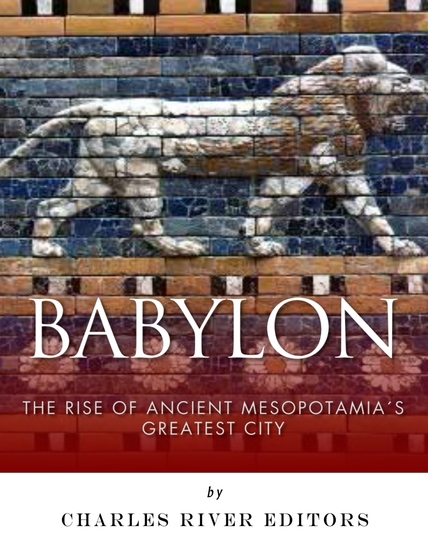
Babylon - The Rise and Fall of Ancient Mesopotamia’s Greatest City - cover
LER

Babylon - The Rise and Fall of Ancient Mesopotamia’s Greatest City

Editors Charles River

Editora: Charles River Editors

  • 0
  • 0
  • 0

Sinopse

The ancient world was full of many fantastic cities and places, and like today’s major cities, the great ancient cities were hubs of trade, religion, and science. Writing was first invented in ancient cities, and many important scientific discoveries were also made in them, some of which are still used in the modern world. Among the many cities of the ancient world, Rome and Athens may come to mind first, but the city of Babylon in the land of Mesopotamia was already an ancient, venerated city when the others were still inconsequential settlements.
 
Today, Babylon has become a byword for greed, excess, and licentiousness, mostly due to its mention in the Bible, but a closer examination reveals that Babylon was so much more, and even perhaps the most important city in the ancient world. Ancient Babylon was home to great dynasties that produced some of the world’s most influential leaders, most notably Hammurabi and Nebuchadnezzar, and these rulers invoked their wills on the entire ancient Near East and have been remembered as both progressive and cruel all at the same time. Babylon was also the seat of culture in ancient Mesopotamia and the place where scholars made amazing scientific advances that would not be eclipsed for several centuries. An examination of ancient Babylon demonstrates that it was truly the first great city in the ancient world.
 
Of course, the sheer span of history between Babylon’s power and today has produced plenty of historical questions and controversy. One of the things people most closely associate Babylon with is the Hanging Gardens, which, like the Great Pyramid of Giza, were considered both a technological marvel and an aesthetic masterpiece. Ancient historians believed that the Hanging Gardens were constructed around the 7th century B.C. after the second rise of Babylon, which would make them the second-oldest of the Seven Wonders of the Ancient World, and they were reputedly created by the biblical Nebuchadnezzar II (the king who conquered Judea) to please his homesick wife, after the model of Egyptian pleasure gardens. However, in 1993, British Assyriologist, Stephanie Dalley, proposed a theory that the Hanging Gardens were ordered built by the Assyrian King Sennacherib a century earlier for his giant palace at Nineveh instead. She believed that the two sites were easily confused by ancient sources, resulting in the Gardens being incorrectly located in Babylon a century later.
 
Babylon was also instrumental in the development of the region’s religions. Ancient Mesopotamian religion continues to captivate people for many of the same reasons today’s best known religions and their histories fascinate people. The religion practiced by the Ancient Mesopotamians provides a certain mix between the mundane and the surreal, and at the same time aspects of it are both familiar and bizarre to people today. Some find themselves drawn to it based on its preeminent position in religious history as the oldest documented religion in the world.  Others become fascinated with the close connections between some of the Mesopotamian religious texts, which include a flood story, a creation story and a story of the righteous sufferer, and their parallels in the Hebrew Bible. Today the Ancient Mesopotamians and their religion are a source of curiosity, but thousands of years ago the religion was an integral part of their lives.  From their birth to their death, deities surrounded them, and whether their social interactions were on the level of a smaller city or that of a larger nation-state, deities played key roles in the social fabric of their society. In fact, the people and religion were so intertwined that a study of Ancient Mesopotamian religion is a study of Ancient Mesopotamian culture. 
Disponível desde: 02/05/2025.
Comprimento de impressão: 55 páginas.
Outros livros que poderiam interessá-lo

  • UNMASKING THE SECRETS OF PERSONALITIES - Decoding Behavior Motivations and the Complexities of Human Personalities (2024 Guide for Beginners) - cover

    UNMASKING THE SECRETS OF...

    ISABELLA GRACE

    • 0
    • 0
    • 0
    "Unmasking the Secrets of Personalities" is your comprehensive guide to unraveling the intricacies of human behavior, motivations, and the diverse tapestry of personalities that shape our interactions. Delve into the fascinating world of personality psychology and gain practical insights to decode the unique traits, tendencies, and idiosyncrasies that define individuals.Personality Typologies: Explore various personality frameworks, from Myers-Briggs to the Big Five, to understand the diversity of human traits.Behavioral Patterns: Recognize recurring patterns of behavior that provide clues to an individual's personality structure.Motivational Drivers: Gain insights into the underlying motivations that influence decision-making and actions.Coping Mechanisms: Understand how individuals respond to stress, challenges, and interpersonal dynamics based on their personality traits.Effective Communication: Tailor your communication style to resonate with different personality types for more meaningful connections.Self-Discovery: Embark on a journey of self-discovery, recognizing your own personality traits and understanding their impact. 
    🔍 Ready to uncover the secrets hidden within personalities? Dive into "Unmasking the Secrets of Personalities" and equip yourself with the tools to navigate the diverse landscape of human interactions. Whether in professional or personal spheres, this book empowers you to decode behaviors, foster understanding, and build stronger connections. Elevate your interpersonal skills—start unmasking personalities today! 🔍 
     
    Ver livro
  • Why War? - cover

    Why War?

    Richard Overy

    • 0
    • 0
    • 0
    Why has war been such a consistent presence throughout the human past? A leading historian explains, drawing on rich examples and keen insight. 


    Richard Overy is not the first scholar to take up the title question. In 1931, at the request of the League of Nations, Albert Einstein asked Sigmund Freud to collaborate on a short work examining whether there was "a way of delivering mankind from the menace of war." Published the next year as a pamphlet entitled Why War?, it conveyed Freud's conclusion that the "death drive" made any deliverance impossible—the psychological impulse to destruction was universal in the animal kingdom. The global wars of the later 1930s and 1940s seemed ample evidence of the dismal conclusion. 


    A preeminent historian of those wars, Overy brings vast knowledge to the title question and years of experience unraveling the knotted motivations of war. His approach is to separate the major drivers and motivations, and consider the ways each has contributed to organized conflict. They range from the impulses embedded in human biology and psychology, to the incentives to conflict developed through cultural evolution, to competition for resources. The discussions show remarkable range, delving deep into the Neolithic past, through the twentieth-century world wars, and up to the current conflict in Ukraine.
    Ver livro
  • Popcorn Principles The: Triple Feature Box Set - Supersize Your Storytelling Skills with Three Essential Books - cover

    Popcorn Principles The: Triple...

    John Gaspard

    • 0
    • 0
    • 0
    Unleash your storytelling potential with "The Popcorn Principles: Triple Feature Box Set," a comprehensive guide for novel writers inspired by the magic of movies. This box set includes three indispensable books designed to elevate your fiction writing using principles gleaned from the world of filmmaking. 
    What's Inside: 
    1. The Popcorn Principles: A Novelist's Guide To Learning From Movies 
       - Discover 25 essential storytelling concepts from pre-production to distribution. 
       - Learn how to apply cinematic techniques to your novels, making your stories compelling and emotionally engaging. 
       - Includes practical homework and movie-watching assignments to deepen your understanding. 
    2. More Popcorn Principles: The Sequel! 
       - Dive deeper with additional principles that expand on the foundational techniques. 
       - Explore advanced storytelling methods to refine and enhance your writing craft. 
       - Gain insights from top filmmakers, screenwriters, and industry professionals. 
    3. The Popcorn Principles Strike Back: Interviews With Screenwriters Who Also Write Novels 
       - Hear from acclaimed filmmakers and screenwriters like Nicholas Meyer, Dennis Palumbo, Phoef Sutton, April Smith, Tom Straw and more. 
       - Learn how to adapt film industry secrets to your writing process. 
       - Access exclusive interviews and anecdotes that provide a unique perspective on storytelling.
    Ver livro
  • Forgotten War - The British Empire and Commonwealth’s Epic Struggle Against Imperial Japan 1941–1945 - cover

    Forgotten War - The British...

    Brian E. Walter

    • 0
    • 0
    • 0
    A new assessment of the British and Commonwealth contribution to the defeat of Japan in the Pacific.
    
    The monumental struggle fought against Imperial Japan in the Asia/Pacific theater during World War II is primarily viewed as an American affair. While the United States did play a dominant role, the British and Commonwealth forces also made major contributions—on land, at sea and in the air, eventually involving over a million men and vast armadas of ships and aircraft. It was a difficult and often desperate conflict fought against a skilled and ruthless enemy that initially saw the British suffer the worst series of defeats ever to befall their armed forces. Still, the British persevered and slowly turned the tables on their Japanese antagonists. Fighting over an immense area that stretched from India in the west to the Solomon Islands in the east and Australia in the south to the waters off Japan in the north, British and Commonwealth forces eventually scored a string of stirring victories that avenged their earlier defeats and helped facilitate the demise of the Japanese Empire.
    
    Often overlooked by history, this substantial war effort is fully explored in Forgotten War. Meticulously researched, the book provides a complete, balanced and detailed account of the role that British and Commonwealth forces played on land, sea and in the air during this crucial struggle. It also provides unique analysis regarding the effectiveness and relevance of this collective effort and the contributions it made to the overall Allied victory.
    Ver livro
  • The web of sexual sin - The naughty minds - cover

    The web of sexual sin - The...

    Francesca Santana

    • 0
    • 0
    • 0
    When her parents died in a car accident, Jasmin’s life changed. She was moved to live with her parents’ uncle and wife that was her mom’s sister her little sister was taken to live with other relatives that didn’t feed her well. Jazmin’s nightmare began when her aunt made sexual moves towards her. She was forced to accept them in order to keep her lifestyle and to rescue her little sister from the abuse she was enduring. Will she be able to help her little sister? How long can Jazmin keep this going on? Will she fight to get vengeance? Time only knows.
    Ver livro
  • ATOMIC HABITS 10-Minute Summary - An Easy & Proven Way to Build Good Habits and Break Bad Ones - cover

    ATOMIC HABITS 10-Minute Summary...

    James Cleary

    • 0
    • 0
    • 0
    This book by James Clear offers an approach rooted in neuroscience, psychology, and sociology to help people build positive habits and eliminate negative ones. Its core premise is that habits are the foundation of success, and that small, incremental changes can lead to significant improvements in one’s life. 
    Beyond their personal impact on identity and success, Atomic Habits also raises broader questions about the role habits play in shaping societies and cultures. While Clear focuses on individual development, his principles can be applied collectively. For example, what would happen if governments, businesses, or communities intentionally designed environments that encourage good habits at scale? Behavioral architecture is already in use in some areas—like walkable city design or waste reduction through nudging strategies—but its full potential remains largely untapped. 
    Another underexplored aspect is how digital technology affects habit formation. In a world where algorithms influence what we see, read, and buy, our habits are no longer purely personal choices—they’re shaped by systems designed to maximize our engagement. This raises a critical question: how can we regain control over our behavior in such a hyperconnected environment? 
    Habits are valuable when they fit the context, but what happens when that context changes? A habit that’s beneficial today might become irrelevant—or even harmful—tomorrow. Real mastery isn’t just about building habits; it’s also about knowing when to adapt or let them go. 
    Ultimately, the book reminds us that the power to change lies in our hands—not in sweeping decisions, but in the small, consistent actions we take each day. Over time, those actions shape who we become and what we achieve. 


    Ver livro