¡Acompáñanos a viajar por el mundo de los libros!
Añadir este libro a la estantería
Grey
Escribe un nuevo comentario Default profile 50px
Grey
Suscríbete para leer el libro completo o lee las primeras páginas gratis.
All characters reduced
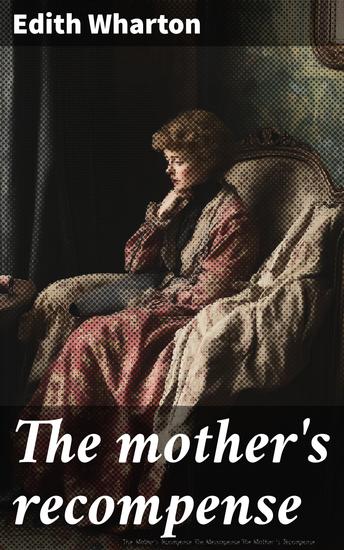
The mother's recompense - cover

The mother's recompense

Edith Wharton

Editorial: Good Press

  • 0
  • 0
  • 0

Sinopsis

Edith Wharton's "The Mother's Recompense" is a poignant exploration of the nuanced interplay between maternal duty and personal desire, framed within the societal constraints of early 20th-century America. The narrative delves into the life of a mother, Judith, who grapples with her past choices and the long-lasting implications they have on her relationship with her children. Wharton employs a rich, introspective prose style, characteristic of her broader body of work, which often critiques the moral rigidity of contemporary society. Set against the backdrop of post-WWI America, this novel reflects the shifting attitudes toward womanhood and independence, making it a significant contribution to the literary canon of its time. Wharton, an astute observer of social dynamics and a prominent figure in American literature, drew from her own experiences as a woman navigating societal expectations to craft this narrative. Her privileged background and deep engagement with the literary and artistic circles of her era informed her exploration of themes such as sacrifice and redemption, particularly in the lives of women. "The Mother's Recompense" allows readers to glimpse the internal conflicts that defined many women's lives during Wharton's time. I highly recommend this novel to readers interested in feminist literature and the intricate psychology of its characters. Wharton's masterful storytelling invites readers to ponder the complexities of love, obligation, and the quest for personal fulfillment, making it an enduring work that resonates even in today's discussions around motherhood and identity.
Disponible desde: 02/03/2025.
Longitud de impresión: 200 páginas.

Otros libros que te pueden interesar

  • The Count Of Monte Cristo - cover

    The Count Of Monte Cristo

    Alexandre Dumas, Auguste Maquet

    • 0
    • 0
    • 0
    On the eve of his wedding to the beautiful Mercedes, Edmond Dantès is betrayed by jealous rivals and wrongfully imprisoned for treason. Locked away in the dreadful Château d'If, he spends years plotting his escape and planning a brilliant revenge against those who destroyed his life.  
    As the mysterious and powerful Count of Monte Cristo, he returns to exact justice, but along the way, he faces his own vulnerability. Filled with adventure, romance, and intrigue, Alexandre Dumas’s epic tale is a timeless story of betrayal, redemption, and the consequences of revenge. This audiobook will take you on a thrilling journey you won’t forget!
    Ver libro
  • The Tempest - cover

    The Tempest

    William Shakespeare

    • 0
    • 0
    • 0
    "We are such stuff as dreams are made on."
    
    Transport yourself to a remote, enchanted island in William Shakespeare's final masterpiece, The Tempest. Prospero, the usurped Duke of Milan, has spent twelve years in exile, mastering the occult arts and commanding the spirits of the isle. When a magical storm brings his treacherous enemies to his shores, Prospero finally has the chance to settle the score.
    
    The play is a breathtaking blend of spectacle and soul-searching. Guided by the ethereal spirit Ariel and hindered by the earthy, resentful Caliban, Prospero orchestrates a series of illusions to confront his brother's betrayal. Yet, amid the schemes of revenge, a tender romance blossoms between his daughter, Miranda, and the shipwrecked Prince Ferdinand.
    
    A profound meditation on the nature of authority, the bond of family, and the power of mercy, The Tempest is often seen as Shakespeare's farewell to the stage. This definitive edition captures the play's unique atmospheric beauty and its timeless message of reconciliation.
    
    Surrender to the magic of the isle. Buy "The Tempest" today and experience the Bard's final, visionary work.
    Ver libro
  • History of England - cover

    History of England

    Jane Austen

    • 0
    • 0
    • 0
    Jane Austen's existence embodies a profound juxtaposition of her illustrious literary endeavors and an ostensibly mundane public persona. Born in the quaint environs of Steventon, Hampshire, she was the product of a domestically-conducted education under the tutelage of her clerical father. Her life was marked by an unwavering familial devotion. Following a brief sojourn in the cosmopolitan city of Bath, Austen's family circumstances necessitated a return to their ancestral abode in Steventon, where she remained until her demise at the relatively young age of 41. Despite the apparent banality of her daily existence, her literary prowess burgeoned in this very setting, shrouded in secrecy. 
    Austen's nascent fascination with the art of novel-writing manifested early in her life, as she penned narratives that offered a satirical commentary on both the contemporary authors and the social mores of the late 18th century. Her novels, suffused with wit and incisive observation, served as a scathing yet engaging critique of the era's literary landscape. Her corpus is replete with masterpieces such as "Pride and Prejudice" (1813), "Mansfield Park" (1814), and "Emma" (1816), which masterfully dissect the social interactions and foibles of the 19th-century middle class. Her acuity for capturing the absurdities of human conduct is particularly evident in these works, which have endured as timeless reflections of societal norms. 
    In the annals of British letters, Austen stands as an adored and venerated figure, celebrated for her astute social commentary and her unparalleled contribution to the novel form. Her enduring popularity is a testament to the universal appeal of her narratives, which transcend temporal and cultural boundaries to resonate with readers across generations.
    Ver libro
  • Candide - cover

    Candide

    Voltaire

    • 0
    • 0
    • 0
    Candide, ou l'Optimisme is a French satire first published in 1759 by Voltaire, a philosopher of the Age of Enlightenment. The novella has been widely translated, with English versions titled Candide: or, All for the Best (1759); Candide: or, The Optimist (1762); and Candide: Optimism (1947). It begins with a young man, Candide, who is living a sheltered life in an Edenic paradise and being indoctrinated with Leibnizian optimism by his mentor, Professor Pangloss. The work describes the abrupt cessation of this lifestyle, followed by Candide's slow and painful disillusionment as he witnesses and experiences great hardships in the world. Voltaire concludes Candide with, if not rejecting Leibnizian optimism outright, advocating a deeply practical precept, "we must cultivate our garden", in lieu of the Leibnizian mantra of Pangloss, "all is for the best" in the "best of all possible worlds".
    Candide is characterized by its tone as well as by its erratic, fantastical, and fast-moving plot. A picaresque novel with a story similar to that of a more serious coming-of-age narrative (Bildungsroman), it parodies many adventure and romance clichés, the struggles of which are caricatured in a tone that is bitter and matter-of-fact. Still, the events discussed are often based on historical happenings, such as the Seven Years' War and the 1755 Lisbon earthquake. As philosophers of Voltaire's day contended with the problem of evil, so does Candide in this short theological novel, albeit more directly and humorously. Voltaire ridicules religion, theologians, governments, armies, philosophies, and philosophers. Through Candide, he assaults Leibniz and his optimism.
    Candide has enjoyed both great success and great scandal. Immediately after its secretive publication, the book was widely banned to the public because it contained religious blasphemy, political sedition, and intellectual hostility hidden under a thin veil of naïveté. However, with its sharp wit and insightful portrayal of the human condition, the novel has since inspired many later authors and artists to mimic and adapt it. Today, Candide is considered as Voltaire's magnum opus and is often listed as part of the Western canon. It is among the most frequently taught works of French literature. The British poet and literary critic Martin Seymour-Smith listed Candide as one of the 100 most influential books ever written.
    Ver libro
  • Hunchback of Notre-Dame The (Book 7) - cover

    Hunchback of Notre-Dame The...

    Victor Hugo

    • 0
    • 0
    • 0
    Book 7: The Hunchback of Notre-Dame or Notre-Dame de Paris is a French Gothic novel by Victor Hugo, published in 1831. - The story is set in Paris in 1482 during the reign of Louis XI. The gypsy Esmeralda (born as Agnes) captures the hearts of many men, including those of Captain Phoebus and Pierre Gringoire, but especially Quasimodo and his guardian Archdeacon Claude Frollo. Frollo is torn between his obsessive lust for Esmeralda and the rules of Notre Dame Cathedral. He orders Quasimodo to kidnap her, but Quasimodo is captured by Phoebus and his guards, who save Esmeralda. Gringoire, who attempted to help Esmeralda but was knocked out by Quasimodo, is about to be hanged by beggars when Esmeralda saves him by agreeing to marry him for four years.
    Ver libro
  • Will Warburton - cover

    Will Warburton

    George Gissing

    • 0
    • 0
    • 0
    Will Warburton follows the life of its titular character, a talented but restless young man from a working-class background who aspires to rise above his circumstances through intellect and ambition. As he navigates London’s literary and artistic circles, Will grapples with personal desires, moral dilemmas, and the harsh realities of class division. His relationships—with women, friends, and society at large—reveal the tensions between idealism and pragmatism in Victorian England. Gissing crafts a nuanced portrait of a man torn between passion and principle, dreams and duty. With psychological depth and social critique, the novel explores the struggles of self-made individuals in a rigidly stratified world, offering a poignant reflection on ambition, identity, and the cost of independence.
    Ver libro