

Junte-se a nós em uma viagem ao mundo dos livros!
Adicionar este livro à prateleira
Grey
Deixe um novo comentário Default profile 50px
Grey
Assine para ler o livro completo ou leia as primeiras páginas de graça!
All characters reduced
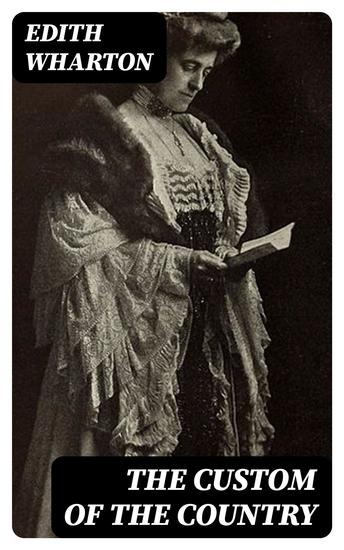
The Custom of the Country - cover
LER

The Custom of the Country

Edith Wharton

Editora: DigiCat

  • 0
  • 0
  • 0

Sinopse

Edith Wharton's "The Custom of the Country" delves into the complexities of societal expectations and individual desires in early 20th-century America. Through the lens of its protagonist, Undine Spragg, a quintessential representation of social ambition, Wharton critiques the materialistic and often superficial nature of the American upper class. The novel's modernist literary style, characterized by its sharp dialogue and rich, nuanced descriptions, effectively captures the interplay between personal aspiration and societal constraints, illustrating the stark realities of ambition and disillusionment in a rapidly changing world. Edith Wharton was an influential figure in American literature, often exploring themes of social class, gender, and morality. Born into a wealthy New York family, Wharton had firsthand experience with the societal norms she so brilliantly dissected in her work. Her European travels and the contrasts between American and European societies deeply influenced her literary voice, and "The Custom of the Country" represents her sophisticated commentary on the American social landscape at the turn of the century. For readers interested in the intricate dynamics of class and gender, "The Custom of the Country" is an essential read. Wharton's keen insights and masterful storytelling invite readers to reflect on the timeless struggles between societal expectations and personal identity, making this novel a profound exploration of the human condition.
Disponível desde: 11/10/2022.
Comprimento de impressão: 386 páginas.
Outros livros que poderiam interessá-lo

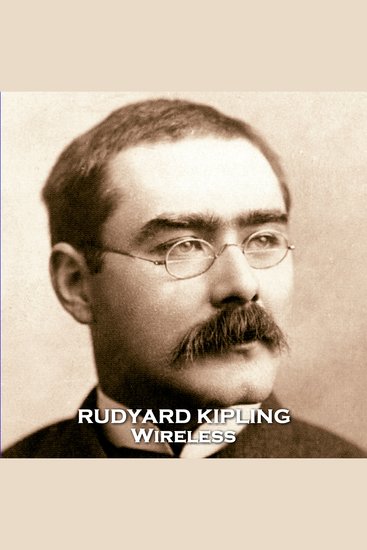
  • Wireless - A rare Kipling venture into sci fi about a technological leap - cover

    Wireless - A rare Kipling...

    Rudyard Kipling

    • 0
    • 0
    • 0
    Joseph Rudyard Kipling was born in Mumbai, India on 30th December 1865.   
     
    As was the custom in those days, he and his sister were sent back to England when he was 5.  The ill-treatment and cruelty by the Portsmouth couple they boarded with Kipling said contributed to the onset of his literary life.  
     
    At 16 he returned to India to work on a local paper where he was soon contributing and writing.  It also exposed him to the issues of identity and national allegiance which pervade much of his work.  
     
    In 1886, his ‘Departmental Ditties’, collection of verse appeared in print followed by 39 short stories for his newspaper over only 8 months.  These were then published as ‘Plain Tales from the Hills’, shortly after his 22nd birthday.  
     
    He continued his prolific pace of writing before being dismissed in a dispute and, taking his pay-off and the profits from the sale of some publishing rights, decided to return to London, travelling via Rangoon, Hong Kong, Japan and the United States, all the while writing articles, and arriving at Liverpool in October 1889. 
     
    Over the next two years he saw further works published as books and in magazines, as well as a nervous breakdown for which he was prescribed a sea voyage, to South Africa, Australia, New Zealand and India.  
     
    Happier times came with marriage to Caroline Starr Balestier in January 1892.  The honeymoon began in Vermont and ended in Yokahama where they heard their bank had failed.  They returned to Vermont and settled.  Caroline was now pregnant and he was planning the ‘Jungle Books’.  
     
    A failed arbitration between the US and England resulted in an argument between Caroline’s brother and Kipling, and then his arrest.  At the hearing he was mortified by the exposure of his private life and after settling the matter they returned to England and life in Torquay.  ‘Kim’ was published in 1902, and ‘Just So Stories for Little Children’, a year later.  
     
    In 1907 he was awarded the Nobel Prize for Literature with the citation “in consideration of the power of observation, originality of imagination, virility of ideas and remarkable talent for narration which characterise the creations of this world-famous author”.   
     
    When the Great War erupted, he scorned those who refused conscription.  His son enlisted and was killed at the Battle of Loos in September 1915, at 18, an exploding shell had ripped his face apart.  This death inspired Kipling’s writing thereafter, but the tragedy broke his life and by 1930 his prolific pen had almost ceased. 
     
    Rudyard Kipling died on 18th January 1936 from a perforated duodenal ulcer.  He was 70.  His ashes are buried at Poets’ Corner in Westminster Abbey.
    Ver livro
  • The Awakening - cover

    The Awakening

    Kate Chopin

    • 0
    • 0
    • 0
    The Awakening caused a stir amongst it's readers when it was first published in 1899.
    
    With its realistic portrayal of female marital infidelity, an anudience accustomed to the pieties of late Victorian romantic fiction were shocked by Chopin's radical portrayal of a woman trapped in a stifling marriage, seeking passionate physical love outside the confines of her domestic situation.
    Ver livro
  • Blue Light The - Story Time Episode 26 (Unabridged) - cover

    Blue Light The - Story Time...

    Brothers Grimm

    • 0
    • 0
    • 0
    The Blue Light is a Brothers Grimm fairy tale about a soldier who finds a magical object that provides him a supernatural helper. Many of the features from Hans Christian Andersen's later work The Tinderbox and from the story of Aladdin and his magic lamp originate with this version.
    Ver livro
  • The Adventure of the Three Garridebs - cover

    The Adventure of the Three...

    Arthur Conan Doyle

    • 0
    • 0
    • 0
    The Adventure of the Three Garridebs (1924), one of the 56 Sherlock Holmes short stories written by British author Sir Arthur Conan Doyle, is one of 12 stories in the cycle collected as The Case-Book of Sherlock Holmes.According to Dr. Watson's opening narration, this story is set at "the latter end of June, 1902 ... the same month that Holmes refused a knighthood for services which may perhaps some day be described." This is a parallel to the knighthood of Arthur Conan Doyle around the same time. Holmes receives a letter from a Nathan Garrideb of 136 Little Ryder Street,asking for help in a most peculiar quest. He is looking for another man with his unusual surname, for it will mean a $5 million inheritance for him. He has been approached by another man, John Garrideb of Kansas, who says that he needs to find others with the same last name.The American Garrideb comes to see Holmes and Watson at 221B Baker Street, and is apparently not very pleased that Nathan Garrideb has involved a detective. Garrideb, who claims to be a lawyer, spins a ridiculous story about Alexander Hamilton Garrideb, a millionaire land tycoon he met in Kansas. Hamilton Garrideb bequeathed his $15 million estate to John Garrideb on the provision that he find two more Garridebs to share it with equally. He came to England to seek out people with the name, having failed in his own country. So far, he has found only Nathan...Famous works of the author Arthur Conan Doyle: A Study in Scarlet, The Sign of the Four, The Adventures of Sherlock Holmes, The Memoirs of Sherlock Holmes, The Hound of the Baskervilles, The Return of Sherlock Holmes, The Valley of Fear, His Last Bow, The Case-Book of Sherlock Holmes, Stories of Sherlock Holmes, The Lost World.
    Ver livro
  • The Case of Lady Sannox - cover

    The Case of Lady Sannox

    Arthur Conan Doyle

    • 0
    • 0
    • 0
    The Case of Lady Sannox (also published as "The Kiss of Blood") is a short story by Sir Arthur Conan Doyle published in The Idler in November 1893.The story features an arrogant surgeon, Douglas Stone, who is in love with the married Lady Sannox, one of the most beautiful women in London. On his way to a rendezvous with her, the surgeon is asked by a Turkish man to operate on the latter's wife, who has cut her lip with a poison envenomed scimitar. The doctor is informed the woman will die if the poison is not cut out.Because of his desire to meet his lover, his need for money, his professional arrogance, and the opinion of the Turk that any delay would kill his wife, the surgeon goes ahead with the operation on the heavily drugged wife, whose face is obscured by a veil. After he has performed the operation, Dr. Stone realizes his patient is Lady Sannox, and the Turk her husband, who believes the disfigurement will be morally good for his wife. The surgeon suffers a breakdown.
    Ver livro
  • Pollyanna - cover

    Pollyanna

    Eleanor H. Porter

    • 0
    • 0
    • 0
    In a small town far out West, 11-year-old Pollyanna loses her mother and then her dad to disease. This book describes how the orphan is sent to be raised by her aunt who lives far away in the East of the country. Unfortunately, her aunt does not want her but accepts her very reluctantly only out of 'duty' and sticks her into a tiny hot attic room so she will be "out of the way". What Aunt Polly does not know is that Pollyanna is bringing the game of being 'glad' that her father taught her and that her irrepressible happy attitude will transform not only that dull and miserable house but an entire village before she is through. 
     
    Eleanor H. Porter,  American novelist, and creator of the Pollyanna series of books generated a popular phenomenon. Hodgman studied singing at the New England Conservatory of Music in Boston. She gained a local reputation as a singer in concerts and church choirs and continued her singing career after her marriage. By 1901, however, she had abandoned music in favor of writing. Her stories began appearing in numerous popular magazines and newspapers, and in 1907 she published her first novel
    Ver livro
