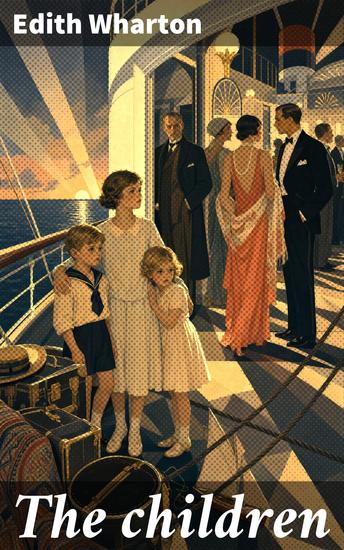
The children
Edith Wharton
Editorial: Good Press
Sinopsis
In The Children, Edith Wharton turns her exacting social intelligence toward the emotional casualties of modern divorce among the Anglo-American elite. The novel follows Martin Boyne as he becomes entangled with a shifting constellation of parents, step-parents, and children whose lives are unsettled by serial remarriage, cosmopolitan travel, and adult irresponsibility. Written in Wharton's lucid, ironical prose, the book combines psychological realism with social satire, exposing the moral evasions of fashionable society while attending closely to the vulnerabilities of youth. Situated within early twentieth-century debates about family, freedom, and modern manners, it is a subtle study of innocence endangered by privilege. Wharton, born into New York's old aristocracy, was uniquely placed to anatomize the codes and failures of her class. Her fiction repeatedly investigates the pressures exerted by wealth, custom, and desire, and her own unhappy marriage, expatriate life, and sharp observation of transatlantic society informed her understanding of emotional displacement. In The Children, these concerns converge in a late work that reflects her mature interest in the costs of adult self-fashioning. This is an essential novel for readers interested in Wharton beyond The Age of Innocence or The House of Mirth. It rewards attention as both a finely controlled social novel and a humane critique of parental negligence, offering pleasures of style alongside enduring moral seriousness.
Disponible desde: 29/06/2026.
Longitud de impresión: 234 páginas.