¡Acompáñanos a viajar por el mundo de los libros!
Añadir este libro a la estantería
Grey
Escribe un nuevo comentario Default profile 50px
Grey
Suscríbete para leer el libro completo o lee las primeras páginas gratis.
All characters reduced
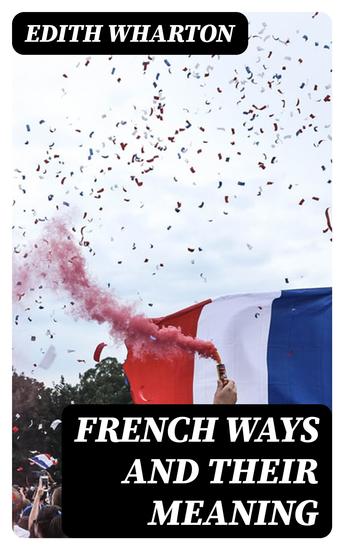
French Ways and Their Meaning - cover

French Ways and Their Meaning

Edith Wharton

Editorial: DigiCat

  • 0
  • 0
  • 0

Sinopsis

In "French Ways and Their Meaning," Edith Wharton embarks on a captivating exploration of French culture, manners, and social customs as perceived through her American lens. The book combines a travelogue with cultural critique, offering keen observations enriched by Wharton's distinctively elegant prose. Set against the backdrop of an early 20th-century Europe shaped by rapid social change, Wharton's work not only documents the nuances of French life but also interrogates the growing divergence between American and European values in an era marked by globalization and modernity. Her insights reflect a deep engagement with the cultural contrasts and shared human experiences that define both societies. Edith Wharton, an accomplished novelist and a prominent figure in American literature, brings her wealth of experience and nuanced understanding of societal dynamics to this work. Born into a privileged New York family, she possessed a keen awareness of class distinctions, both within America and abroad. Wharton's extensive travels in Europe, her friendships with expatriate artists, and her keen observations of societal structures enriched her perspectives, underscoring her desire to bridge cultural divides, which is vividly illustrated in this book. "French Ways and Their Meaning" is essential reading for those interested in cultural studies or the complexities of East-West relations. Wharton's incisive analyses and lyrical style invite readers to reflect on their own cultural assumptions, making the book a timeless exploration of identity, belonging, and the art of living. It is an invitation to appreciate the subtleties of cultural engagement and the beauty of difference.
Disponible desde: 04/09/2022.
Longitud de impresión: 240 páginas.


Otros libros que te pueden interesar

  • May Contain Lies - How Stories Statistics and Studies Exploit Our Biases And What We Can Do About It - cover

    May Contain Lies - How Stories...

    Alex Edmans

    • 0
    • 0
    • 0
    Our lives are minefields of misinformation. It ripples through our social media feeds, our daily headlines, and the pronouncements of politicians, executives, and authors. Stories, statistics, and studies are everywhere, allowing people to find evidence to support whatever position they want. Many of these sources are flawed, yet by playing on our emotions and preying on our biases, they can gain widespread acceptance, warp our views, and distort our decisions. 


    In this eye-opening book, renowned economist Alex Edmans teaches us how to separate fact from fiction. Using colorful examples—from a wellness guru's tragic but fabricated backstory to the blunders that led to the Deepwater Horizon disaster to the diet that ensnared millions yet hastened its founder's death—Edmans highlights the biases that cause us to mistake statements for facts, facts for data, data for evidence, and evidence for proof. 


    Armed with the knowledge of what to guard against, he then provides a practical guide to combat this tide of misinformation. Going beyond simply checking the facts and explaining individual statistics, Edmans explores the relationships between statistics—the science of cause and effect—ultimately training us to think smarter, sharper, and more critically.
    Ver libro
  • Napoleon's Europe - Empire and Conflict - cover

    Napoleon's Europe - Empire and...

    Nova Ashford

    • 0
    • 0
    • 0
    Napoleon Bonaparte, one of the most influential figures in world history, rose from modest beginnings to become the emperor of France and the master of much of Europe. Born on August 15, 1769, on the island of Corsica, Napoleon came from a relatively modest family. His father, a lawyer, was part of the minor nobility, but the family’s wealth was limited. Despite these humble origins, Napoleon's extraordinary ambition, sharp intellect, and relentless drive would propel him into the center of European politics, shaping the future of the continent. 
    Napoleon’s early life was marked by education at military academies, where his talent for strategy and leadership quickly became apparent. At the age of 16, he was commissioned as a second lieutenant in the French army. His rise through the ranks coincided with the turmoil of the French Revolution, which fundamentally altered France and its political landscape. In 1789, the French Revolution erupted, dismantling the monarchy and challenging traditional structures of power. It was in this chaotic period that Napoleon saw his opportunity. 
    During the Revolution, Napoleon initially made his name through his military prowess, especially during the Italian Campaign in the late 1790s. His innovative tactics and leadership were crucial in securing French victories against Austria and its allies. These victories not only increased Napoleon’s reputation but also solidified his status as one of France’s most brilliant generals. By 1799, France was embroiled in political instability, and the government—the Directory—was weakened by corruption and poor leadership. Amid this instability, Napoleon seized the moment to take control.
    Ver libro
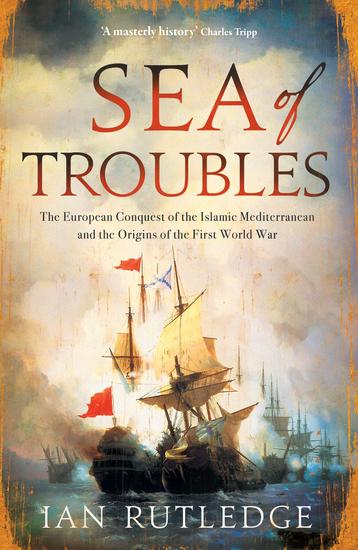
  • Sea of Troubles - The European Conquest of the Islamic Mediterranean and the Origins of the First World War - cover

    Sea of Troubles - The European...

    Ian Rutledge

    • 0
    • 0
    • 0
    In the mid-eighteenth century, most of the Mediterranean coastline and its hinterlands were controlled by the Ottoman Empire, a vast Islamic power regarded by Christian Europe with awe and fear. By the end of the First World War, however, this great civilisation had been completely subjugated, and its territories occupied by European powers. Sea of Troubles is the definitive account of the European conquest of the Levant and North Africa over three centuries. Ian Rutledge reveals the intense imperial rivalry between six European powers - Britain, France, Italy, Spain, Austria-Hungary and Russia - who all jostled for control of the trade, lands and wealth of the Islamic Mediterranean. The competition between these states made their conquest a far more difficult and extended task than they encountered elsewhere in the world. Yet, as new contenders entered the contest, and as rivalries intensified in the early twentieth century, events would spiral out of control as the continent headed towards the First World War.
    Ver libro
  • Japanese History - a comprehensive history of the land of the rising sun - cover

    Japanese History - a...

    Will Forrest

    • 0
    • 0
    • 0
    Fascinated by samurai, honor-bound warriors of Japan's past? 
    Wonder about World War II's impact and Japan's rebirth? 
    If so, this book is for you! 
    Embark on a thrilling odyssey through Japan's riveting history, catapulting from the ancient realm of samurai and shoguns into the cutting-edge prowess that defines this extraordinary nation. Plunge headfirst into the elegance of timeless art forms, relive the thunderous echoes of feudal clashes, and witness the indomitable spirit that forged Japan's fate. 
    This book is your gateway to the past, weaving electrifying narratives that unravel the enigmatic layers of Japan's heritage. Its pages ignite history before your eyes. Whether you're a daring explorer or an unwavering history devotee, this volume thrusts you into the heart of Japan's captivating saga. 
    Together we will explore:Ancient Shinto Roots: Origins and Imperial LineageFeudal Epoch: Samurai, Shoguns, and IsolationEdo's Cultural Renaissance: Art, Geisha, and KabukiZen Philosophy: Influence and Inner ContemplationMeiji Rebirth: Modernization, Global ReachPost-War Resurgence: Reconstruction and InnovationAnime and Manga: Modern Creative OutpouringTimeless Traditions: Tea Ceremonies, Craftsmanship MasteryTechnological Advancements: Innovations and High-Tech ProwessPop Culture Impact: J-Pop, Cosplay, and BeyondAnd Much More! 
    Unearth the well-guarded secrets of a culture masterfully blending tradition and innovation. Venture forth now, and embark on an exhilarating expedition through the currents of time! Buy this book now!
    Ver libro
  • Remains of the Day by Kazuo Ishiguro The (Book Analysis) - Detailed Summary Analysis and Reading Guide - cover

    Remains of the Day by Kazuo...

    Dylan Alling

    • 0
    • 0
    • 0
    Unlock the more straightforward side of The Remains of the Day with this concise and insightful summary and analysis!This engaging summary presents an analysis of The Remains of the Day by Kazuo Ishiguro, which follows Stevens, the butler of Darlington Hall, as he reflects on his situation and career. Stevens takes great pride in his professionalism and service to the owner of the Hall, and constantly puts his sense of duty above his own needs and feelings. However, the world he lives in is changing rapidly, and in the course of the novel he reflects on his past and on what he sees as a vanishing age of honour. The Remains of the Day is Kazuo Ishiguro's third novel and is among his most acclaimed works, winning the Man Booker Prize in 1989. Ishiguro is also known for his novels Never Let Me Go and The Buried Giant, and was awarded the Nobel Prize in Literature in 2017.Find out everything you need to know about The Remains of the Day in a fraction of the time!This in-depth and informative reading guide brings you:• A complete plot summary• Character studies• Key themes and symbols• Questions for further reflectionWhy choose BrightSummaries.com?Available in print and digital format, our publications are designed to accompany you on your reading journey. The clear and concise style makes for easy understanding, providing the perfect opportunity to improve your literary knowledge in no time.See the very best of literature in a whole new light with BrightSummaries.com!
    Ver libro
  • The Fifth History of Man - cover

    The Fifth History of Man

    MD John Bershof

    • 0
    • 0
    • 0
    In the spirit of medieval writer Chaucer, all human activity lies within the artist’s scope, the History of Man Series uses medicine as a jumping off point to explore precisely that, all history, all science, all human activity since the beginning of time. The jumping off style of writing takes the reader, the listener into worlds unknown, always returning to base, only to jump off again. History of Man are stories and tales of nearly everything. 
    The Fifth History of Man has a few parting shots at viruses but mostly continues with the world of parasites, from tick disease that tick us off, Old Lyme, Connecticut and Lyme disease, toxoplasmosis, Crazy Cat Lady and her clowder of cats, then on into a discussion of the avatar of parasites: malaria. Our travels will venture down into the valley: Valley Girls, Valspeak, Valley Fever, fungus and fungal infections. We’ll jump into the biology of evolution, Darwin, Huxley and the great debates, the geology of earthquakes, volcanos, the Ring of Fire, and Johnny Cash, and then through the homos: Homo habilis, Homo erectus, and Homo sapiens, and once the dust cleared how the opposable thumbs, walking erect, and bigger brains left one man standing, one woman, too. No discussion of human history can leave out the G.O.A.T. of French history, heck, of European history; the man, the legend, Napoleon Bonaparte, loved and admired by everyone, even his enemies. Our path will take us into war & military, World War I versus the 1918 Swine Flu, some Russian history and how Stalin got Lenin wrong.
    Ver libro