Junte-se a nós em uma viagem ao mundo dos livros!
Adicionar este livro à prateleira
Grey
Deixe um novo comentário Default profile 50px
Grey
Assine para ler o livro completo ou leia as primeiras páginas de graça!
All characters reduced
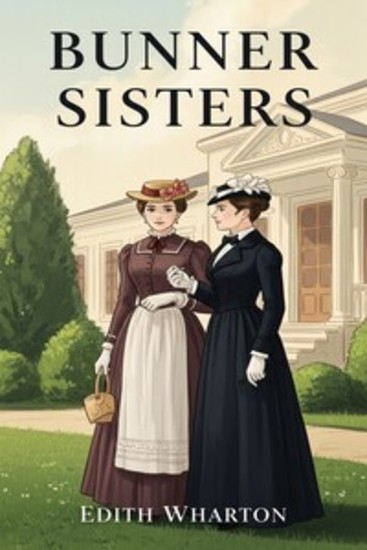
Bunner Sisters - cover
LER

Bunner Sisters

Edith Wharton

Editora: Bu Classics Books

  • 0
  • 0
  • 0

Sinopse

In the dim corners of a small New York shop, two sisters cling to a quiet existence of modest labor and mutual devotion. Their fragile peace is shattered when a charming clockmaker enters their lives, sparking hope that quickly unravels into heart-wrenching sacrifice. Exploring the stark realities of the working class, this narrative strips away the glamour of the Gilded Age to reveal a raw portrait of loss. It is a haunting examination of how selflessness can lead to the deepest solitude.
Disponível desde: 04/03/2026.
Comprimento de impressão: 122 páginas.

Outros livros que poderiam interessá-lo

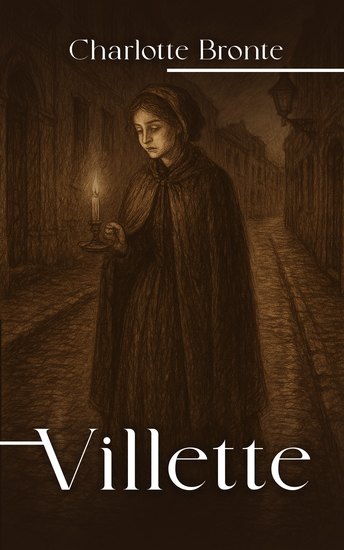
  • Villette - cover

    Villette

    Charlotte Brontë

    • 0
    • 0
    • 0
    Villette is a deeply psychological and emotionally complex novel by Charlotte Brontë, widely regarded as one of her most mature and profound works. First published in 1853, the novel offers an intimate exploration of loneliness, identity, faith, and unspoken love, drawing heavily on Brontë's own experiences abroad.
    
    The story follows Lucy Snowe, a quiet, intelligent, and inwardly passionate woman who leaves England to seek independence and purpose in the fictional city of Villette. There, she finds employment as a teacher in a girls' school, navigating a foreign culture, religious tension, and profound emotional isolation. Lucy's inner life—marked by restraint, longing, and resilience—forms the heart of the novel.
    
    As Lucy encounters friendship, temptation, and romantic attachment, she struggles to reconcile her need for emotional connection with her fierce self-control and moral convictions. Brontë masterfully uses Lucy's perspective to explore themes of gender, power, faith, and the cost of emotional repression.
    
    Subtle, intense, and hauntingly honest, Villette is a landmark of Victorian literature. Its psychological depth, unconventional heroine, and exploration of inner strength make it a powerful and enduring novel that continues to resonate with readers seeking insight into the complexities of the human heart.
    Ver livro
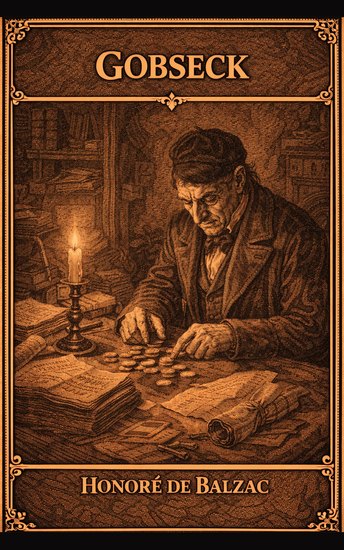
  • Gobseck - cover

    Gobseck

    Honoré de Balzac

    • 0
    • 0
    • 0
    In Gobseck, Honoré de Balzac delivers a powerful and penetrating exploration of wealth, obsession, and the hidden machinery of society. Set in post-Napoleonic Paris, this masterful novella—part of Balzac's monumental collection La Comédie Humaine—examines the corrosive power of money and the moral compromises people make in pursuit of status and survival.
    
    At the center of the story stands Jean-Esther van Gobseck, an aging and enigmatic moneylender whose life revolves around one unwavering principle: gold rules the world. Cold, calculating, and emotionally detached, Gobseck has built his fortune by lending money to desperate aristocrats and ambitious social climbers, watching with clinical fascination as debt exposes their secrets, weaknesses, and hypocrisies. To him, human emotions—love, honor, loyalty—are mere illusions, all ultimately subject to the authority of money.
    
    The narrative unfolds through the perspective of a young lawyer, Derville, who recounts Gobseck's life and his dealings with the aristocratic Countess de Restaud. As the Countess spirals into financial and moral ruin to sustain her extravagant lifestyle and illicit passions, Gobseck becomes both witness and silent judge. Through this tragic entanglement, Balzac reveals the fragile façade of high society and the devastating consequences of greed, vanity, and unchecked desire.
    
    Yet Gobseck is more than a portrait of a miser. It is a profound meditation on capitalism, power, and human nature. Gobseck himself is a paradox—both predator and philosopher, villain and observer. Though he accumulates immense wealth, he lives in stark austerity, hoarding treasures he never uses, revealing the emptiness at the heart of his obsession. His life poses unsettling questions: Is wealth power, security, or prison? Can a person truly possess riches without being possessed by them?
    
    Balzac's sharp realism, vivid characterizations, and incisive social commentary make Gobseck a timeless study of ambition and morality. With psychological depth and keen insight into the financial and emotional transactions that govern human relationships, this novella remains strikingly relevant in a world still driven by profit and power.
    
    Dark, intelligent, and unflinchingly honest, Gobseck is a compelling exploration of the price of wealth—and the cost of losing one's soul in its pursuit.
    Ver livro

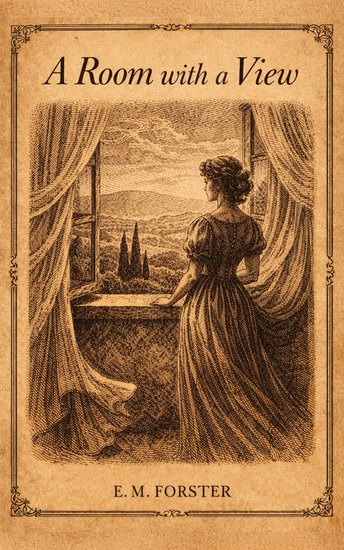
  • A Room with a View - cover

    A Room with a View

    E. M. Forster

    • 0
    • 0
    • 0
    A Room with a View is a luminous and witty exploration of love, freedom, and self-discovery set against the vibrant landscapes of Italy and the restrained society of Edwardian England. In this beloved classic, E.M. Forster crafts a story that delicately examines the tension between social convention and personal desire.
    
    The novel follows Lucy Honeychurch, a young Englishwoman touring Florence with her prim and proper cousin, Charlotte Bartlett. At the Pension Bertolini, Lucy encounters an unconventional father and son duo, Mr. Emerson and his passionate, free-spirited son, George. A simple room exchange—offering Lucy a room with a view of the Arno—becomes symbolic of a much larger awakening. Through her interactions with George and exposure to the beauty and spontaneity of Italy, Lucy begins to glimpse a life beyond the rigid expectations imposed by her upbringing.
    
    Returning to England, Lucy finds herself engaged to the refined and socially acceptable Cecil Vyse. Yet her experiences in Italy linger in her heart, challenging the carefully constructed values of propriety, class consciousness, and emotional restraint that define her world. As Lucy struggles between the safety of convention and the authenticity of true feeling, she must ultimately decide whether to conform to societal expectations or follow her own heart.
    
    Forster's prose sparkles with irony, warmth, and keen social observation. With subtle humor and deep emotional insight, he critiques the hypocrisy and artificiality of Edwardian society while celebrating passion, individuality, and the courage to live truthfully. The "room with a view" becomes more than a literal space—it represents openness, clarity, and the possibility of a fuller, more honest existence.
    
    Tender, thought-provoking, and enduringly relevant, A Room with a View is a timeless romantic novel that reminds readers of the transformative power of love and the importance of embracing life without fear.
    Ver livro
  • Twenty-Six Men and a Girl - From their pens to your ears genius in every story - cover

    Twenty-Six Men and a Girl - From...

    Maxim Gorky

    • 0
    • 0
    • 0
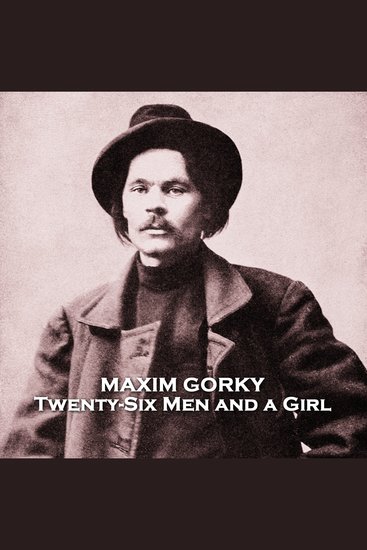
    Alexei Maximovich Peshkov was born on 28th March 1868, in Nizhny Novgorod, Russia. 
    Better known as Maxim Gorky he was orphaned at 11 and ran away from home at 12.  At 19 he had already attempted suicide and thereafter travelled, by foot, across the Russian Empire for 5 years. 
    His first book ‘Essays & Stories’ in 1898 was a sensation and so began a long career as an author of short stories, novels and plays.  Gorky saw writing as a moral and political act that would help to change the unjust world around him.  He was an ardent early advocate of the emerging Marxist movement and publicly opposed the Tsarist regime leading several times to his arrest.  
    In 1904 he began his own theatre but the censor banned every play and Gorky was forced to abandon the project. 
    But Gorky was a financially successful author, editor, and playwright and gave monies to political parties as well as for civil rights and social reform.  The brutal shooting of workers, which set in motion the Revolution of 1905, pushed Gorky more decisively toward radical solutions.  
    In 1906 he went to the United States to raise funds for the Bolsheviks. Those experiences including a scandal over travelling with his lover and not his wife deepened his contempt for the ‘bourgeois soul.’ 
    Gorky now moved to Capri in Italy, both for health reasons and to escape the increasingly repressive times in Russia.  
    An amnesty for the 300th anniversary of the Romanov dynasty saw him return to Russia in 1914. His politics remained close to the Bolshevik cause.  But soon, after the 1918 revolution, his essays referred to Lenin as a tyrant for his senseless arrests and repression.  He was soon appealing to the outside world for food aid after the catastrophic crop failure. 
    In October 1921 Gorky returned to Italy, now in Fascist hands, and settled in Sorrento until 1932.  His health worsened with the onset of tuberculosis. 
    He wrote several successful books there but now decided to find an understanding with the communist regime. Stalin invited him home and his return was hailed as a major propaganda victory.  He was decorated with the Order of Lenin, and a province, a park, and various streets re-named in his honour. 
    But he had his faults too.  In 1933, Gorky co-edited a book on the White Sea-Baltic Canal and denied even a single prisoner died during its construction, but thousands had. As well, knowing that some Nazis were homosexual, a phrase was attributed to him that said ‘exterminate all homosexuals and fascism will vanish’.  Although he was himself was quoting another he was decidedly homophobic. 
    With the increase of Stalinist repression in 1935 Gorky was placed under unannounced house arrest. 
    Maxim Gorky died on the 18th June 1936 from pneumonia.  He was 68. 
    Stalin and Molotov were among those who carried Gorky's urn of ashes at his funeral.
    Ver livro
  • The Haunted Man and the Ghost's Bargain - cover

    The Haunted Man and the Ghost's...

    Charles Dickens

    • 0
    • 0
    • 0
    Charles Dickens’s The Haunted Man and the Ghost’s Bargain (1848) was the last of his five Christmas books, following A Christmas Carol, The Chimes, The Cricket on the Hearth, and The Battle of Life. Like its predecessors, it is not a simple tale of the festive season but a moral study that uses the supernatural to explore human sympathy, memory, and redemption.
    Ver livro
  • The Horror At Red Hook - cover

    The Horror At Red Hook

    H. P. Lovecraft

    • 0
    • 0
    • 0
    In the shadowed streets and decaying buildings of Red Hook, New York, Detective Thomas Malone encounters horrors beyond human comprehension. Sent to investigate a series of strange events in this sinister neighborhood, he discovers a dark world of ancient rituals, occult practices, and hidden mysteries lurking beneath the city’s surface. As Malone delves deeper, he finds himself facing powers that defy all rational thought, leading him into a nightmare he may never escape. 
    Narrated by John Klicman, this audiobook brings Lovecraft’s tale of supernatural dread to life. Klicman’s captivating voice enhances the eerie, oppressive atmosphere, immersing listeners in Lovecraft’s haunting vision of fear and the unknown. 
    Perfect for fans of horror and the Lovecraftian universe, The Horror at Red Hook invites listeners into a terrifying tale of suspense, cosmic dread, and the limits of human understanding.
    Ver livro