Junte-se a nós em uma viagem ao mundo dos livros!
Adicionar este livro à prateleira
Grey
Deixe um novo comentário Default profile 50px
Grey
Assine para ler o livro completo ou leia as primeiras páginas de graça!
All characters reduced
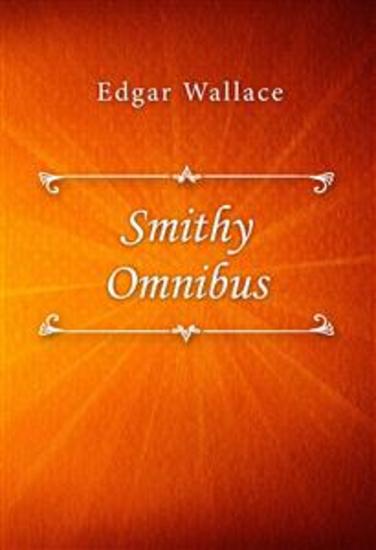
Smithy Omnibus - cover
LER

Smithy Omnibus

Edgar Wallace

Editora: Classica Libris

  • 0
  • 0
  • 0

Sinopse

A collection of ninety-eight stories from everyday life in the British military. Between 1904 and 1918 Edgar Wallace wrote a large number of mostly humorous sketches about life in the British Army relating the escapades and adventures of privates Smith (Smithy), Nobby Clark, Spud Murphy and their comrades-in-arms. Edgar Wallace, who is also famous for his own stories of colonial life – the Sanders stories – was principally a writer of crime and detective fiction. However, he was well aware that the irrepressible spirit of Kipling’s famous rankers would live on, and he wrote his own tales of ordinary British soldiers. Set at a later-end, when first published, contemporary time, and on a different stage, this substantial collection of the Smithy stories finds our incorrigible hero and his scurrilous band of confederates malingering, scheming and conniving their way through life in the British Army before and during the First World War.
Disponível desde: 25/09/2022.

Outros livros que poderiam interessá-lo

  • Italy Dia Kahania - cover

    Italy Dia Kahania

    Maxim Gorky

    • 0
    • 0
    • 0
    Italy Dia Kahania (Stories of Italy) is a collection of vivid short stories by Maxim Gorky that captures the everyday life, struggles, and emotions of ordinary people in Italy. Through rich imagery and detailed observation, Gorky portrays social unrest, human resilience, and the vibrant spirit of communities facing hardship. The stories often focus on laborers, children, and common folk, highlighting their interactions, struggles, and small joys in the backdrop of a dynamic cityscape.
    Ver livro
  • The Selected Works of H P Lovecraft - Cool Air He Herbert West Reanimator Medusa's Coil Shadow Over Innsmouth and The Call of Cthulhu - cover

    The Selected Works of H P...

    H.P. Lovecraft

    • 0
    • 0
    • 0
    Dive into the dark heart of cosmic horror with this definitive collection of stories by H. P. Lovecraft, the master of existential dread and the unknown. Featuring Cool Air, He, Herbert West–Reanimator, Medusa’s Coil, The Shadow Over Innsmouth, and The Call of Cthulhu, this volume showcases Lovecraft at his most unsettling—where forbidden knowledge, ancient entities, and fragile human sanity collide. From decaying New England towns to blasphemous sciences that defy death itself, these tales explore humanity’s insignificance in a vast, indifferent universe. A must-have collection for fans of classic horror, dark fantasy, and timeless speculative fiction, this book brings together some of the most influential stories ever written in the genre.
    Ver livro
  • Forgotten Authors The - Volume 9 - Rina Ramsay to James Stephens - cover

    Forgotten Authors The - Volume 9...

    Rina Ramsay, William Pett Ridge,...

    • 0
    • 0
    • 0
    Throughout the long centuries of human history is the want, and the need, to share information, to exchange ideas and for that knowledge and experience, for curiosity and learning, to be the basis of a civil society. 
    In literature the ambition is much narrower.  In order to be known, to be popular, you had to be published.  And for that people had to know you existed and your ideas worth reading.  Obviously for most of humanity’s time people couldn’t read and texts couldn’t be published in any great number. 
    In the 15th Century Gutenberg’s printing press began the revolution to address the second and by the 19th century had gathered pace with startling speed and mass distribution.  Education for the many was brought in to help people understand more of their world and, with new skills, how to have a better place within it.  Now, if the powers that owned the presses and means of distribution agreed an audience would now be able to avail themselves of your ideas, your printed words.  
    Sadly, in the thirst for the new, the recent and the past fell from sight, relegated to dark corners and dusty shelves.   
    But the printed word is rarely without someone, somewhere busying themselves through piles of papers and books rediscovering what a good story is, whatever its age. 
    Sadly, in the thirst for the new, the recent and the past fell from sight, relegated to dark corners and dusty shelves.    
    But the printed word is rarely without someone, somewhere busying themselves through piles of papers and books rediscovering what a good story is, whatever its age. 
    In this volume we offer up a small selection of those talents whose time has now come again.
    Ver livro
  • Son - From their pens to your ears genius in every story - cover

    Son - From their pens to your...

    Ivan Bunin

    • 0
    • 0
    • 0
    Ivan Alekseyevich Bunin was born on 22nd October 1870 in Voronezh province, in the South-West of the Russian Empire. 
    His early life was plagued by his Father’s gambling habits which caused his education to be erratic and the family to lose most of their wealth. 
    Bunin published his first poem in 1887 in St Petersburg and later in Oryol he worked for the local paper and became its editor, handily allowing him to publish his own poems and short stories.  There he met and married Varvara Pashchenko.  Ivan Bunin's debut book of poetry ‘Poems (1887–1891)’ was published in 1891. 
    This poetry and his translation of Longfellow garnered him his first Pushkin Prize.  Now he switched to writing prose and his novella ‘Antonov Apples’ is regarded as his first masterpiece.  Many more would follow. 
    The October Revolution of 1905 found Bunin in the Crimea.  Scenes of ‘class struggle’ he saw more as the oppressed people's craving for anarchy and destruction. 
    In November 1906 he began a passionate affair with Vera Muromtseva, within a few months they were touring through Egypt and Palestine.  ‘The Bird's Shadow’ collection was the result.   
    His second Pushkin Prize came in 1909 for Poems (1903–1906) and further translations.  He was now elected to the prestigious Russian Academy. 
    More widespread fame came in 1910 with ‘The Village’, a controversial and bleak portrayal of Russian country life.  Travel too beckoned them back to the Middle East, Ceylon (now Sri Lanka) and for winters in Capri with their friend Maxim Gorky.  
    That friendship suddenly ended in April 1917 as the revolution began to ferment in war-ravaged Russia.  After the Bolsheviks took power and the upheavals continued, he decided to leave Russia, finally achieving that in early 1920.  
    It would take some time to heal the wounds and stress he had been under and for his writing to begin again.  Settled in France, Bunin published many of his previous works and collections of novellas.  He also made regular contributions to the Russian emigre press.  
    Although reluctant to become involved in politics, Bunin was now feted as both a writer and the figurehead of non-Bolshevik Russian values and traditions.  In 1933 he became the first Russian to be awarded the Nobel Prize for Literature ‘for following through and developing with chastity and artfulness the traditions of Russian classic prose.’  
    In 1938 Bunin began working on the celebrated cycle of nostalgic, and erotically themed stories known Dark Avenues (or Dark Alleys).  
    As World War II broke out he chose to remain in Grasse spending the war at his remote Villa Jeanette, high in the mountains.  
    Ivan Bunin was a staunch anti-Nazi, and often, under difficult conditions, sheltered fugitives after Vichy was occupied by the Germans.  He wrote but did not publish during these years until on August 23rd the Nazi’s fled Grasse without a fight.  The next day the Americans came.  
    In May 1945 he returned to Paris and, apart from convalescing at times in Juan-les-Pins, he stayed for the rest of his life. 
    After 1948, with his health deteriorating, Bunin concentrated upon writing his memoirs and a book on Chekhov.  His last years were overshadowed by bitterness and despair at the situation in Russia and the treatment of its peoples.  He was suffering now from asthma, bronchitis and chronic pneumonia. 
    Ivan Alekseyevich Bunin died in a Paris attic flat on 8th November 1953.  Heart failure, cardiac asthma and pulmonary sclerosis were given as the causes of death.  He was 83.
    Ver livro
  • The Remnant - cover

    The Remnant

    Channing Whitaker

    • 0
    • 0
    • 0
    With his writing career failing and his publisher thinking of pulling the plug, Gene Winfield is left reeling from a failing passion and his beloved aunt’s passing. 
    But when he discovers an ominous book among his late aunt’s belongings, Gene finally sees his chance. He becomes determined to write about the savage, unearthly creature in its pages – despite the book’s stern warnings. 
    And as he breathes life into the creature through his own pages, he soon realizes that he’s unleashing much more than his imagination… 
    If you like gripping horror novelettes packed with page-turning suspense, then you won’t want to miss the first stand-alone book in the Black Band Shorts Anthology series. Grab your copy now!
    Ver livro
  • Gooseberries - From their pens to your ears genius in every story - cover

    Gooseberries - From their pens...

    Anton Chekhov

    • 0
    • 0
    • 0
    Anton Pavlovich Chekhov was born on 29th January 1860 in Taganrog, on the south coast of Russia.  
    His family life was difficult; his father was strict and over-bearing but his mother was a passionate story-teller, a subject Chekhov warmed to. As he later said; ‘our talents we got from our father, but our soul from our mother’.  
    At school Chekhov was distinctly average. At 16 his father mis-managed his finances and was declared bankrupt. His family fled to Moscow. Chekhov remained and eked out a living by various means, including writing and selling short sketches to newspapers, to finish his schooling. That completed and with a scholarship to Moscow University obtained he rejoined his family. 
    He was able to help support them by selling satirical sketches and vignettes of Russian lifestyles and gradually obtained further commissions. In 1884, he qualified as a physician and, although it earned him little, he often treated the poor for free, he was fond of saying ‘Medicine is my lawful wife, and literature is my mistress.’ 
    His own health was now an issue as he began to cough up blood, a symptom of tuberculosis.  Despite this his writing success enabled him to move the family into more comfortable accommodation.  
    Chekhov wrote over 500 short stories which included many, many classics including ‘The Kiss’ and ‘The Lady with a Dog’.  His collection ‘At Dusk’ won him the coveted Pushkin Prize when was only 26.  
    He was also a major playwright beginning with the huge success of ‘Ivanov’ in 1887.   
    In 1892 Chekhov bought a country estate north of Moscow. Here his medical skills and money helped the peasants tackle outbreaks of cholera and bouts of famine. He also built three schools, a fire station and a clinic.  It left him with less time for writing but the interactions with real people gained him detailed knowledge about the peasantry and their living conditions for his stories.  
    His most famous work, ‘The Seagull’ was received disastrously at its premiere in St Petersburg. It was later restaged in Moscow to highlight its psychological aspects and was a huge success. It led to ‘Uncle Vanya’, ‘The Three Sisters’ and ‘The Cherry Orchard’.  
    Chekhov suffered a major lung hemorrhage in 1897 while visiting Moscow. A formal diagnosis confirmed tuberculosis and the doctors ordered changes to his lifestyle.  
    Despite a dread of weddings the elusive literary bachelor quietly married the actress Olga Knipper, whom he had met at rehearsals for ‘The Seagull’, on 25th May 1901. 
    By May 1904 with his tuberculosis worsening and death imminent he set off for the German town of Badenweiler writing cheerful, witty letters to his family and assuring them his health was improving.  
    On 15th July 1904 Anton Chekhov died at Badenweiler.  He was 44.
    Ver livro