¡Acompáñanos a viajar por el mundo de los libros!
Añadir este libro a la estantería
Grey
Escribe un nuevo comentario Default profile 50px
Grey
Suscríbete para leer el libro completo o lee las primeras páginas gratis.
All characters reduced
Sanders of the River - cover

Sanders of the River

Edgar Wallace

Editorial: Interactive Media

  • 0
  • 0
  • 0

Sinopsis

"Bones: Further Adventures in Mr. Commissioner Sanders' Country" by Edgar Wallace continues the exploits of Commissioner Sanders in colonial Africa. Wallace crafts a thrilling narrative of intrigue, tribal conflicts, and the challenges of maintaining order. As Sanders confronts new adversaries and navigates the complexities of colonial dynamics, the story unfolds with suspense and moral dilemmas. The novel delves into the clash between tradition and progress, offering a vivid portrayal of the commissioner's relentless pursuit of justice in a vibrant and volatile setting.
Disponible desde: 25/11/2023.
Longitud de impresión: 208 páginas.

Otros libros que te pueden interesar

  • When I Was a Witch - From their pens to your ears genius in every story - cover

    When I Was a Witch - From their...

    Charlotte Perkins Gilman

    • 0
    • 0
    • 0
    Charlotte Perkins Gilman was born on 3rd July 1860 in Hartford, Connecticut, to an unaffectionate mother and a father who abandoned her and her older brother to a life of poverty. 
    Inevitably her schooling was limited and by 15 she had attended seven different schools but received only four years education.  However Charlotte was resourceful and did spend time with her father’s aunts – the suffragist Isabella Beecher Hooker and the ‘Uncle Tom Cabin’s’ author, Harriet Beecher Stowe as well as many hours at the public library studying ancient civilisations. 
    In 1878, she enrolled in classes at the Rhode Island School of Design where she met Martha Luther and they developed a close relationship until Luther married in 1881. Charlotte was devastated and detested romance and love until she met and married the artist Charles Walter Stetson.  
    Their only child, Katharine Beecher Stetson, was born in 1885 but left Charlotte with post-natal depression, then often dismissed as a case of hysteria or nerves.  Unsuited to domestic life she ruptured her life and moved to California with Katherine.  She divorced in 1894 and then sent Katharine east to live with her father and his second wife confirming that his paternal rights be acknowledged and that Katherine establish a relationship with her father. 
    After her mother died in 1893, Charlotte moved back east and became involved with her first cousin, Wall Street attorney, Houghton Gilman who she married in 1900. After his death she moved back to California, where Katherine now lived.   
    Her most popular story is ‘The Yellow Wallpaper’ which touched on her own post-partum depression and underlined the need for women to be responsible for their mental and physical well-being, as the narrator is ordered by her husband/doctor to take compete rest in her room where she is isolated and becomes obsessed with the revolting yellow wallpaper.   
    She wrote other notable short stories the best of which we also include.   
    Charlotte lectured widely for social reform, wrote important non-fiction works that questioned our patriarchal system and left a legacy as a leading and positive spokesperson for feminism.  
    She was diagnosed with incurable breast cancer in 1932 and, as she wrote in her suicide note and autobiography, she ‘chose chloroform over cancer’    
    Charlotte Perkins Gilman took her own life on 17th August 1935, aged 75, in Pasadena, California.
    Ver libro
  • Comrade Bingo - cover

    Comrade Bingo

    P. G. Wodehouse

    • 0
    • 0
    • 0
    Some men dream of changing society. Others simply hope to survive luncheon without disgrace.
    In Comrade Bingo, P. G. Wodehouse unleashes another round of romantic confusion, social acrobatics, and impeccably polished nonsense. Bertie Wooster finds himself observing a world in which revolutionary ideals, aristocratic habits, and spectacularly poor decisions coexist far too comfortably. At the center of it all is Bingo Little — enthusiastic, impressionable, and once again dangerously in love. As political fervor collides with drawing-room etiquette, disguises become necessary, loyalties become flexible, and even the most respectable gathering threatens to dissolve into chaos.
    Effortlessly witty and irresistibly light-footed, this is a masterclass in comic precision and the particular kind of disaster that only English gentlemen can create with complete sincerity.
    Ver libro
  • The Tree - cover

    The Tree

    H. P. Lovecraft

    • 0
    • 0
    • 0
    Unlike many of Lovecraft’s stories, this story takes place in Greece, and more importantly on a mountain that was supposedly watched over by Pan. Kalos and Musides, two friends, live here and when Kalos falls ill and dies, Musides decides to use his sculpting powers to use. He erects a great monument to Kalos over his tomb, but an oak tree decides to overtake it, shaping into what looks like a deformed and monstrous human figure. Musides’ fears about the tree sapping the vital force from his friend’s grave are finally struct down by lightning – and with it the whole monument.  
    Ver libro
  • No More Parades - cover

    No More Parades

    Madox Ford

    • 0
    • 0
    • 0
    There are not many English novels which deserve to be called great: Parade's End is one of them. — W. H. Auden  
    No More Parades is the second of four in Ford Madox Ford's Parade's End tetralogy, a work that Ford hoped would contribute to the obviating of all future wars. The novel follows Christopher Tietjens, a wealthy British landowner and the last British Tory; his unfaithful wife, Sylvia; and his mistress, Valentine Wannop. Highlighting the tension between traditional values and the new reality of a world marred by war, the novel details Tietjens' turmoils in both his personal life and on the warfront—and what follows when those struggles become one and the same.  
    The Parade's End tetralogy privileges not the conflict of World War I itself, but the impact the war had on its participants and upon society writ large. It is often referred to as one of the greatest 20th century novels, and one of the best depictions of war in literature. The 2012 television adaptation, written by Tom Stoppard and starring Benedict Cumberbatch and Rebecca Hall, was nominated for two Primetime Emmy Awards and seven BAFTA Television Awards.
    Ver libro
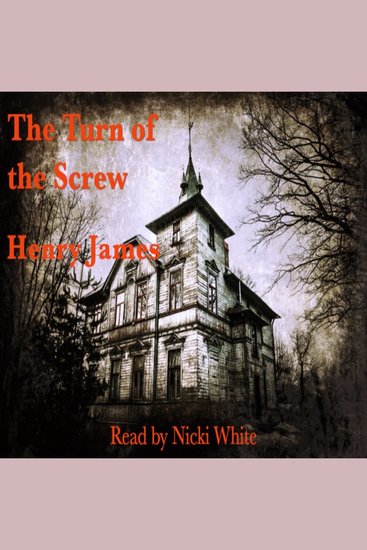
  • The Turn of the Screw - cover

    The Turn of the Screw

    Henry James

    • 0
    • 0
    • 0
    Henry James' chilling gothic horror novella read by Nicki White reprising her role as the governess.
    Ver libro
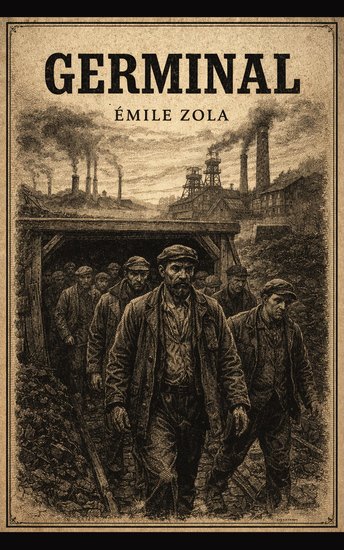
  • Germinal - cover

    Germinal

    Émile Zola

    • 0
    • 0
    • 0
    Émile Zola's Germinal is a powerful and unflinching portrayal of working-class struggle, social injustice, and the relentless fight for dignity. Widely regarded as one of the greatest novels of the nineteenth century, this masterpiece of literary naturalism immerses readers in the harsh realities of coal miners in northern France and delivers a searing critique of industrial capitalism.
    
    The story follows Étienne Lantier, a young, unemployed mechanic who arrives in a mining town seeking work and survival. He soon finds employment in the coal pits, where he witnesses firsthand the brutal conditions endured by the miners—grueling labor, meager wages, hunger, and constant danger beneath the earth. Entire families toil in darkness, their lives dictated by the demands of powerful mine owners who profit from their suffering.
    
    As Étienne becomes increasingly aware of the systemic exploitation around him, he begins to embrace revolutionary ideas and dreams of collective resistance. His growing involvement in the workers' movement sparks tension within the community and sets the stage for a dramatic and devastating strike. Zola masterfully depicts the rising anger, desperation, and hope of the miners as they confront starvation, repression, and betrayal.
    
    With meticulous realism and emotional intensity, Germinal explores themes of class conflict, solidarity, poverty, and human resilience. Zola does not shy away from the physical and psychological toll of industrial labor; his vivid descriptions of the mines create an atmosphere that is both suffocating and unforgettable. Yet amid the darkness, he also reveals moments of tenderness, courage, and shared humanity.
    
    The novel's title—referring to a spring month in the French Revolutionary calendar—symbolizes rebirth and renewal. Even in the wake of tragedy, Zola suggests that the seeds of change have been planted. The struggle for justice may be painful and incomplete, but it carries the promise of future transformation.
    
    Both a gripping narrative and a profound social document, Germinal remains strikingly relevant today. It is a timeless exploration of inequality and the enduring human desire for fairness and hope in the face of oppression.
    Ver libro