¡Acompáñanos a viajar por el mundo de los libros!
Añadir este libro a la estantería
Grey
Escribe un nuevo comentario Default profile 50px
Grey
Suscríbete para leer el libro completo o lee las primeras páginas gratis.
All characters reduced
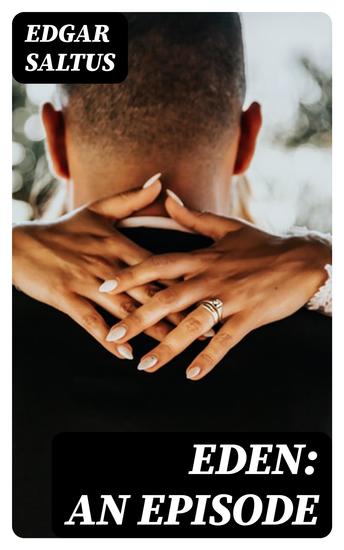
Eden: An Episode - cover

Eden: An Episode

Edgar Saltus

Editorial: DigiCat

  • 0
  • 0
  • 0

Sinopsis

Edgar Saltus's "Eden: An Episode" is a richly layered exploration of human desire and existential conflict, framed within a philosophical narrative that delves into the complexities of love, identity, and creation. Through a distinctive prose style characterized by lyrical beauty and incisive wit, Saltus weaves a meditative tale that subverts traditional notions of paradise. The text is deeply embedded in the literary context of the late 19th century, reflecting the era's preoccupations with Darwinism, moral ambiguity, and the metaphysical undercurrents of life, as Saltus reinterprets the myth of Eden to portray an intricate allegory of humanity's eternal search for meaning and fulfillment. Edgar Saltus, an esteemed yet often overlooked literary figure, was greatly influenced by the tumultuous societal shifts of his time, including the rise of modernism and the philosophical inquiries of existentialism. His varied career spans journalism, literature, and philosophical writing, leading him to articulate profound thoughts on the human condition, often illustrated by vivid imagery and symbolic narratives. This intellectual background offers a lens through which readers can appreciate the depth and nuance of "Eden: An Episode," as Saltus's personal and literary experiences converge to create a thought-provoking text. I highly recommend "Eden: An Episode" to any reader seeking an engrossing and philosophical narrative that challenges conventional paradigms of happiness and existence. Through Saltus's vivid storytelling and keen observations, readers are invited to reflect on their own beliefs and desires, making this work a timeless piece that resonates across generations.
Disponible desde: 16/09/2022.
Longitud de impresión: 94 páginas.

Otros libros que te pueden interesar

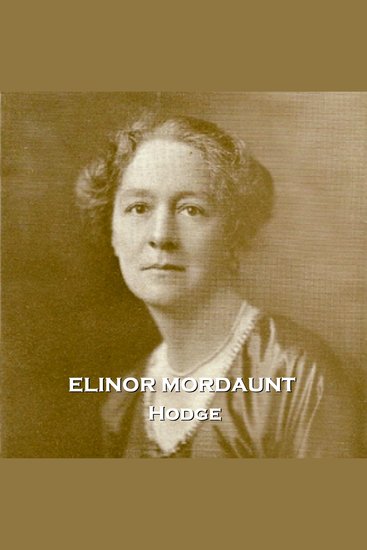
  • Hodge - From their pens to your ears genius in every story - cover

    Hodge - From their pens to your...

    Elinor Mordaunt

    • 0
    • 0
    • 0
    Evelyn May Clowes was born on 7th May 1872 in Cotgrave, Nottinghamshire.  
    Growing up in genteel circumstances, her early childhood was spent at Charlton Down House near Cheltenham, Gloucestershire, and her teenage years near Heythrop in the Cotswolds.  
    She was educated at home by governesses, excelling at German, Latin, Greek, shorthand, landscape painting, and fabric and wallpaper design. 
    In 1897 she went to Mauritius as companion to her cousin Caroline and in 1898 married Maurice Wilhemn Wiehe, the owner of a sugar plantation. She gave birth to two stillborn children. After a few years of marriage, she found life difficult and returned to England. Shortly afterwards she went by herself to Australia, arriving in June 1902 and gave birth to a son a few months later.   
    She lived in Melbourne for about eight years.  To earn a living she took on a wide and varied range of jobs; she edited a woman's fashion paper, wrote short stories and articles, made blouses, designed embroideries, tilled gardens, acted as a housekeeper, and did other artistic work. Her health was not strong, but she undertook any kind of work which would provide a living for herself and her infant son. This gained her an experience of life which was readily put to use in her literary works. 
    Her first book, ‘The Garden of Contentment’, was published in 1902 under her pen-name Elinor Mordaunt. It was the first of many works that covered fiction, short stories, travel and autobiography. 
    She changed her name by deed poll to Evelyn May Mordaunt on 1st July 1915 and gained a further reputation as a writer of short stories for magazines which display both her humour and sense of tragedy. Travel was always high on her priority and the experiences used not only for pleasure but in her writings and, as travel books, ideas in themselves.  
    On 27th January 1933 at Tenerife, in the Canary Islands, she married a retired barrister from Gloucestershire. In her own words, the marriage ‘ended in tragedy.’ 
    Elinor Mordaunt died on 25th June 1942 at the Radcliffe Infirmary, Oxford. She was 70.
    Ver libro
  • All Quiet on the Western Front - cover

    All Quiet on the Western Front

    Erich Maria Remarque

    • 0
    • 0
    • 0
    This audiobook is narrated by an AI Voice.   
    All Quiet on the Western Front by Erich Maria Remarque is presented in this unabridged audiobook as a stark, intimate portrait of a young German soldier on the Western Front in World War I. Through the voice of Paul Bäumer, listeners experience the mud, fear, comradeship, and emotional numbness of trench warfare, as patriotic ideals collapse under the reality of shellfire, gas, and constant loss. This deeply human, anti-war classic is ideal for listeners who want a powerful, immersive narrative that explores trauma, disillusionment, and the destruction of a generation.
    Ver libro
  • The Book of Dragons - cover

    The Book of Dragons

    Edith Nesbit

    • 0
    • 0
    • 0
    "The Book of Dragons" by Edith Nesbit is a delightful collection of whimsical tales where magic and mischief collide. From mischievous dragonets causing chaos to a magic carpet with a mind of its own, Nesbit weaves enchanting stories that captivate the imagination. Each tale explores the unexpected consequences of magical encounters, offering a blend of humor, fantasy, and moral lessons in this timeless collection.
    Ver libro
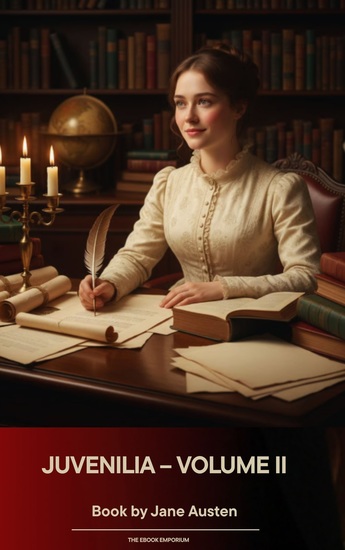
  • Juvenilia – Volume II - cover

    Juvenilia – Volume II

    Jane Austen

    • 0
    • 0
    • 0
    "Run mad as often as you choose; but do not faint!"
    
    If Volume I was the spark, Juvenilia – Volume II is the fire. In this volume, a mid-teen Jane Austen takes aim at the "cult of sensibility" that dominated the novels of her day. The centerpiece, "Love and Freindship" (spelled intentionally with Austen's original flourish), is a brilliant epistolary parody featuring heroines who faint on every sofa they encounter and wander the countryside in a state of perpetual, melodramatic "distraction." This volume also features her iconic "History of England," where she gleefully abandons historical accuracy to defend Mary, Queen of Scots, and mock the "vile" Elizabeth I. It is a collection that proves Austen was a master of irony before she was even twenty.
    
    The Masterpiece of Parody: Love and Freindship: Through a series of letters, Austen deconstructs the romantic tropes of the era. Her characters, Laura and Sophia, believe that "feeling" is more important than "common sense," leading to a series of absurd adventures involving stolen money, secret marriages, and dying of a "chill" caught while fainting in the dew.
    
    The Bias of a Historian: In The History of England, Austen mocks the dry, "objective" historians of her time. Writing as a "partial, prejudiced, and ignorant historian," she proves that history is often just a matter of who you like and who you don't—a biting critique of how narratives are constructed that still feels modern today.
    
    A Developing Genius: From the unfinished "Lesley Castle" to the sharp "Collection of Letters," this volume shows Austen experimenting with different voices and structures. You can see the DNA of Northanger Abbey and Sense and Sensibility being formed in these rowdy, rebellious pages.
    
    Join the fun at the Austen family table. Purchase "Juvenilia – Volume II" today.
    Ver libro
  • Hunchback of Notre-Dame The (Book 10) - cover

    Hunchback of Notre-Dame The...

    Victor Hugo

    • 0
    • 0
    • 0
    Book 10: The Hunchback of Notre-Dame or Notre-Dame de Paris is a French Gothic novel by Victor Hugo, published in 1831. - The story is set in Paris in 1482 during the reign of Louis XI. The gypsy Esmeralda (born as Agnes) captures the hearts of many men, including those of Captain Phoebus and Pierre Gringoire, but especially Quasimodo and his guardian Archdeacon Claude Frollo. Frollo is torn between his obsessive lust for Esmeralda and the rules of Notre Dame Cathedral. He orders Quasimodo to kidnap her, but Quasimodo is captured by Phoebus and his guards, who save Esmeralda. Gringoire, who attempted to help Esmeralda but was knocked out by Quasimodo, is about to be hanged by beggars when Esmeralda saves him by agreeing to marry him for four years.
    Ver libro
  • Jamathagni - cover

    Jamathagni

    La Sa Ra

    • 0
    • 0
    • 0
    One more story that will take you on an emotional roller coaster. 
    Second in the Panchabhootha series - Anjali : Jamathagni (Fire)
    Ver libro