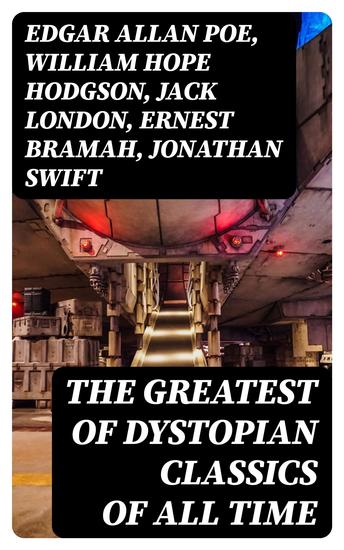
The Greatest of Dystopian Classics of All Time
Edgar Allan Poe, Jonathan Swift, Anthony Trollope, Ignatius Donnelly, Edward Bellamy, William Dean Howells, William Hope Hodgson, Richard Jefferies, Mary Shelley, Ayn Rand, E. M. Forster, Edwin A. Abbott, George Griffith, H. G. Wells, Ernest Bramah, Edward Bulwer-Lytton, Fred M. White, Philip Francis Nowlan, Fritz Leiber, Cleveland Moffett, Irving E. Cox, Arthur Dudley Vinton, Jack London, Owen Gregory, Hugh Benson, Milo Hastings, Richard Stockham, Gertrude Barrows Bennett, Rokeya Sakhawat Hossain, Samuel Butler
Editora: DigiCat
Sinopse
The anthology 'The Greatest of Dystopian Classics of All Time' navigates the shadowy realms of human imagination through a striking collection of dystopian literature. It traverses time, from Mary Shelley's prescient forebodings to the philosophical quandaries posed by E.M. Forster and the allegorical dimensions woven by Jonathan Swift. This collection encompasses a myriad of styles, from the prophetic to the satirical, each shedding light on societal structures and individual agency. Distinct narratives engage with prevailing anxieties about technological advancement, moral decay, and socio-political upheaval, offering readers a venue to ponder the complexities of humanity itself. Contributing authors span the literary landscape, united by their stark portrayals of potential futures that extend beyond the conventional confines of their periods. Writers such as H.G. Wells, Edgar Allan Poe, and Ayn Rand craft speculative narratives that question the repercussions of socio-economic disparities and the ethical dilemmas inherent in technological progress. The anthology pays homage to diverse literary traditions and movements, including Romanticism's probing of human nature and realism's dialogue with industrial society, enhancing the book's thematic richness. This anthology invites readers to explore a confluence of prophetic voices and diverse literary crafts. It's an essential compendium for those seeking to understand the cultural and philosophical underpinnings of dystopian narratives across history. A unique intellectual journey within these pages awaits, challenging assumptions while providing multifaceted perspectives on the enduring appeal and relevance of dystopian fiction. The work is not only an engaging literary expedition but also a profound educational tool facilitating dialogue between past contemplations and contemporary concerns.
Disponível desde: 11/10/2022.
Comprimento de impressão: 6620 páginas.