¡Acompáñanos a viajar por el mundo de los libros!
Añadir este libro a la estantería
Grey
Escribe un nuevo comentario Default profile 50px
Grey
Suscríbete para leer el libro completo o lee las primeras páginas gratis.
All characters reduced
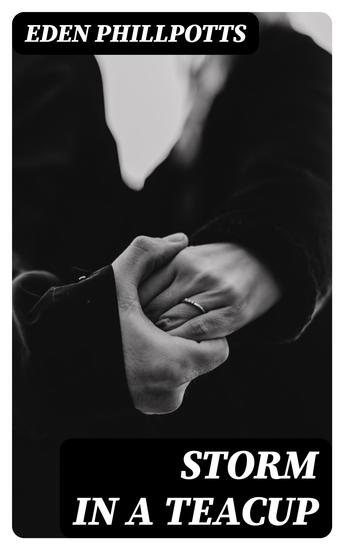
Storm in a Teacup - cover

Storm in a Teacup

Eden Phillpotts

Editorial: DigiCat

  • 0
  • 0
  • 0

Sinopsis

Eden Phillpotts' "Storm in a Teacup" masterfully explores the intricate dynamics of human relationships set against the backdrop of a small English village. This novel, rich in regional dialect and vivid descriptions, navigates the whimsical yet poignant realm of domestic life, depicting the tensions and joys of community interactions. With humor and astute observations, Phillpotts presents a tapestry of characters whose everyday struggles resonate deeply with readers, addressing themes of love, rivalry, and the capriciousness of fate. The literary style exhibits a keen eye for detail, evoking both charm and a sense of urgency throughout the narrative. Eden Phillpotts, an influential figure in early 20th-century literature, was deeply rooted in the landscapes and cultures of Devon, which heavily inform his work. His extensive writing career, encompassing novels, plays, and poetry, reflects a profound engagement with natural beauty and social intricacies. This novel, written during a time of social transition in England, showcases his ability to portray the complexities of human emotion while reflecting on the broader societal changes of his time. Readers interested in nuanced character studies and a rich sense of place will find "Storm in a Teacup" both enchanting and enlightening. Phillpotts' wit and wisdom offer a delightful lens through which to examine the human condition, making it a recommended read for anyone with a penchant for classic literature infused with humor and depth.
Disponible desde: 15/08/2022.
Longitud de impresión: 233 páginas.
Otros libros que te pueden interesar

  • The Vampyre - cover

    The Vampyre

    John William Polidori

    • 0
    • 0
    • 0
    Noted as one of the first pieces of literature to feature vampirism effectively, The Vampyre follows the adventures of a wealthy young man named Aubrey who befriends a mysterious, suave nobleman named Lord Ruthven. As Aubrey begins to realize just how dangerous Lord Ruthven is, he discovers that his beloved sister is in the monster's sights. A product of a competition that also produced Mary Shelley's Frankenstein, this classic gothic novella became the foundation of the romantic vampire genre.
    Ver libro
  • The Valley of Fear - cover

    The Valley of Fear

    Arthur Conan Doyle

    • 0
    • 0
    • 0
    The Valley of Fear is the fourth and final Sherlock Holmes novel by Sir Arthur Conan Doyle. It is loosely based on the Molly Maguires and Pinkerton agent James McParland. The story was first published in the Strand Magazine between September 1914 and May 1915. The novel starts with Sherlock Holmes receiving a cipher message from Fred Porlock, a pseudonymous agent of Professor Moriarty. After Porlock sends the message, however, he changes his mind for fear of Moriarty's discovering that he is a traitor. He decides not to send the key to the cipher, but he sends Holmes a note telling of this decision. From the cipher message and the second note, Holmes is able to deduce that it is a book cipher and that the book used for the encryption is a common book, large (with at least 534 pages), printed in two columns per page, and standardised. An almanac fits these conditions exactly. Holmes tries the latest edition of Whitaker's Almanac, which he had only received a few days earlier, and fails; he then tries the previous edition. With this almanac, Holmes is able to decipher the message as a warning that "some devilry is intended against one "Douglas", a country gentleman residing at Birlstone House.Unlike many of the other Holmes novels, mostly linear entertainments, Doyle crafted The Valley of Fear as "two parts and a coda and carefully stage managed the elements of fear and terror".Famous works of the author Arthur Conan Doyle: A Study in Scarlet, The Sign of the Four, The Adventures of Sherlock Holmes, The Memoirs of Sherlock Holmes, The Hound of the Baskervilles, The Return of Sherlock Holmes, The Valley of Fear, His Last Bow, The Case-Book of Sherlock Holmes, Stories of Sherlock Holmes, The Lost World.
    Ver libro
  • Meet Mr Mulliner - cover

    Meet Mr Mulliner

    P. G. Wodehouse

    • 0
    • 0
    • 0
    In Mr Mulliner, P.G Wodehouse (1881 -1975) has created a conduit for all manner of tall tales. The amiable gentleman happily regales the drinkers in the Angler’s Rest Pub with fascinating stories, usually about his own relatives, which range from the somewhat dubious, to the downright unbelievable.  
    Welcome to this eccentric world inhabited by Curates and Bishops high on health tonic, and a lovesick chap who utilises beauty remedies to win his love. A world where a deceased author’s cottage appears to exert a sentimental influence on all who enter, and where an earthquake can lead to marriage. 
      
    Wodehouse’s most famous creations the implacable “Jeeves” and the archetypal English toff “Bertie Wooster” are only the tip of the author’s considerable output. A master of humorous prose, he published over ninety books, forty plays and two hundred short stories.  
    Head Stories presents " Meet Mr Mulliner" - narrated by Simon Hester
    Ver libro
  • The Haunted Man and the Ghost's Bargain - cover

    The Haunted Man and the Ghost's...

    Charles Dickens

    • 0
    • 0
    • 0
    The Haunted Man and the Ghost's Bargain, A Fancy for Christmas-Time (better known as The Haunted Man and the Ghost's Bargain is a novella by Charles Dickens first published in 1848. It is the fifth and last of Dickens's Christmas novellas. The story is more about the spirit of Christmas than about the holiday itself, harking back to the first in the series, A Christmas Carol. Charles John Huffam Dickens FRSA was an English writer and social critic. He created some of the world's best-known fictional characters and is regarded by many as the greatest novelist of the Victorian era.
    Ver libro
  • A Dialogue Among Clever People - From their pens to your ears genius in every story - cover

    A Dialogue Among Clever People -...

    Leo Tolstoy

    • 0
    • 0
    • 0
    Leo Tolstoy was born in 1828 in the Russian province of Tula to a wealthy noble family. As a child, he had private tutors but he showed little interest in any formal education. When he went to the University of Kazan in 1843 to study oriental languages and law, he left without completing his courses.  Life now was relaxed and idle but with some writing also taking place.  Gambling debts forced an abrupt change of path and he joined the army to fight in the Crimean War.  He was commended for his bravery and promoted but was appalled at the brutality and loss of life.  He recorded these and other earlier experiences in his diaries which formed the basis of several of his works. 
    In 1852 ‘Childhood’ was published to immediate success and was followed by ‘Boyhood’ and ‘Youth’. 
    His experience in the army and the horrors he witnessed resulted in ‘The Cossacks’ in 1862 and the trilogy ‘Sevastopol Tales’. After the war he travelled around Europe, visiting London and Paris and meeting such luminaries as Victor Hugo and Charles Darwin.  
    It was now that Tolstoy began his masterpiece, ‘War and Peace’. Published in 1869 it was an epic work that changed literature. He quickly followed this with ‘Anna Karenina’.  
    These successes made Tolstoy rich and helped him accomplish many of his dreams but also brought problems as he grappled with his faith and the lot of the oppressed poor. These revolutionary views became so popular that the authorities now kept him under surveillance.  
    He led a life of asceticism and vegetarianism and put his socialist ideals into practice by establishing numerous schools for the poor and food programmes. He also believed in giving away his wealth, which caused much discord with his wife.  
    His writing continued to bring forth classics such as ‘The Death of Ivan Ilyich’ and many brilliant and incisive short stories such as ‘How Much Land Does A Man Need’.  
    In 1901 Tolstoy was excommunicated from the Church and controversially deselected for the Nobel Prize for Literature. 
    Whilst undertaking a pilgrimage by train in October 1910 with his daughter Aleksandra he caught pneumonia in the nearby town of Astapovo.  Leo Tolstoy died on November 9th, 1910, he was 82.
    Ver libro
  • At the Villa Rose - cover

    At the Villa Rose

    Edward Woodley Mason

    • 0
    • 0
    • 0
    ""At the Villa Rose" is a captivating detective novel written by the British author A. E. W. Mason in 1910. It marks the debut of his character, Inspector Hanaud. The story unfolds against the backdrop of Aix-les-Bains, a picturesque French town.    Here's a glimpse into the intriguing plot:    The Crime: A wealthy widow named Mme Dauvray is found murdered at the Villa Rose. Her valuable jewels have vanished, and her maid, Hélène Vauquier, lies unconscious, chloroformed, and bound.  The Suspects: Suspicion falls on Mme Dauvray's young English companion, Celia Harland, who has mysteriously disappeared. Celia is in love with a fellow Englishman, Harry Wethermill, who pleads with Inspector Hanaud to prove her innocence.  Spiritualism and Deception: Mme Dauvray was fascinated by spiritualism, and Celia's role included staging séances for her. But beneath the veneer of mediumship lies trickery.  The Cunning Criminal: Enter Adèle Tacé, a seasoned criminal who arrives in Aix with the intent to steal Mme Dauvray's jewels. She goads the widow into holding a séance, where Celia is expected to perform while bound hand and foot.  The Unexpected Twist: Celia becomes a prisoner during the séance, and her life takes a dark turn. The true identity of the murderer remains shrouded in mystery.  Abduction and Pursuit: Celia is abducted and taken to Geneva, kept alive only to reveal the hidden location of the stolen jewels.  The Unraveling: As the investigation unfolds, Inspector Hanaud navigates deception, love, and betrayal to unmask the killer.  "At the Villa Rose" weaves together elements of suspense, illusion, and human frailty, making it a compelling read. The novel's success led to adaptations as a stage play and several films."
    Ver libro