Junte-se a nós em uma viagem ao mundo dos livros!
Adicionar este livro à prateleira
Grey
Deixe um novo comentário Default profile 50px
Grey
Assine para ler o livro completo ou leia as primeiras páginas de graça!
All characters reduced
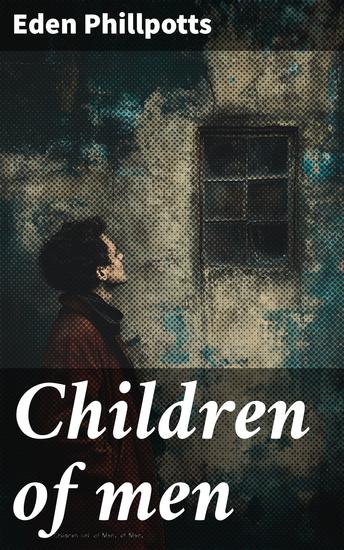
Children of men - cover
LER

Children of men

Eden Phillpotts

Editora: Good Press

  • 0
  • 0
  • 0

Sinopse

In "Children of Men," Eden Phillpotts weaves a rich tapestry of narrative that delves into the intricate dynamics of human relationships and societal decay. Set against the backdrop of early 20th-century England, the novel employs a lyrical prose style distinctively marked by Phillpotts' evocative descriptions and psychological insights. The story follows a deteriorating world plagued by the existential crisis of infertility, exploring the implications of a humanity teetering on the brink of extinction, while examining themes of hope, despair, and the value of legacy within a fractured society. Eden Phillpotts was a multifaceted author, playwright, and poet, whose experiences in Devonshire and a keen interest in nature profoundly influenced his writing. Known for his deep understanding of human behavior and interactions, Phillpotts often addressed societal issues and personal conflicts. His literary endeavors reflect a commitment to exploring complex moral landscapes; this resonance is particularly evident in "Children of Men," which continues to provoke critical thought about the consequences of societal disconnection. This book is highly recommended for readers interested in thought-provoking literature that challenges social norms and human relationships. Phillpotts' masterful storytelling invites the reader to reflect on the fundamental questions of existence, making it a compelling read not just for enthusiasts of early 20th-century literature, but for anyone seeking to understand the intricate tapestry of human life.
Disponível desde: 02/03/2025.
Comprimento de impressão: 200 páginas.
Outros livros que poderiam interessá-lo

  • Dubliners - cover

    Dubliners

    James Joyce

    • 0
    • 0
    • 0
    "I gazed up into the darkness and saw myself as a creature driven and derided by vanity."
    
    James Joyce's Dubliners offers an unflinching look at the lives of ordinary citizens in a city caught between a glorious past and an uncertain future. From the innocent longings of a young boy in "Araby" to the devastating domestic realizations in "The Dead," these stories capture moments of profound personal "epiphany"—sudden flashes of spiritual or psychological clarity. Joyce meticulously maps the streets, pubs, and parlors of Dublin, revealing the quiet tragedies and hidden desires of its inhabitants as they struggle against the "paralysis" of religion, poverty, and tradition.
    
    The Four Stages of Life: Joyce structured the collection to mirror the progression of a human life, moving from the innocence of childhood to the complexities of public life.
    
    Childhood: Stories like "The Sisters" and "An Encounter" explore the first brushes with death and mystery.
    
    Adolescence: "Araby" and "Eveline" capture the painful transition into adulthood and the weight of family duty.
    
    Maturity: "A Little Cloud" and "Counterparts" examine the frustrations of marriage and career.
    
    Public Life: "Ivy Day in the Committee Room" and "The Dead" look at politics, social status, and the ghosts of Irish history.
    
    The Masterpiece: "The Dead": The collection culminates in "The Dead," widely regarded as one of the finest short stories ever written. As Gabriel Conroy attends a holiday party, a simple song triggers a revelation about his wife's past and his own insignificance. The story's final, haunting image of snow falling "faintly through the universe" remains one of the most celebrated passages in literature.
    
    Discover the soul of a city. Purchase "Dubliners" today and experience the birth of modern literature.
    Ver livro
  • First and Last Things - Book 2: Of Beliefs (Unabridged) - cover

    First and Last Things - Book 2:...

    H. G. Wells

    • 0
    • 0
    • 0
    Herbert George "H. G." Wells (1866 - 1946) was an English writer.
    He was prolific in many genres, including the novel, history, politics, social commentary, and textbooks and rules for war games. Wells is now best remembered for his science fiction novels and is called a "father of science fiction"
    BOOK 2: OF BELIEFS: And now having stated my conception of the true relationship between our thoughts and words to facts, having distinguished between the more accurate and frequently verified propositions of science and the more arbitrary and infrequently verified propositions of belief, and made clear the spontaneous and artistic quality that inheres in all our moral and religious generalizations, I may hope to go on to my confession of faith with less misunderstanding.
    Ver livro
  • The Moon Pool - cover

    The Moon Pool

    A. Merritt

    • 0
    • 0
    • 0
    A. Merritt’s landmark classic of lost world fiction. The tome that influenced H.P. Lovecraft’s Call of Cthulhu.   Two princesses, one of temptation, power, and naked deceit; one of mercy, trust, and blind truth. Both bound to serve supernatural beings unto death.   Both in love with the same man.   What do you get when you combine the action of Conan the Barbarian and the lyrical vision of The Martian Chronicles?   The Mool Pool recounts the story of a group of adventurers who stumble through a portal into a lost, underground world. A world of incredible science and sublime magic. A world on the brink of war.   The adventurers tip it over the edge.   Can they save themselves?   Can they save the world?   One of the first stories of its kind, A. Merritt’s The Moon Pool will dazzle you until the final page.
    Ver livro
  • Ineligible - A Simon Iff Occult Detective Story - cover

    Ineligible - A Simon Iff Occult...

    Aleister Crowley

    • 0
    • 0
    • 0
    Edward Alexander Crowley was born on 12th October 1875 to wealthy parents in Royal Leamington Spa in Warwickshire. 
     
    He was educated at Malvern College, Tonbridge School, Eastbourne College and finally Trinity College, Cambridge where he focused on his passions of mountaineering and poetry and published several volumes. 
     
    Life for Crowley was to abandon his parents’ Christian faith and instead to inject himself into Western esotericism.  In 1898, he joined the esoteric Hermetic Order of the Golden Dawn and was trained in ceremonial magic before studying both Hindu and Buddhist practices in India. 
     
    On his Egyptian honeymoon in 1904 he claimed contact with an entity―Aiwass―who gave him the sacred Book of the Law which served as the basis for the Thelema religion where he identified as its prophet.  During the Great War, which he spent in the United States, he claimed to be working for British Intelligence but by the 1920s he had decamped to pursue a libertine lifestyle in Sicily, and in the ensuing scandals was evicted by the Italian Government. 
     
    He divided the following two decades between France, Germany, and England, and the continuing promotion of Thelema. 
     
    During his life he gained widespread notoriety for his drug use, his bisexuality, and his alarming views on society.  In short, polite society frowned on his ways, his thoughts and his influence but to many others his stance had much of value.  Even after death he was a darling for the 60’s counterculture but his influence has since waned.   
     
    His literary works were both prolific and covered many topics.  In the early part of his career he published many poetry books, even plays, before his darker and more forceful works came to dominate his output. 
     
    Aleister Crowley died on 1st December 1947 at Hastings in England. He was 72.
    Ver livro
  • Adeline Mowbray - cover

    Adeline Mowbray

    Amelia Opie

    • 0
    • 0
    • 0
    "Adeline Mowbray, or, The Mother and Daughter, is a novel by Amelia Opie that was published in 1804. The experiences of the heroine, Adeline, are loosely based on the unconventional life of Mary Wollstonecraft, an acquaintance of Opie. In the novel, Opie explores what might happen when a woman's idealistic philosophical beliefs conflict with society's notions about female sexuality.    The philosophically minded Adeline decides that marriage is an outmoded institution. She refuses marriage to Frederic Glenmurray (modeled on William Godwin) and instead chooses to live with him as his sexual equal. Although Adeline is honorable, clever, and honest, she faces social condemnation. She is disowned by her mother and respectable friends and harassed by men who assume she is sexually available. After Glenmurray dies, Adeline seeks protection by marrying the abusive Mr. Berrendale, who ultimately abandons her and their daughter, Editha. At the end of the novel, the ill Adeline is finally reunited with her mother. Adeline repents having transgressed society's expectations of women and, before she dies, leaves instructions on how Editha is to be educated."
    Ver livro
  • Tess of the D'Urbevilles - cover

    Tess of the D'Urbevilles

    Thomas Hardy

    • 0
    • 0
    • 0
    When Tess Durbeyfield is driven by family poverty to claim kinship with the wealthy D'Urbervilles and seek a portion of their family fortune, meeting her 'cousin' Alec proves to be her downfall.
    
    A very different man, Angel Clare, seems to offer her love and salvation, but Tess must choose whether to reveal her past or remain silent in the hope of a peaceful future.
    Ver livro