¡Acompáñanos a viajar por el mundo de los libros!
Añadir este libro a la estantería
Grey
Escribe un nuevo comentario Default profile 50px
Grey
Suscríbete para leer el libro completo o lee las primeras páginas gratis.
All characters reduced
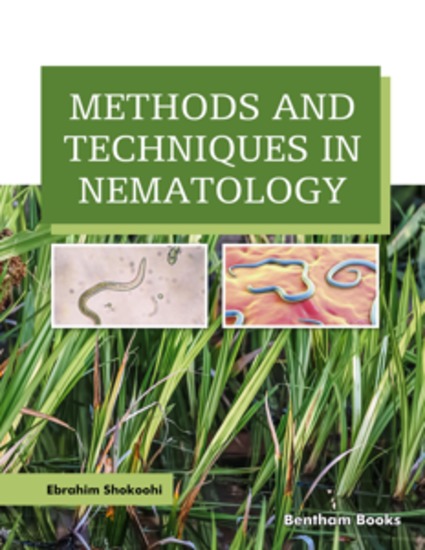
Methods and Techniques in Nematology - cover

Methods and Techniques in Nematology

Ebrahim Shokoohi

Editorial: Bentham Science Publishers.

  • 0
  • 0
  • 0

Sinopsis

Methods and Techniques in Nematology discovers the intricate world of nematodes, a comprehensive guide essential for researchers, academics, and enthusiasts alike. This book addresses the methods crucial for studying these unsegmented roundworms, covering everything from sampling techniques to advanced molecular diagnostics and biodiversity analysis. 
  
Key Features: 
- Detailed sampling methods for diverse habitats. 
- Extraction procedures for soil, root, and entomopathogenic nematodes. 
- Microscopic observation techniques including SEM and DIC. 
- Molecular diagnostic tools such as PCR and RFLP. 
- Introduction to bioinformatics for nematology. 
- Comprehensive biodiversity analysis, both conventional and molecular. 
- Culturing and greenhouse studies for experimental purposes. 
  
Readership: Suitable for students, researchers, industry professionals, and general readers interested in biological sciences and agriculture.
Disponible desde: 11/03/2025.

Otros libros que te pueden interesar

  • Artificial Intelligence: Taking Over - How Will AI and Machine Learning Impact Your Life? - cover

    Artificial Intelligence: Taking...

    James Hendrickson

    • 0
    • 0
    • 0
    Learn Everything You Need to Know About Artificial Intelligence in This Book! 
    Do you want to learn more about Artificial Intelligence and its impact to human society? 
    Are you finding the traditional Artificial Intelligence textbooks difficult to read? 
    “Artificial Intelligence: Taking Over - How Will AI and Machine Learning Impact Your Life?” by James Hendrickson is THE guide you need to start reading right now! 
    As we move in the age of wearable computers, sensory expansion, wireless devices, intelligent environments, thought-controlled prosthetics, and rapid-fire information search and retrieval, the line between the user and her tools grows thinner day by day. 
    “Artificial Intelligence: Taking Over” is a great and impact filled book that presents key Artificial Intelligence (AI) concepts in a simple to read format with examples. 
    This guide focuses mainly on the impact of AI in the knowledge of human life, particularly history, philosophy, challenges and the threats of artificial intelligence to human society. It was written to inspire you to embrace the arrival of AI (especially as it affects human society) as a progressive drive for the enablement of knowledge workers. 
    You Will Learn the Following:The History of Artificial IntelligenceThe Philosophy of Artificial IntelligenceWhat is Artificial Intelligence?Artificial Intelligence versus Machine LearningPractical Uses of AI and Impact on Human LifeChallenges Present in AI ResearchThreats of AI to Human SocietyAnd much more.. 
    Order Now!
    Ver libro
  • Power Cell Secrets - The Corporate Cover-Up in Energy Storage Technology - cover

    Power Cell Secrets - The...

    John Harpoon

    • 0
    • 0
    • 0
    The journey toward modern power cell technology began with a simple, yet profound, question: How could we store energy efficiently for future use? Early efforts to store and harness energy date back to the 19th century, but it wasn't until the 20th century that the foundations for power cells—an essential part of our energy storage systems—were truly laid. 
    In the 1950s, the advent of the first rechargeable batteries marked a critical turning point. While earlier technologies had focused on single-use solutions, the development of rechargeable batteries, such as the nickel-cadmium (NiCd) battery, offered a glimpse into the potential for sustainable energy storage. Scientists, engineers, and inventors sought to solve the problem of storing energy in a way that was both compact and reliable, an issue that had long hampered the efficiency of early electrical systems. 
    The early breakthroughs were just the beginning. As the world began to recognize the importance of renewable energy sources—wind, solar, and hydroelectric power—the need for effective energy storage became even more pressing. Renewable energy production, often intermittent, required reliable methods to store excess energy for times when generation was low. This gave rise to research into more efficient and sustainable battery technologies, pushing the boundaries of what was possible in energy storage.
    Ver libro
  • Maladies of Empire - How Colonialism Slavery and War Transformed Medicine - cover

    Maladies of Empire - How...

    Jim Downs

    • 0
    • 0
    • 0
    Most stories of medical progress come with ready-made heroes. John Snow traced the origins of London's 1854 cholera outbreak to a water pump, leading to the birth of epidemiology. Florence Nightingale's contributions to the care of soldiers in the Crimean War transformed hospitals from crucibles of infection to sanctuaries of recuperation. Yet histories of individual innovators ignore many key sources of medical knowledge. 


    Reexamining the foundations of modern medicine, Jim Downs shows that the study of infectious disease depended crucially on the unrecognized contributions of nonconsenting subjects—conscripted soldiers, enslaved people, and subjects of empire. Plantations, slave ships, and battlefields were the laboratories in which physicians came to understand the spread of disease. Military doctors learned about the importance of air quality by monitoring Africans confined to the bottom of slave ships. Statisticians charted cholera outbreaks by surveilling Muslims in British-dominated territories returning from their annual pilgrimage. 


    The scientific knowledge derived from discarding and exploiting human life is now the basis of our ability to protect humanity from epidemics. Boldly argued and eye-opening, Maladies of Empire gives a full account of the true price of medical progress.
    Ver libro
  • Adjusted Reality - Supercharge Your Whole-Being for Optimal Living and Longevity - cover

    Adjusted Reality - Supercharge...

    Sherry McAllister

    • 0
    • 0
    • 0
    In a world dominated by groupthink echoes of “this is how it's always been done," Adjusted Reality offers a refreshing path to ask “how can we open ourselves up to do better?” through the transformative power of deep reflection and intentional living.
    Ver libro
  • Field Guide to Edible Wild Plants - cover

    Field Guide to Edible Wild Plants

    Bradford Angier

    • 0
    • 0
    • 0
    Revised and updated: The classic illustrated reference for today’s foragers.   With essential information on each plant’s characteristics, distribution, and edibility, as well as updated taxonomy and eighteen new species, this is the second edition of Field Guide to Edible Wild Plants—the practical handbook for finding, preparing, and eating plants growing in the wild.   This guide to North American wild edibles has been a nature classic for over thirty years. Now David K. Foster revises Bradford Angier’s invaluable foraging reference. Scientific information for a general audience and full-color illustrations combine with intriguing accounts of the plants’ uses, making this a practical and informative resource for modern-day foragers.
    Ver libro
  • Loading Screens and Memory Cards - Growing Up Gaming in the 90s and 00s - cover

    Loading Screens and Memory Cards...

    Anónimo

    • 0
    • 0
    • 0
    Loading Screens and Memory Cards is a nostalgic journey through the golden age of gaming — from Christmas mornings spent unwrapping new consoles to late-night sleepovers lit by the glow of CRTs. 
    If you remember blowing on cartridges, swapping cheat codes in the schoolyard, or fighting over who got the “good” controller, this book is for you. 
    Join Flandrew, known for his YouTube channel celebrating classic games, to look back at the consoles, games, and memories that defined a generation — the PlayStation 2 era, the GameCube’s weird charm, the chaos of birthday party split-screen, and the pure joy of discovering new worlds before microtransactions and day-one patches. 
    Funny, heartfelt, and packed with stories any 90s or 00s gamer will relate to, this is a love letter to the days when “please wait…” meant you had a moment to dream.
    Ver libro