¡Acompáñanos a viajar por el mundo de los libros!
Añadir este libro a la estantería
Grey
Escribe un nuevo comentario Default profile 50px
Grey
Suscríbete para leer el libro completo o lee las primeras páginas gratis.
All characters reduced
The History of Ancient Egyptian Literature - cover

The History of Ancient Egyptian Literature

E. A. Wallis Budge

Editorial: DigiCat

  • 0
  • 0
  • 0

Sinopsis

E. A. Wallis Budge's "The History of Ancient Egyptian Literature" is a critical exploration of the rich literary traditions of ancient Egypt, encompassing poetry, religious texts, and wisdom literature. Budge meticulously examines primary texts while employing a comparative literary analysis to elucidate the thematic and stylistic characteristics that define this ancient canon. The work stands out for its extensive references to original hieroglyphic sources, offering readers insight into the historical context, linguistic intricacies, and cultural significance of Egyptian writings, thereby situating the literature not only within its own temporal frame but also within the broader spectrum of world literature. As a distinguished Egyptologist and curator at the British Museum, Budge's expertise in ancient languages and cultures profoundly influenced this work. His immersion in and commitment to the preservation of Egyptian artifacts and writings allowed him to approach the subject with unparalleled authenticity and depth. His career was marked by an insatiable curiosity that drove him to unravel the complexities of a civilization long forgotten yet vital to our understanding of human expression. Readers interested in the intersections of history, literature, and culture will find "The History of Ancient Egyptian Literature" to be an illuminating resource. Budge's scholarly rigor paired with his passion for ancient literature makes this book essential for both students and enthusiasts of Egyptology, as it offers a comprehensive and accessible overview of a captivating and often underappreciated literary legacy.
Disponible desde: 11/10/2022.
Longitud de impresión: 341 páginas.
Otros libros que te pueden interesar

  • God-Given or Bust - Defeating Marxism and Saving America with Biblical Truths - cover

    God-Given or Bust - Defeating...

    Cheryl K. Chumley, Pastor Jack...

    • 0
    • 0
    • 0
    In America, either rights come from God—or they don't. This is the ultimate war, and God-Given or Bust tells how patriots can win. 


    American exceptionalism is rooted in the idea that individual rights come from God and government is only in place to preserve and protect those rights. But America's losing sight of that concept. America's turning into a country where the government grants rights and privileges to only those the government deems worthy—and takes them from those it deems unworthy. This is not how the Founding Fathers envisioned the nation; this is not how the concept of inalienable rights coming from a Creator works. Rather, this is how Marxism, communism, and collectivism spread. 


    If we want a nation that's free for generations to come, then we must reclaim the notion of God-given and ditch the idea of government-granted. The only way to do that is for Americans of faith to rise up and inject biblical values and godly principles into government, culture, and society, and put God once again at the center. It's time to demand the God-given—or the great American experiment will come to an end.
    Ver libro
  • Palace of Deception - Museum Men and the Rise of Scientific Racism - cover

    Palace of Deception - Museum Men...

    Darrin Lunde

    • 0
    • 0
    • 0
    From 1908 to 1933, the American Museum of Natural History launched more scientific field expeditions than at any other time in its existence. Sponsoring lavish trips to Africa and Central Asia, the museum filled its halls with artifacts and an aura of adventure, supported by some of New York City's most prominent men. All the while, the museum's then president, Henry Fairfield Osborn, attempted to use his adventurers' expeditions to fulfill a personal agenda: to propagate his belief in racial hierarchy. 
     
    Palace of Deception uncovers the complicated legacy of three iconic figures of the American Museum: the preeminent explorer Roy Chapman Andrews; Carl Akeley, the pioneering taxidermist; and Osborn, the museum's president. Darrin Lunde tells the story of the American's Museum foundational years. Lunde also shows how the achievements of the museum's adventurers were used to introduce residents of New York to a version of the natural world endorsed by the museum's leader. 
     
    Palace of Deception recreates some of the most celebrated, globe-trotting journeys from natural history's heyday. It also traces the larger, racially infused milieu that underwrote the golden age of exploration, uncovering the simmering anxieties about race behind the era's greatest adventures. It is a legacy that still haunts natural history institutions today.
    Ver libro
  • Seclusion: Celebrating Jamaica - poetry for today - cover

    Seclusion: Celebrating Jamaica -...

    Andrew Brodber

    • 0
    • 0
    • 0
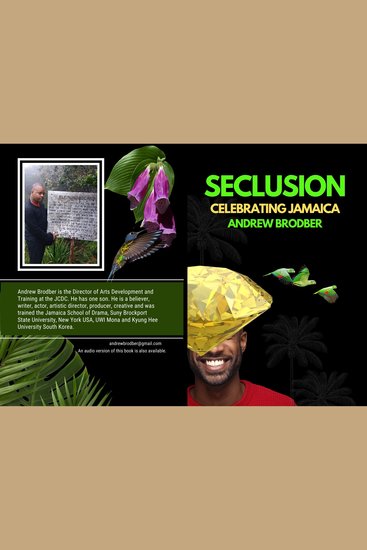
    This book has beautiful poetry about Jamaica’s flora and fauna in part as well as glimpses of some of her people. As we celebrate Jamaica’s 60th Jubilee and my 50th this year I think the works must go forth for the readers and listeners pleasure.
    Ver libro
  • Summary of Brené Brown's Atlas of the Heart - cover

    Summary of Brené Brown's Atlas...

    Falcon Press

    • 0
    • 0
    • 0
    Buy now to get the main key ideas from Brené Brown's Atlas of the Heart 
      
    Emotions – we feel them every second of every day, yet we have such a limited vocabulary to express them. How do we go beyond happy and sad? 
    In Atlas of the Heart (2021), Brené Brown aims to equip us with all the language tools we need to map out the wide spectrum of feelings we experience. She doesn’t tell us how we’re supposed to feel, or how to deal with emotions when they come up – it’s simply an emotional encyclopedia. Brown puts emotions into related groups, then goes into the details to help us better comprehend them and communicate them to those around us. The goal is to build deeper, more authentic connections on a foundation of mutual understanding.
    Ver libro
  • Why Buddhist Practice? Why Psychotherapy? - cover

    Why Buddhist Practice? Why...

    Ph.D. Pilar Jennings

    • 0
    • 0
    • 0
    Jennings is both a Buddhist practitioner and a psychologist. Here she talks about when it’s appropriate to bring our psychological struggles to our Buddhist teacher and when it is appropriate to bring them to a therapist. 
    In general, Jennings says the differences between them are: “When you are working with a therapist or an analyst, there is a sense of very personal explorations. The lens is to go in close and look at the particularities of the way a patient has gone through their life with very particular parents, family system, and culture, etc. Buddhist teachers tend to zoom out, and explore suffering from a more universal lens. So, when their Western students come to them with particular personal problems, they’ll tend to respond from this universal perspective that these are all manifestations of the same tendencies we all have.” 
    She discusses how each has much to give and addresses the value of having a spiritual community where you can look for support and have conversations, as contrasted to the psycho-analytic process where it is a one-on-one and the support comes from a single individual in the form of the therapist. (hosted by Michael Toms)
    Ver libro
  • Corpse Care - Ethics for Tending the Dead - cover

    Corpse Care - Ethics for Tending...

    Mikeal C. Parsons, Cody J. Sanders

    • 0
    • 0
    • 0
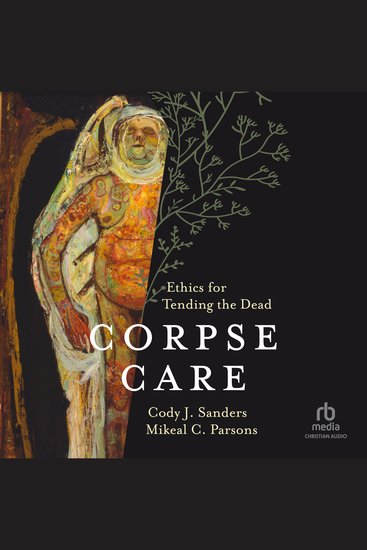
    Corpse Care relates the history of death care in the US to craft robust, constructive, practical ethics for tending the dead. It specifically relates corpse care to economic, environmental, and pastoral concerns. 


    Death and the treatment of the dead body loom large in our collective, cultural consciousness. The authors explore the materiality and meaning of the dead body and the living's relationship to it. All the biggest questions facing the planetary human community relate in one way or another to the corpse. Surprisingly, Christian communities are largely missing in the discussion of the dead, having abdicated the historic role in care for the dead to the funeral industry. Christianity has stopped its reflection about the body once that body no longer bears life. Corpse Care stakes a claim that the fact of embodiment, this incarnational truth, this process of our bodily becoming, is a practical, ethical, and theological necessity.
    Ver libro