¡Acompáñanos a viajar por el mundo de los libros!
Añadir este libro a la estantería
Grey
Escribe un nuevo comentario Default profile 50px
Grey
Suscríbete para leer el libro completo o lee las primeras páginas gratis.
All characters reduced
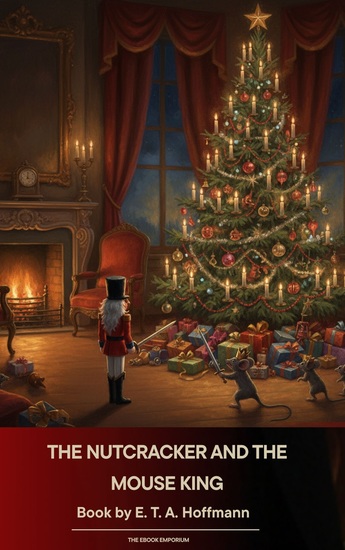
Nutcracker and the Mouse King - cover

Nutcracker and the Mouse King

E. T. A. Hoffmann

Editorial: The Ebook Emporium

  • 0
  • 0
  • 0

Sinopsis

"Beyond the sugar plums lies a world of clockwork wonders and ancient curses."

On Christmas Eve, young Marie Stahlbaum witnesses her new Nutcracker come to life to lead an army of toy soldiers against the seven-headed Mouse King. But this is no simple bedtime story. In Hoffmann's original masterpiece, we discover the tragic "History of the Hard Nut," the secret of the Princess Pirlipat, and the true identity of the Nutcracker himself. Guided by her mysterious and eccentric Godfather Drosselmeyer, Marie must show true courage and devotion to break a century-old spell. It is a brilliant example of German Romanticism, filled with mechanical marvels, gingerbread castles, and the haunting beauty of a childhood imagination that refuses to be tamed.

The "Hard Nut" Backstory: One of the most fascinating elements missing from many adaptations is the backstory of how the Nutcracker became deformed. This gothic sub-plot involves a vengeful Queen Mouse, a magical nut called Krakatuk, and a lesson on the fickle nature of beauty and gratitude.

Surrealism and Wonder: Hoffmann was a master of "The Uncanny." He crafts a world where toys have complex social hierarchies and the scenery shifts from a quiet parlor to the sparkling Kingdom of Dolls. The story challenges the reader to wonder: is Marie dreaming, or is she the only one who can see the world as it truly is?

Why It Is a Must-Read: If you only know the ballet, the book will surprise you with its depth, wit, and slightly darker edge. It is a story about the power of belief and the idea that "only a pure heart can see the marvelous." It remains the ultimate tribute to the magic of the holiday season and the boundless nature of the human spirit.

Discover the truth behind the clockwork. Purchase "The Nutcracker and the Mouse King" today.
Disponible desde: 16/01/2026.
Longitud de impresión: 92 páginas.
Otros libros que te pueden interesar

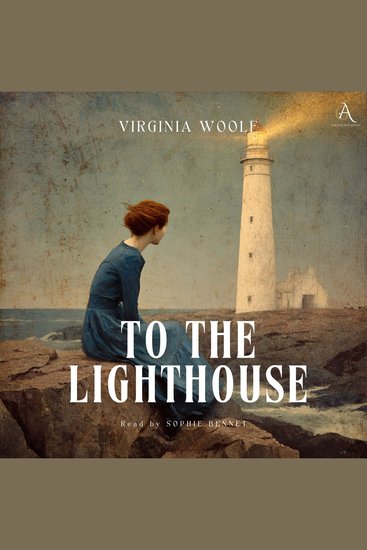
  • To the Lighthouse - Audiobook - cover

    To the Lighthouse - Audiobook

    Virginia Woolf, Classic...

    • 0
    • 0
    • 0
    Virginia Woolf's To the Lighthouse is a modernist masterpiece that captures the fleeting nature of time, memory, and human connection. Set on the Isle of Skye before and after the First World War, the novel follows the Ramsay family and their guests as they grapple with love, loss, and the inexorable passage of life. The long-delayed trip to the lighthouse serves as both a literal goal and a symbol of longing, distance, and change.Told in Woolf's stream-of-consciousness style, the novel offers intimate glimpses into the shifting thoughts and emotions of its characters. The narrative moves fluidly between perspectives, revealing the hidden depths of ordinary moments and the unspoken tensions that shape relationships.More than a story, To the Lighthouse is a meditation on art, existence, and the search for meaning in a transient world. Its lyrical beauty and profound insight have made it one of Woolf's most celebrated works, cherished by generations of readers and listeners alike.
    Ver libro
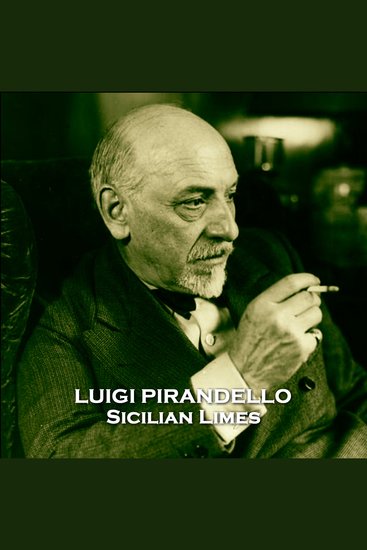
  • Sicilian Limes - From their pens to your ears genius in every story - cover

    Sicilian Limes - From their pens...

    Luigi Pirandello

    • 0
    • 0
    • 0
    Luigi Pirandello was born on 28th June 1867 into an upper-class family in Agrigento, in Sicily. 
    In 1880, the family moved to Palermo and there he completed high school and thence to the University of Palermo, at that time the centre of what became the Fasci Siciliani movement.  Although not an active member he had close friendships with many of its leading ideologists.  Pirandello then completed his university studies in Rome and Bonn, receiving his Doctorate in March, 1891. 
    His time in Rome had provided him with the opportunity to visit its many theatres. "Oh the dramatic theatre! I will conquer it. I cannot enter into one without experiencing a strange sensation, an excitement of the blood through all my veins..." 
    1894 brought marriage, at his father's suggestion, to a shy, withdrawn girl: Mara Antonietta Portulano.  The marriage encouraged his studies and writings and, the following year, the first part of the ‘Dialoghi tra Il Gran Me e Il Piccolo Me’ was published. 
    In 1903 the flooding of the sulphur mines in which his father had invested the family capital and Antonietta's dowry, brought financial catastrophe.  She, on hearing the news, was mentally broken.  Pirandello would now work a full day and then watch over his troubled wife at night. Somehow he found time to write ‘The Late Mattia Pascal’.  It was an immediate and resounding success.  
    In 1909, Pirandello began his collaboration with the prestigious Corriere della Sera.  Whilst his fame as a writer was increasing his private life was poisoned by the suspicion and jealousy of Antonietta who now turned physically violent.  His plays were now being regularly performed but, within a decade, Antonietta had to be placed into an asylum from which she never left. 
    In 1921, in Rome his play, ‘Six Characters in Search of an Author’ debuted.  It was a failure.  However, when presented in Milan it was a great success, as it also was in London and New York. 
    In 1925, Pirandello, with Mussolini’s help, assumed the artistic direction and ownership of the Teatro d'Arte di Roma.  He now described himself both as ‘a Fascist because I am Italian’ and ‘I'm apolitical, I'm only a man in the world...’  However his later conflicts with fascist leaders meant he fell under close surveillance by the OVRA, the secret police. 
    In 1934 he won the Nobel Prize but asked that the medal be melted down for Italy’s occupation of Abyssinia Campaign to which he had given his support.  
    Pirandello's canon stretches across novels, short stories, poetry, essays and some 40 plays.  His tragic farces are often cited as forerunners of the Theatre of the Absurd. 
    Luigi Pirandello died on the 10th December 1936 at his home at Via Bosio, Rome, Italy.  He was 69.
    Ver libro
  • Much Ado About Nothing - cover

    Much Ado About Nothing

    William Shakespeare

    • 0
    • 0
    • 0
    Witty, sparkling, and irresistibly entertaining, Much Ado About Nothing is one of William Shakespeare's most beloved comedies—a brilliant exploration of love, deception, honor, and the delightful chaos of human relationships. Set in the sunlit town of Messina, this timeless play blends sharp humor with heartfelt romance, creating a story that continues to charm audiences centuries after it was first performed.
    
    At the center of the play are two contrasting couples. The young and impressionable Hero and Claudio fall quickly into what seems to be a perfect romance—until jealousy and manipulation threaten to destroy their happiness. Meanwhile, the fiercely intelligent Beatrice and the proudly cynical Benedick engage in a "merry war" of words, each vowing never to marry while clearly masking deeper feelings for one another.
    
    When a mischievous scheme is set in motion to trick Beatrice and Benedick into confessing their love, their spirited rivalry transforms into one of literature's most celebrated romances. At the same time, darker forces conspire to deceive Claudio into believing that Hero has betrayed him, leading to public humiliation, heartbreak, and a test of loyalty and truth.
    
    Through mistaken identities, overheard conversations, and clever plots, Shakespeare crafts a lively tale that balances laughter with moments of genuine emotional depth. The play examines themes of trust, reputation, gender expectations, and the fine line between appearance and reality. With its unforgettable dialogue and vibrant characters, Much Ado About Nothing captures both the joy and vulnerability that accompany love.
    
    From the comedic blunders of the endearing constable Dogberry to the sharp-tongued brilliance of Beatrice, the play offers a rich cast of characters who bring humor and humanity to every scene. Shakespeare's masterful blend of romance and satire ensures that this comedy remains as fresh and engaging today as it was in the Elizabethan era.
    
    Delightful, intelligent, and full of heart, Much Ado About Nothing is a celebration of love in all its complications—a reminder that sometimes the greatest misunderstandings can lead to the happiest endings.
    Ver libro
  • The Mutineers of the "Bounty" - cover

    The Mutineers of the "Bounty"

    Jules Verne

    • 0
    • 0
    • 0
    The Mutineers of the "Bounty" is Jules Verne's compelling retelling of one of the most famous episodes in maritime history—the dramatic mutiny aboard HMS Bounty. Drawing on historical accounts while infusing the narrative with his trademark clarity and sense of adventure, Verne brings new depth and perspective to this legendary tale of authority, rebellion, and survival at sea.
    
    The novel chronicles the ill-fated voyage of the Bounty, sent to the South Pacific to transport breadfruit plants to the West Indies. Under the rigid command of Captain William Bligh, tensions steadily rise among the crew, culminating in a dramatic act of mutiny led by Fletcher Christian. What follows is a gripping account of divided loyalties, perilous ocean journeys, and the struggle to endure in some of the world's most remote and unforgiving regions.
    
    Beyond the excitement of seafaring adventure, The Mutineers of the "Bounty" explores complex moral questions about leadership, justice, and human endurance. Verne presents the mutiny not merely as an act of defiance, but as a human drama shaped by harsh conditions, clashing personalities, and the limits of authority.
    
    Rich in historical detail and maritime atmosphere, this classic work stands as a powerful blend of history and storytelling. The Mutineers of the "Bounty" remains a timeless narrative of rebellion and survival, captivating readers who appreciate nautical adventures and true stories brought vividly to life.
    Ver libro
  • Within the Tides - cover

    Within the Tides

    Joseph Conrad

    • 0
    • 0
    • 0
    The four stories contained in Within the Tides are linked by Conrad’s treatment of loyalty and betrayal. They range in setting from the Far East to eighteenth-century Spain to England. The tone shifts from the tragic inevitability of “The Planter of Malata” and the pathos of “Because of the Dollars” to the gothic atmosphere of “The Inn of the Two Witches” and the grim humor of “The Partner.” Experimental in form, these stories represent yet another branch of Conrad’s search for moral truth.
    Ver libro
  • Evening Guest An - From their pens to your ears genius in every story - cover

    Evening Guest An - From their...

    Alexander Kuprin

    • 0
    • 0
    • 0
    Alexander Kuprin was born in Narovchat, Penza in Russia on 7th September 1870. 
    At 3 his Father died and he and mother moved to Moscow. By 10 he was enrolled at the Second Moscow Military High School and there his interest in literature began. The Alexander Military Academy followed and two years later he was a sub-lieutenant and posted to an Infantry Regiment for a further four years. 
    Despite his duties he was a now a keen writer and published his first short story at this time. His military duties also garnered him experiences for his breakthrough work ‘The Duel’.  Leaving the military he left for Kiev to work for local newspapers.  He continued to publish both stories and novels and by 1901 he was in St Petersburg becoming part of a group that included Chekhov, Ivan Bunin, Maxim Gorky and Leonid Andreyev.  
    In the years that followed further controversial works and acclaim followed.  His comments on the regime meant he was also put under secret police surveillance.   
    As World War I erupted, Kuprin opened a military hospital but was then given command of an infantry company in Finland. He was soon discharged on grounds of ill health.  
    The October Revolution saw him praise Lenin, but he warned that the Bolsheviks threatened Russian culture and might cause further widespread suffering to the peasants.  As Civil War raged he took his family to Helsinki and then on to Paris. 
    Exile saw his talents decline further and his succumbing to alcoholism. He became lonely and withdrawn. The family's poverty increased his malaise.   
    In May 1937, the Kuprin’s returned to Moscow.  He now saw his work published but wrote almost nothing new.  In 1938 his health rapidly deteriorated.  Already suffering from a kidney problems and sclerosis, he had now developed cancer of the oesophagus.  
    Alexander Kuprin died on 25th August 1938.
    Ver libro