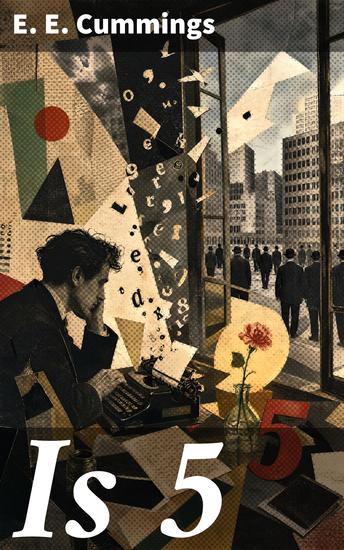
Is 5
E. E. Cummings
Editorial: Good Press
Sinopsis
E. E. Cummings's Is 5 (1926) is a daring collection of lyric, satiric, and experimental poems that consolidates his place within high modernism. The volume ranges from love poems of startling delicacy to sharply ironic social observations, all rendered in Cummings's distinctive idiom of fractured syntax, visual spacing, typographical play, and linguistic compression. Yet beneath its apparent eccentricity lies a disciplined poetic intelligence, one deeply engaged with modernism's challenge to inherited forms while preserving a Romantic faith in feeling, immediacy, and the singular self. Cummings, an American poet, painter, and novelist educated at Harvard, emerged from the upheavals of the early twentieth century with a fiercely individual artistic vision. His service as an ambulance driver in the First World War, and his subsequent disillusionment with bureaucratic authority and mass conformity, shaped much of his anti-conventional stance. In Is 5, these biographical pressures converge with his cosmopolitan exposure to the Parisian avant-garde and his commitment to artistic freedom. This collection is especially recommended to readers interested in modernist poetry at its most inventive yet emotionally accessible. Is 5 rewards close reading, revealing wit, tenderness, and formal audacity in equal measure. It is an essential book for anyone seeking to understand how experimentation can deepen, rather than diminish, poetic feeling.
Disponible desde: 29/06/2026.
Longitud de impresión: 30 páginas.