Junte-se a nós em uma viagem ao mundo dos livros!
Adicionar este livro à prateleira
Grey
Deixe um novo comentário Default profile 50px
Grey
Assine para ler o livro completo ou leia as primeiras páginas de graça!
All characters reduced
Breaking the Spiral - 15 Steps to Quiet Anxiety Stop Overthinking and Build Lasting Inner Peace - cover
LER

Breaking the Spiral - 15 Steps to Quiet Anxiety Stop Overthinking and Build Lasting Inner Peace

Dylan Harrison

Editora: BookRix

  • 0
  • 0
  • 0

Sinopse

Are you exhausted by a mind that never seems to rest—constantly replaying scenarios, doubting decisions, and drowning in anxiety? You’re not alone, and you don’t have to live this way.Breaking the Spiral is your compassionate, science-based roadmap to overcoming overthinking and reclaiming peace of mind. Drawing on proven Cognitive Behavioral Therapy (CBT) strategies, this guide leads you through a practical 15-step framework to break free from the patterns that fuel fear, doubt, and endless rumination.Inside, you’ll learn how to challenge catastrophic thinking, silence your inner critic, and let go of the need for constant reassurance. With clear exercises and relatable guidance, you’ll develop daily habits that anchor your mind in clarity and resilience.Unlike vague “quick fixes,” this book offers concrete, actionable steps rooted in psychology—helping you shift from feeling stuck in endless mental loops to living with calm confidence. Whether you’ve tried other self-help tools before or are starting fresh, this book meets you with empathy, clarity, and proven solutions.✨ If you’re ready to take control of your mind and finally find peace, Breaking the Spiral will guide you every step of the way.
Disponível desde: 31/08/2025.

Outros livros que poderiam interessá-lo

  • The Dark Side of Society - cover

    The Dark Side of Society

    John Harpoon

    • 0
    • 0
    • 0
    This audiobook peels back the layers of our modern world to expose the complex realities in sections: 
    The People Who Own the World 
     Explore the concentration of global wealth and power in the hands of a select few. This section examines how financial elites, corporate conglomerates, and influential families have shaped economies, policies, and social structures across generations, often operating beyond public awareness and traditional democratic oversight. 
    The Most Densely Populated Place on Earth 
     Journey to extraordinary human settlements where community exists in extreme proximity. From the historical Kowloon Walled City to today's megaslums and urban centers, discover how humans adapt to life in incredibly confined spaces, creating unique social dynamics, economic systems, and cultural practices. 
    10 Signs of Phony Friendly People 
     Learn to identify the subtle indicators of inauthentic relationships and manipulative behavior. This section provides practical insights into recognizing individuals who use the appearance of friendliness to conceal ulterior motives, helping you protect yourself from exploitation while building genuine connections. 
    Why So Many Young People Are Depressed 
     Examine the alarming rise in depression among younger generations. This section analyzes the confluence of factors—from economic uncertainty and social media pressure to environmental anxiety and changing social structures—that have created unprecedented mental health challenges for today's youth, along with potential paths forward. 
    Why Stupid People Think They're Smart 
     Delve into the fascinating psychological phenomenon known as the Dunning-Kruger effect. Understand how cognitive biases lead to overconfidence among the least knowledgeable, while experts often recognize the limitations of their understanding.
    Ver livro
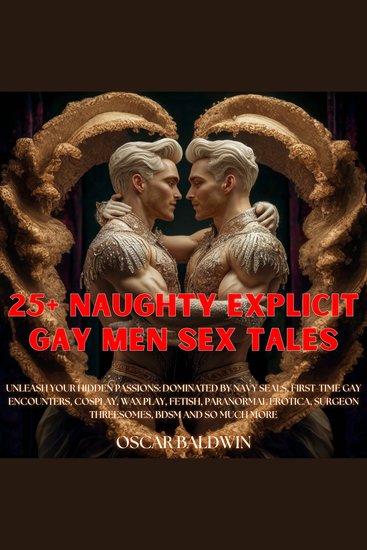
  • 25+ Naughty Explicit Gay Men Sex Tales - Unleash Your Hidden Passions: Dominated by Navy Seals First-Time Gay Encounters Cosplay Wax Play Fetish Paranormal Erotica Surgeon Threesomes BDSM and So Much More - cover

    25+ Naughty Explicit Gay Men Sex...

    Oscar Baldwin

    • 0
    • 0
    • 0
    Discover your wildest desires with our groundbreaking audiobook 
    Dive into a world of intense and varied erotic fantasies, designed to ignite your imagination and push the boundaries of pleasure. 
    This audiobook offers a unique experience with stories ranging from:first-time gay encounters and domination by Navy Seals tothrilling tales of cosplay, wax play, fetishes, dogging tail, paranormal erotica, surgeon threesomes, BDSM, and so much more. 
    Perfect for those looking to explore and satisfy their deepest fantasies, this audiobook is a masterpiece of erotic storytelling. Every tale is narrated with passion and skill, drawing you into a world where every boundary is pushed, and every desire is realized. 
    Get ready for an unparalleled journey that will awaken all your senses and leave you craving more. Whether you're new to erotic literature or a seasoned enthusiast, this audiobook offers something for everyone. 
    Indulge in the ultimate escape and discover a new realm of pleasure today! 
    Listen and let your imagination soar!
    Ver livro
  • Madhouse at the End of the Earth: Book Summary and Analysis - cover

    Madhouse at the End of the...

    Briefly Summaries

    • 0
    • 0
    • 0
    This is a concise summary and analysis of Madhouse at the End of the Earth, by Julian Sancton.
     
    It is not the original book and is not affiliated with or endorsed by Julian Sancton.
     
    Ideal those seeking a quick and insightful overview.


    In Madhouse at the End of the Earth, embark on a gripping journey into one of history's most harrowing tales of survival, endurance, and exploration. This captivating audiobook chronicles the Belgian Antarctic Expedition of 1897, led by Adrien de Gerlache, as it ventured into the uncharted and unforgiving wilderness of Antarctica. What began as a quest for glory quickly turned into a nightmare when the expedition’s ship, the Belgica, became trapped in the ice, forcing the crew to endure months of isolation during the Antarctic winter.
     
    Through vivid storytelling and meticulous research, the author reveals the psychological and physical toll of the crew's ordeal, from scurvy and freezing temperatures to the descent into madness. At the heart of the narrative are the extraordinary figures of Frederick Cook and Roald Amundsen, whose resilience and ingenuity not only kept the crew alive but also laid the groundwork for future polar exploration.
     
    Madhouse at the End of the Earth is more than a tale of survival—it’s a testament to the human spirit’s ability to persevere in the face of overwhelming adversity. Perfect for listeners captivated by true adventure, leadership lessons, and the depths of human endurance, this audiobook will inspire you to confront your own challenges with courage and determination.
     
    Prepare to be transported to the edge of the world, where hope, innovation, and the will to survive triumph over the harshest conditions imaginable.
    Ver livro
  • Exploring Shakespeare - A Director's Notes from the Rehearsal Room - cover

    Exploring Shakespeare - A...

    Bill Alexander

    • 0
    • 0
    • 0
    'Theatre is the greatest of collaborative art forms, and Shakespeare its greatest exponent: he used the form better than anyone else ever has to speak truth about the world.'
    In Exploring Shakespeare, acclaimed theatre director Bill Alexander takes us inside the rehearsal room to reveal – in unprecedented and captivating detail – exactly what happens there. He examines the key relationship between the actors and the director, how they work together to bring Shakespeare's vision to life, and how choices are made that will shape every aspect of the play in production.
    Full of acute observations and perceptions drawn from a long and brilliant career, the book covers the essential aspects of any Shakespeare production, from understanding the world of the play, to preparing and cutting the text, deciding on costumes and set design, handling soliloquies, and considering character and backstory.
    There are detailed studies of eight plays spanning the full length and breadth of the Shakespearean canon, from Titus Andronicus and The Shrew to The Tempest, via Othello, Hamlet, Lear, The Merchant of Venice and Twelfth Night. Alexander also provides first-hand case studies of three of his own productions, including his famous Richard III starring Antony Sher.
    Personal, forthright, and full of pragmatic advice, Exploring Shakespeare is a masterclass for directors and actors, and a fascinating insight for anyone interested in Shakespeare.
    Bill Alexander was an Associate Director of the Royal Shakespeare Company, and then Artistic Director of Birmingham Rep. His landmark productions include Richard III and The Merry Wives of Windsor (both Olivier Award-winners), The Merchant of Venice, The Taming of the Shrew, Titus Andronicus and King Lear with Corin Redgrave.
    'Bill Alexander is a brilliant director, whose work has powerfully shaped my understanding of Shakespeare's plays, Richard III most of all' James Shapiro, author of 1599: A Year in the Life of William Shakespeare
    Ver livro
  • Ancient Egypt - Pharaohs Pyramids and the Cradle of Civilization - cover

    Ancient Egypt - Pharaohs...

    Rolf Hedger

    • 0
    • 0
    • 0
    The Nile River was the lifeblood of ancient Egypt, shaping its civilization, economy, and culture. Flowing over 4,000 miles from the heart of Africa to the Mediterranean Sea, the river provided a reliable source of water in an otherwise arid landscape. Without the Nile, Egypt as we know it would not have existed. 
    Each year, the river’s annual flooding deposited nutrient-rich silt onto the surrounding land, creating fertile soil ideal for agriculture. This natural cycle allowed the Egyptians to grow crops such as wheat, barley, and flax, sustaining a thriving population. The predictability of the flooding led to the development of an agricultural calendar, which played a crucial role in the organization of society. Farmers planted their crops after the waters receded and harvested them before the next flood, ensuring a steady food supply. 
    Beyond agriculture, the Nile was also Egypt’s main highway. With deserts on either side of the river, travel by land was difficult, but the Nile provided an efficient means of transportation. Boats carried goods, people, and even large stone blocks for temple and pyramid construction. Trade flourished as the Egyptians exchanged gold, papyrus, and linen for exotic products from neighboring regions, including spices from the east and cedarwood from Lebanon.
    Ver livro
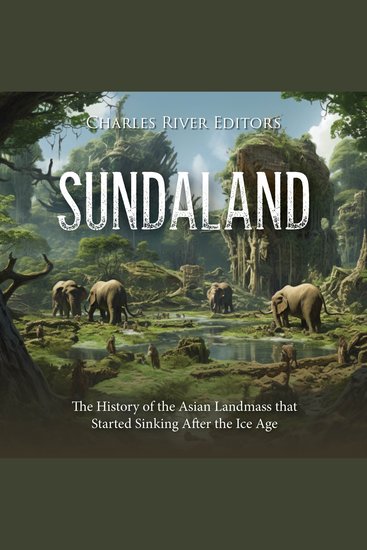
  • Sundaland: The History of the Asian Landmass that Started Sinking After the Ice Age - cover

    Sundaland: The History of the...

    Editors Charles River

    • 0
    • 0
    • 0
    By the time the Pleistocene Epoch ended around 12,000 years ago, Homo sapiens had become one of the most significant species on the planet. 	It was also near the end of that period of time that modern humans began to gradually populate what would become Europe, Asia, and the Americas, eventually becoming the inheritors of the Paleolithic era and the only human species to make it into the Neolithic era. The process was long and difficult, and the survival of the species only happened through a combination of human tenacity and a fair amount of luck. As much as humans evolved during the Pleistocene, the topography, geography, and environment changed even more. 
    The cold Pleistocene temperatures lowered water levels across the planet, exposing land that was not there before or after the period. At the same time, significant regions of the planet were very different during the Pleistocene, including Southeast Asia, particularly the modern islands of Bali, Borneo, Sumatra, and the Malay Peninsula, roughly equivalent to parts of Indonesia, Malaysia, Myanmar, and Thailand. This region, which modern scholars refer to as Sunda or Sundaland, was unique because all of it was connected by land, meaning today’s islands were once part of a contiguous subcontinent, and in terms of the people, flora, and fauna, it was very different than it is today. If a modern traveler could somehow transport back to the Pleistocene, Sundaland would look nothing like modern Southeast Asia and would resemble as much of a lost world as something out of a science fiction novel.  
    Although much is still unknown about Sundaland, researchers have uncovered plenty of evidence bringing this lost world to life. As anthropologists and archaeologists developed new models and discovered ancient material culture, they learned that Sundaland played a significant role in the development of Neolithic Southeast Asia in many ways. 
    Ver livro