Junte-se a nós em uma viagem ao mundo dos livros!
Adicionar este livro à prateleira
Grey
Deixe um novo comentário Default profile 50px
Grey
Assine para ler o livro completo ou leia as primeiras páginas de graça!
All characters reduced
The Five Principles of War - cover
LER

The Five Principles of War

dr. Ruszin-Szendi Romulusz

Editora: Alexandra Kiadó

  • 0
  • 0
  • 0

Sinopse

War has been an indelible part of human civilisation since the dawn of history, and the war in our neighbourhood has shown that it is not just a remote event in time and space. Conflict, violence and war are an integral and terrible part of human behaviour, whether it is the world conflagrations that have covered continents in blood or the clashes that have blighted our daily lives. The outbreak of armed conflict, its nature, the reasons for victory and defeat have been written about in countless books from antiquity to the present day. In his book, Lieutenant General Romulusz Ruszin-Szendi, former commander of the Hungarian Defence Forces, who has seen the battlefields of Afghanistan, Iraq and Ukraine, sets out to condense the principles of war into five simple, clear points.Although the examples used to illustrate them are drawn from war situations, this book is not only for readers interested in military history and theories. Whether it's how we relate to opposing and allied forces, how we define our objectives, or the importance of communication, the principles set out here are applicable to any conflict and can help us win the battles of our lives.
Disponível desde: 08/08/2024.
Comprimento de impressão: 128 páginas.


Outros livros que poderiam interessá-lo

  • The American Operations in WW2: Central Burma - cover

    The American Operations in WW2:...

    History U.S. Army Center of...

    • 0
    • 0
    • 0
    World War II was the largest and most violent armed conflict in the history of mankind. Highly relevant today, World War II has much to teach us, not only about the profession of arms, but also about military preparedness, global strategy, and combined operations in the coalition war against fascism. This book follows military operations of the US Army in North Ease Asia from 29 January to 15 July 1945. 
    At the beginning of 1945, less than eight months remained before the final surrender of Japan. Those eight months, however, were to see some of the bitterest fighting of the war. Although the final outcome was no longer in doubt, when and how the conflict would end remained unclear. The American naval blockade of Japan, combined with a growing air offensive, was placing a serious strain on Japan's economy. Yet any invasion of the Japanese home islands would most likely be drawn out and extremely costly in lives. There was also the danger that even with the capture of the home islands the war might not end, but continue interminably on the Asian mainland, where large numbers of Japanese troops occupied Korea, Manchuria, and the richest and most populous areas of China.
    While American forces in the Pacific had been making dramatic progress since early 1942, the Allied effort in the China-Burma-India theater had bogged down in a morass of conflicting national objectives. The hope Americans held in the early stages of the war, that Chinese manpower and bases would play a vital role in the defeat of Japan, was unrealized. Americans sought to achieve great aims on the Asian mainland at small cost, looking to the British in India and the Chinese, with their vast reservoirs of manpower, to carry the main burden of the ground conflict. Neither proved capable of exerting the effort the Americans had hoped...
    Ver livro
  • Artificial Intelligent Future - cover

    Artificial Intelligent Future

    Raphael Terra

    • 0
    • 0
    • 0
    This audiobook has been recorded using Text to speech (TTS). 
     
    The days of a secure and peaceful future are over. Man is on the brink of a new world filled with danger, adventure, and a potential threat from an artificial intelligence unlike anything ever seen. 
     
    The world we live in is on the cusp of a dangerous new era: the emergence of intelligent artificial systems, or “agents”, that will profoundly reshape humanity’s relationship with technology. We will explore the murky landscape ahead, and seek to uncover the future of mankind’s relationship with these revolutionary new technologies. 
     
    Advancements in artificial intelligence are happening faster than ever before, and with them comes a potential risk unseen in the history of digital technology. We explore the implications of this rapid development, from extreme wealth disparity to cyber–security threats, and examine how these systems might impact the lives of citizens everywhere. At the center of this book stands the ethical dilemma posed by these agents: how can we ensure that our choices respect and protect our values, interests, and communities? 
     
    This is just the beginning. As we venture deeper into this new, complex, and sometimes intimidating world, you will witness stunning stories of amazing innovations and emerging opportunities that promise to change our lives forever. From artificial intelligence and its associated robotic hardware, to the advocates and opponents of these remarkable creations, this book promises to be an eye-opening exploration of the world that’s to come.
    Ver livro
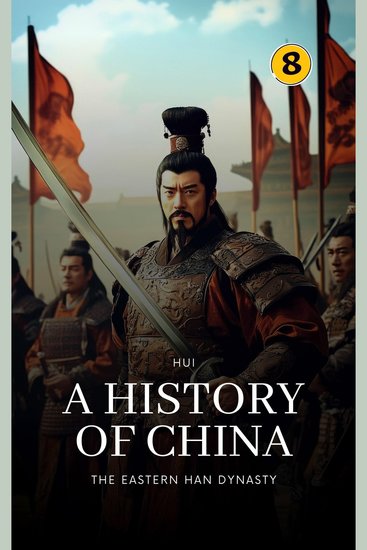
  • Eastern Han Dynasty The: A History of China - cover

    Eastern Han Dynasty The: A...

    Hui Wang

    • 0
    • 0
    • 0
    The Eastern Han Dynasty: A History of China, PART ONE takes you on an unforgettable journey through one of China's most transformative eras. Once fractured by war, the Han Empire finds hope in Liu Xiu—a noble who rises through chaos to become Emperor Guangwu of Han. But claiming the throne is only the beginning. To rebuild an empire torn apart, he must outmaneuver rivals, crush rebellions, and restore order. 
    From the fall of the Chimei Army to the eruption of the Three Rebellions, Liu Xiu's reign is marked by endless trials. Allies become threats, and loyalty is tested—especially for Wei Xiao, a trusted officer with dangerous ambitions. Meanwhile, the empire expands into Longyou and sets its sights on resource-rich Shu, where political intrigue runs deep. 
    Military legends like General Ma Yuan rise, shaping China's future with brilliant campaigns. As peace returns, loyal ministers help rebuild the government. But power shifts within the court, and when the crown prince unexpectedly steps down, the influential Yin Family begins to dominate the throne's inner circle. 
    A new era begins with Emperor Ming, who faces his own battles—reforms, alliances, and unrest. Yet Han is no longer limited by borders. Ban Chao’s bold expeditions to the Western Regions spark a wave of imperial ambition, paving the way for the rise of a new conqueror who will take Han’s influence farther than ever before. 
    This is not just a chronicle of events—it's a sweeping epic of ambition, war, strategy, and legacy. If you’re drawn to tales of empire-building, battlefield brilliance, and court intrigue, The Eastern Han Dynasty: Part One is a journey you won’t want to miss.
    Ver livro
  • Napoleon’s Escape from the Middle East: The History of the French General’s Flight from the Levant and Egypt - cover

    Napoleon’s Escape from the...

    Editors Charles River

    • 0
    • 0
    • 0
    In addition to being unable to be reinforced or supplied by sea, Napoleon's ambitions to establish a permanent presence in Egypt were further frustrated by a number of uprisings. Early in 1799, Napoleon advanced against France’s erstwhile enemy, the Ottoman Empire, invading modern Syria (then the province of Damascus) and conquering the cities of Gaza, Jaffa, Arish and Haifa. However, with the plague running rampant through his army and his lines of supply from Egypt stretched dangerously thin, Napoleon was unable to destroy the fortified city of Acre and was forced to retreat. The retreat cost him almost all of his wounded as, harassed by enemy forces, he was forced to abandon most of his casualties to the Ottomans’ mercy, or lack thereof. Most of the wounded were tortured and beheaded. 
    	Napoleon harbored all kinds of delusions about his time in Egypt that were not based in reality, but he definitely left a lasting legacy in the region, one he would never live to see or appreciate. By shifting the theater of operations to Africa and the Middle East, Napoleon inadvertently ensured the Europeans would fight there in the future, and the French occupation impressed upon the locals the necessity of catching up to the modern world in terms of technology. Ancient tactics could not prevail against a modern army, no matter the numbers, but while that was a lesson Napoleon consistently taught his enemies in Egypt and the Levant to their detriment, the French also sped up the occupied populations’ technological advances as well. Perhaps more importantly, the Egyptian Scientific Institute introduced numerous modern innovations, perhaps most importantly the printing press, which in turn encouraged literacy. This brought about the emergence of nationalism and liberalism, leading eventually to the establishment of Egyptian independence and modernization under the rule of Muhammad Ali Pasha in the first half of the 19th century.
    Ver livro
  • Bagavad Gita in Tamil - Chapter 6 - cover

    Bagavad Gita in Tamil - Chapter 6

    Viyasar

    • 0
    • 0
    • 0
    The Bhagavad Gita is a 700-verse Hindu scripture embedded within the epic Mahabharata, depicting a dialogue between Arjuna and Krishna on the battlefield of Kurukshetra. Arjuna, facing his relatives in battle, experiences despair and a crisis of conscience. Krishna, his charioteer and an avatar of Vishnu, provides philosophical and spiritual guidance, addressing themes of duty (dharma), action (karma), devotion (bhakti), and knowledge (jnana). The Gita explores the nature of the self, the divine, and humanity's place in the world, offering paths to liberation and spiritual fulfillment. 
    Ver livro
  • The Psychology of Focused Thinking - Breaking Mental Barriers to Unlock Clarity - cover

    The Psychology of Focused...

    Caleb David

    • 0
    • 0
    • 0
    "The Psychology of Focused Thinking: Breaking Mental Barriers to Unlock Clarity" is your ultimate guide to mastering the art of deep focus and harnessing the untapped potential of your mind. In a world filled with distractions, this book dives into the science and strategies behind achieving mental clarity, overcoming limiting beliefs, and cultivating razor-sharp focus to excel in every area of your life. 
    Combining cutting-edge psychological research with practical exercises, this book explores how focused thinking can transform your productivity, decision-making, and creativity. You'll uncover tools to break through mental barriers, eliminate procrastination, and create a mindset built for success. 
    Learn how to:Understand and reprogram limiting thought patterns.Enhance your mental clarity and concentration.Develop habits that foster long-term focus and resilience.Unlock your inner potential to achieve your most ambitious goals. 
    Whether you're seeking to improve your career, personal growth, or overall well-being, The Psychology of Focused Thinking offers actionable insights to help you thrive in a fast-paced world. This book is your blueprint for thinking clearly, living intentionally, and unlocking the clarity you need to succeed. 
    Take the first step toward a more focused, fulfilled life today!
    Ver livro