Junte-se a nós em uma viagem ao mundo dos livros!
Adicionar este livro à prateleira
Grey
Deixe um novo comentário Default profile 50px
Grey
Assine para ler o livro completo ou leia as primeiras páginas de graça!
All characters reduced
The Way of Faith - Seven Steps To Faith - cover
LER

The Way of Faith - Seven Steps To Faith

Dr. M. Nathaniel Anderson Phd

Editora: Proisle Publishing Services

  • 0
  • 0
  • 0

Sinopse

Seven Steps to aid Faith: 50-page Work booklet
 
The Way of Faith
 
Seven Steps
 
To Faith
 
Your New Life In Christ
 
Bible studies
 
For the
 
Faith Believer
Disponível desde: 22/06/2023.
Comprimento de impressão: 33 páginas.

Outros livros que poderiam interessá-lo

  • Body of Knowledge Card Deck - Sensorimotor Practices for Awareness Regulation and Expansion - cover

    Body of Knowledge Card Deck -...

    Pat Ogden

    • 0
    • 0
    • 0
    Our bodies hold a wealth of knowledge that, with the right tools, we can tap into at any time. 


    Our physical habits—of sensation, posture, and movement—reflect implicit knowledge of our histories of trauma, relationships, and resources, as well as our future possibilities. However, this wealth of information often eludes our awareness. The intention of the somatic practices in this card deck is to experientially illuminate the innate and unique knowledge that resides in our bodies, and to nurture a more deeply embodied connection with ourselves, others, and the world. 


    The cards are divided into fifteen themes: ancestors and community, body connection, body sensation, boundaries, breath, containment, culture, five fundamental movements, grounding, mindfulness, movement, posture, the senses, positivity, resources, and the future. Our bodies have different lessons to teach us at different points in our lives, so listeners are encouraged to revisit these enlightening, somatic exercises time and again to glean new insights.
    Ver livro
  • History of Peru: A Captivating Guide to Peruvian History Starting from the Chavín Civilization and Other Ancient Andean Civilizations through the Inca Empire to the Present - cover

    History of Peru: A Captivating...

    Captivating History

    • 0
    • 0
    • 0
    Peru is a land of majesty and wonder where myth, legend, and history all come together. And this audiobook gives you a front-row seat! 
    The land of Peru is one that, for many, seems far away and distant. Even for those living relatively nearby geographically, Peru can seem just out of reach. After all, Peru is situated high in the Andes on the western coast of South America. Those who dare to live at this high of an elevation have learned to live on their own terms.  
    The Inca leader Manco II, for example, displayed his tenacity by heading a rebel kingdom in the depths of the Amazon even after much of the Inca Empire of his ancestors had been overrun by the Spanish conquistadors.  
    Manco’s struggle was later picked up by Túpac Amaru II, who waged war against the Spanish occupation. Túpac Amaru II would be captured and executed for daring to revolt against the Spanish Crown, but his legend would live on in the hearts and minds of Peruvians everywhere.  
    Fast forward to Peru’s independence from Spain, and one finds the heroic Simón Bolívar. He was pivotal in the independence of Peru, as well as a whole slew of Latin American countries, which he was put in charge of at various times during his dynamic career.  
    Great heroes like Simón Bolívar certainly stand out, but so do other intriguing and captivating characters from Peru’s past. From the great Inca ruler Atahualpa to Francisco Pizarro to modern-day Peruvian presidents like Alberto Fujimori and Dina Boluarte, Peru has quite a story to tell! 
    In this audiobook, you will learn about the following:The origins of Peruvian civilizationThe rise and fall of the Inca EmpireThe explorations of conquistadors like Francisco PizarroRevolutionaries like Túpac Amaru II and resistance to Spanish rulePeru’s struggle for independence 
    Scroll up and click the “add to cart” button to begin learning about Peru today!
    Ver livro
  • World War II in the Arctic: The History of the Aleutian Islands Campaign and Nazi Germany’s Arctic Invasion of the Soviet Union - cover

    World War II in the Arctic: The...

    Editors Charles River

    • 0
    • 0
    • 0
    Today, everyone remembers the most famous consequences of Hitler’s choice, particularly the fighting at Leningrad and Stalingrad, but the invasion was so comprehensive that it also involved fighting in the barren lands near the Arctic Circle, bringing fierce combat to the taiga and tundra. In fact, Arctic combat occurred in both the Pacific and European theaters of the war, and in both cases the operations were related in some measure to external lines of supply to the USSR. 
    Meanwhile, the Wehrmacht and the Red Army also met in the boreal pine forests, bogs, and tundra of Lapland and far northern Russia during the Barbarossa campaign of 1941. Fighting separately from the other Army Groups of the Third Reich, elite German Gebirgs (mountain) division soldiers and tough, resourceful Finns clashed with relatively determined and experienced Red Army soldiers in the forbidding terrain east of Finland’s border. This campaign bore the elegant operational tile of Silberfuchs, or “Silver Fox.” Aiming for Murmansk, a key Soviet port, or at least to sever the rail lines connecting it to points south and east, the Germans found themselves contending with the rugged, unfamiliar landscape, tough Soviet resistance, and as all too frequently occurred, the half-baked strategic meddling of Adolf Hitler, Fuhrer of the Third Reich. 
    For the Japanese, the secondary operation to the Aleutian Islands proved more successful than the main thrust at Midway Island. In a triumph of cryptanalytic skill and poker-player daring, codebreaker Joseph Rochefort and his team at “Hypo” cracked Japanese messages proving the main effort aimed at Midway. The U.S. Navy intercepted Yamamoto's fleet at Midway and smashed its carriers in one of the most decisive actions of the Pacific Theater on June 3rd to 7th, 1942. The Aleutians invasion, on the other hand, gave Japan a foothold on American territory that required almost a year to dislodge.
    Ver livro
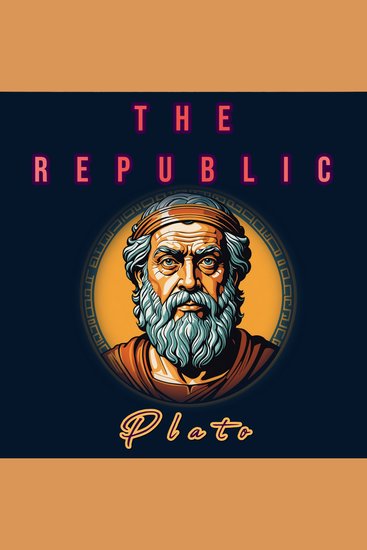
  • The Republic - cover

    The Republic

    Plato

    • 0
    • 0
    • 0
    The Republic (Greek: Politeia) is a Socratic dialogue, written by Plato around 380 BC, concerning the definition of (justice), the order and character of the just city-state and the just man, reason by which ancient readers used the name On Justice as an alternative title (not to be confused with the spurious dialogue also titled On Justice). The dramatic date of the dialogue has been much debated and though it must take place some time during the Peloponnesian War, "there would be jarring anachronisms if any of the candidate specific dates between 432 and 404 were assigned".    It is Plato's best-known work and has proven to be one of the most intellectually and historically influential works of philosophy and political theory. In it, Socrates along with various Athenians and foreigners discuss the meaning of justice and examine whether or not the just man is happier than the unjust man by considering a series of different cities coming into existence "in speech", culminating in a city (Kallipolis) ruled by philosopher-kings; and by examining the nature of existing regimes.    The participants also discuss the theory of forms, the immortality of the soul, and the roles of the philosopher and of poetry in society. Short Summary (Epilogue): X.1—X.8. 595a—608b. Rejection of Mimetic Art X.9—X.11. 608c—612a. Immortality of the Soul X.12. 612a—613e. Rewards of Justice in Life X.13—X.16. 613e—621d. Judgment of the Dead The paradigm of the city — the idea of the Good, the Agathon — has manifold historical embodiments, undertaken by those who have seen the Agathon, and are ordered via the vision. The centre piece of the Republic, Part II, nos. 2–3, discusses the rule of the philosopher, and the vision of the Agathon with the allegory of the cave, which is clarified in the theory of forms.    The centre piece is preceded and followed by the discussion of the means that will secure a well-ordered polis (City). Part II, no. 1, concerns marriage, the community of people and goods for the Guardians, and the restraints on warfare among the Hellenes. It describes a partially communistic polis. Part II, no. 4, deals with the philosophical education of the rulers who will preserve the order and character of the city-state. In Part II, the Embodiment of the Idea, is preceded by the establishment of the economic and social orders of a polis (Part I), followed by an analysis (Part III) of the decline the order must traverse. The three parts compose the main body of the dialogues, with their discussions of the "paradigm", its embodiment, its genesis, and its decline. The Introduction and the Conclusion are the frame for the body of the Republic.    The discussion of right order is occasioned by the questions: "Is Justice better than Injustice?" and "Will an Unjust man fare better than a Just man?" The introductory question is balanced by the concluding answer: "Justice is preferable to Injustice". In turn, the foregoing are framed with the Prologue (Book I) and the Epilogue (Book X). The prologue is a short dialogue about the common public doxai (opinions) about "Justice". Based upon faith, and not reason, the Epilogue describes the new arts and the immortality of the soul.
    Ver livro

  • Passwords - cover

    Passwords

    Sally Cook

    • 0
    • 0
    • 0
    This story tells the frustrating but sometimes humorous journey of the author's interactions with the virtual world where she combats chat bots, racks her withering brain for passwords, almost has a hissyfit at the supermarket checkout, accidentally buys online goods she doesn't want and gets all scrambled  regarding pins, passwords and cyber theft. She used to have a childhood toffee stall to raise money for Freedom From Hunger. Now emails remind her to help save the world, the planet, combat animal cruelty and the climate crisis. Some days it takes nerves to turn on her social devices.
    Ver livro
  • España - A Brief History of Spain - cover

    España - A Brief History of Spain

    Giles Tremlett

    • 0
    • 0
    • 0
    Bestselling author Giles Tremlett traverses the rich and varied history of Spain, from prehistoric times to today, in a brief, accessible primer for visitors, curious listeners and hispanophiles. 
     
    Spain's position on Europe's south-western corner has exposed it to cultural, political and actual winds blowing from all quadrants. Africa lies a mere nine miles to the south. The Mediterranean connects it to the civilizational currents of Phoenicians, Romans, Carthaginians, and Byzantines as well as the Arabic lands of the near east. Hordes from the Russian steppes were amongst the first to arrive. They would be followed by Visigoths, Arabs, Napoleonic armies and many more invaders and immigrants. Circular winds and currents linked it to the American continent, allowing Spain to conquer and colonize much of it. 
     
    As a result, Spain has developed a sort of hybrid vigour. Whenever it has tried to deny this inevitable heterogeneity, it has required superhuman effort to fashion a 'pure' national identity – which has proved impossible to maintain. In España, Giles Tremlett argues that, in fact, that lack of a homogenous identity is Spain's defining trait. 
     
    PRAISE FOR GILES TREMLETT: 
     
    'Lively and well-informed ... At once a history, a journalistic inquiry and a travel book' Sunday Telegraph. 
     
    'A feast of a book' Irish Times. 
     
    'A transfixing, elegantly written account of Spain today' Metro. 
     
    'Tremlett writes with humour, modesty and a great affection for his subject'. --Daily Telegraph 
     
    'An invaluable book ... Ghosts of Spain has become something of a bible for those of us extranjeros who have chosen to live in Spain ... A country finally facing its past could scarcely hope for a better, or more enamored chronicler of its present' New York Times Book Review.
    Ver livro