Begleiten Sie uns auf eine literarische Weltreise!
Buch zum Bücherregal hinzufügen
Grey
Einen neuen Kommentar schreiben Default profile 50px
Grey
Jetzt das ganze Buch im Abo oder die ersten Seiten gratis lesen!
All characters reduced
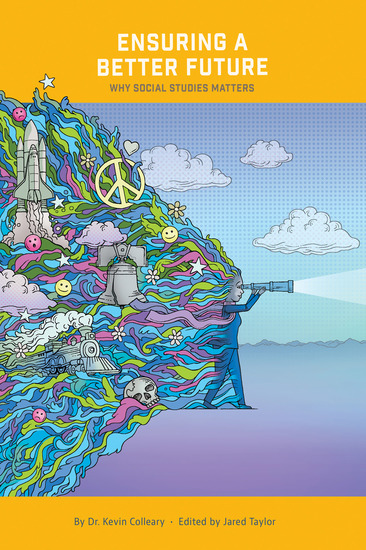
Ensuring a Better Future - Why Social Studies Matters - cover

Ensuring a Better Future - Why Social Studies Matters

Dr. Kevin Colleary

Verlag: Gibbs Smith

  • 0
  • 1
  • 0

Beschreibung

We have missed part of the equation for effective education. STEM became STEAM, but we forgot social studies and the importance of what it teaches. This book explores the sacrifice of both many students’ inherent skills/interests and an effectively informed and effective citizenry through prioritized Social Studies education in public schools.
Verfügbar seit: 26.07.2022.
Drucklänge: 160 Seiten.

Weitere Bücher, die Sie mögen werden

  • Dark Psychology - How to Emotionally Control Anything and Anyone with Persuasion Techniques - cover

    Dark Psychology - How to...

    Wesley Felt

    • 0
    • 0
    • 0
    Verbal abuse involves making negative, defining statements about a person or withholding responses to diminish their presence. Essentially, it means belittling, insulting, or patronizing someone, or gossiping behind their back. 
      
    When the abuser fails to apologize or retract their harmful statements, the relationship may be characterized by verbal abuse. Such abuse is often driven by underlying anger, which fuels and sustains the abusive behavior. 
      
    In schools and everyday life, verbal abuse, often accompanied by physical bullying, serves to elevate the abuser's status over their target and to rally others against the victim. Typically, the bully may not know any other way to connect with others emotionally.
    Zum Buch
  • Saving Ourselves From Suicide - Before and After - How to Ask for Help Recognize Warning Signs and Navigate Grief - cover

    Saving Ourselves From Suicide -...

    LInda Pacha

    • 0
    • 0
    • 0
    HELP, HOPE, AND HEALING - 125 FIVE STAR AMAZON REVIEWS 
    An up-close look at Suicide Prevention and Grief in one best-selling book. Why? They relate more than you realize. Considering how loved ones would grieve might be what keeps someone here. Likewise, grief can become so intense that prevention tools are needed to keep safe those left behind. 
    Pacha, an attorney with a degree and post graduate studies in psychology, public speaks about prevention and grief through her nonprofit, Nick's Network of Hope. She lost her teen son and holds nothing back to help others. 
    SELF-HELP: Reasons to stay; make a safety plan; yell for help and allow it; you're not a burden; people care more than you think; how to reach out when hope is lost; and risk factors and warning signs with real-life examples 
    HOW TO HELP PEOPLE STRUGGLING: Okay to ask if suicidal; listen and ask open-ended questions; don't be a cheerleader if more is needed; believe behavior more than words; and seek professional help 
    GRIEF: Why push on; release guilt and anger; emotions of the first year; second year and beyond; grieving individually and together; new family dynamics; getting back into society; answering difficult questions; parenting surviving kids; keeping your marriage intact; what to avoid; siblings of suicide 
    HOW TO HELP THOSE GRIEVING: Don't avoid; listen but don't try to fix; talk about loved ones; and birthdays and anniversaries 
    STIGMA: Why it exists; ways to reduce it, complexities of mental health; misconceptions of suicide; and how mental health stigma morphs and attaches to survivors 
    HOW TO REDUCE PRESSURE: What is the pressure and ways to reduce it; and recommendations for parents and schools 
    A BETTER TOMORROW: Ways for kinder world; how to reduce bullying and teach kids to live with more compassion
    Zum Buch
  • Risk Makes Sense - Human Judgement and Risk - cover

    Risk Makes Sense - Human...

    Dr Robert Long, Joshua Long

    • 0
    • 0
    • 0
    In a world of growing risk aversion, one could be forgiven for thinking that risk doesn’t make sense. Risk elimination thinking and behaviour sets a trajectory for a ‘dumb down’ workplace culture. The more efforts are made to ‘engineer out the idiot’, the more the system creates an unthinking workforce. 
    A Newsletter in 2011 by the Health and Safety Executive (HSE) in the UK lists a number of things that have been banned. Dodgem cars, school sack races and kite flying, amongst the activities which have been banned. Some schools have banned kids playing on monkey bars and others have banned leather footballs. A local council has instituted a $1000 penalty for kite flying on council ovals in case somebody might get hit. Even the Royal British Legion had to stop selling poppies with pins on Remembrance Day in case people might prick themselves. 
    The report above demonstrates just how absurd things have developed in our risk adverse society. The reality is, there is no learning without risk. Risk is not bad. You can’t live life without a ‘trade-off ’ for risk. You can’t learn without risk. We seem more than ever preoccupied with lawsuits than learning, more anxious about injury than adventure and, fearful of harm rather than welcoming creativity. The evolving language of risk elimination and cult-like fixation with everything ‘zero’ is a language that fosters the development of an unthinking workforce. As risk aversion increases, so do the resulting management systems that accompany it. This results in ‘flooding’ the worker so that they default to gut instincts, personal micro-rules and ‘risk quackery’. This increases risk. Rather than resist risk or extinguish risk, we need to embrace it and better understand it from a social-psychological and cultural perspective. 
    This book advocates a social psychology approach when applied to risk, a new approach to risk that identifies that risk makes sense and is sense-able.
    Zum Buch
  • LSAT Strategies: Boost Your Score with Engaging Secrets - "Elevate your LSAT prep! Discover captivating audio lessons that unlock secrets for acing your score!" - cover

    LSAT Strategies: Boost Your...

    Kellan Ravenscroft

    • 0
    • 0
    • 0
    Audiobook Description for "LSAT Strategies: Boost Your Score with Engaging Secrets" 
    ⭐⭐ Simplified Audio Guide with Explanations ⭐⭐ 
    Are you eager to elevate your career and solidify your understanding by triumphing in the LSAT exam for 2024-2025? 
    Looking for an all-encompassing guide that covers every aspect needed to excel in your LSAT preparation? 
    Your search ends here! 
    This guide serves as your ultimate companion for enhancing your comprehension, honing your skills, and engaging in interactive exercises. With it, you're primed for success. 
    Updated for the LSAT 2024-2025 Exam Structure. 
    Key Features of this Enhanced Guide: 
    - In-depth insights into the LSAT 2024-2025 certification process 
    - Extensive explanations of LSAT concepts  
    - Effective strategies for exam preparation and test-taking techniques 
    Our guide stands out with thorough coverage, which is crucial for your exam achievement. Subjects are not just skimmed over; they are explored with meticulous detail. 
    Please note that this guide is an independent resource and is not associated with any official LSAT body. 
    Crafted with clear organization and accessible language, our LSAT Exam Guide 2024-2025 ensures smooth transitions between topics. Bid farewell to convoluted jargon and welcome straightforward, accurate, and engaging content. 
    So, why hesitate? Click the BUY NOW button, secure your guide, and embark on your journey to LSAT success for 2024-2025! 
    Unlock the secrets to mastering the LSAT while managing your daily routine!
    Zum Buch
  • The Neurotic Character - Fundamentals of a Comparative Individual Psychology and Psychotherapy - cover

    The Neurotic Character -...

    Alfred Adler

    • 0
    • 0
    • 0
    As the 20th century drew to a close, the Austrian psychologist Alfred Adler (1870-1937) was perhaps the least known of the prominent figures of his time - in particular Sigmund Freud and Carl Gustav Jung - and yet he continues to be a figure of influence in the 21st century. His school of ‘individual psychology’ involved a holistic approach to the study of the individual, with a key focus on the way each person viewed the world, especially regarding their concerns of inferiority. This applied to both men and women in their different ways. The Neurotic Character is, as the editor of this modern translation states, 'Adler’s magnum opus - complex, profound and brilliant in its crystallised capture of the human soul gone astray.' 
     
    Written in 1911, Adler continued to expand and develop his ideas over the following decades as he assimilated experience gained from his practice. It opens with the Theoretical Part, in which he introduces ‘The Origin and Development of the Inferiority Feeling and Its Effects', as well as ‘Psychic Compensation and Its Preparation’ and ‘The Accentuated Fiction as Guiding Idea in the Neurosis’. 
     
    The second, major part of his work follows - the Practical Part. In this, Adler examines a wide range of issues, from ‘Greed and Distrust’, to the sexual causes and effects of inferiority. In the succeeding sections, he considers how suppressing everyday feelings and habits experienced by men and women in the course of their lives - issues such as impatience and dissatisfaction, cruelty, self-reproach - can all have profound effects on the individual. 
     
    The writing is clear and supported by case studies providing a strong perspective of reality. It is not surprising that, as a result, it can be seen how strongly Adlerian ideas and views have influenced the practice of psychotherapy today. And that for all the apparent dominance of Freudian and Jungian doctrine in psychological and academic circles, the work of Alfred Adler should not be underestimated. This recording presents the new translation of The Neurotic Character, commissioned and edited by the Adlerian psychotherapist, Henry Stein, who provides a useful appendix - an introduction to classical Adlerian theory and practice.
    Zum Buch
  • Summary & Analysis - A Place For Us - Based On The Book By Fatima Farheen Mirza - cover

    Summary & Analysis - A Place For...

    Book Summary Station

    • 0
    • 0
    • 0
    SUMMARY & ANALYSIS 
      
    A PLACE FOR US 
    BASED ON THE BOOK BY FATIMA FARHEEN MIRZA 
      
    SUMMARY WRITTEN BY: BOOK SUMMARY STATION 
      
    CONTENT 
    The Wedding and the Return 
    Childhood and Family Dynamics 
    First Love and Rebellion 
    The Seeds of Discontent 
    Secrets and Loss 
    Shifting Relationships 
    Deception and Discovery 
    Confrontation and a Father's Fear 
    Reflection and Reconciliation 
    General Analysis 
      
    ABOUT THE ORIGINAL BOOK 
    A Place for Us by Fatima Farheen Mirza tells the story of an Indian Muslim family living in America, focusing on their struggles with cultural expectations, individual desires, and the complexities of family relationships. The novel explores the lives of the three siblings, Amar, Hadia, and Huda, and their parents, Layla and Rafiq, and how each one of them navigates their identities within the family. The story highlights the tension between tradition and modernity, as well as the challenges of communication and understanding within a family. Amar's rebellious nature and his parents' struggle to accept his choices is a central conflict, and the narrative also delves into themes of love, loss, and the search for belonging.
    Zum Buch