¡Acompáñanos a viajar por el mundo de los libros!
Añadir este libro a la estantería
Grey
Escribe un nuevo comentario Default profile 50px
Grey
Suscríbete para leer el libro completo o lee las primeras páginas gratis.
All characters reduced
Biafra - It´s high time we went home - cover

¡Lo sentimos! La editorial o autor ha eliminado este libro de nuestro catálogo. Pero no te preocupes, tenemos más de 500.000 otros libros que puedes disfrutar.

Biafra - It´s high time we went home

Dr. Jolly Chinemeucheya Donatus Nwagbo

Editorial: BooxAi

  • 0
  • 0
  • 0

Sinopsis

Biafrans have a revolutionary spirit. We hate oppression and Nigeria is synonymous to death and oppression. Our ancestors have fought long to liberate us, coming out from colonialism to black and black despotism yet the circle of wickedness continues; only Biafra can guarantee our everlasting survival.
Disponible desde: 09/11/2023.

Otros libros que te pueden interesar

  • Swift Sword - The True Story of the Marines of Mike 3 5 in Vietnam 4 September 1967 - cover

    Swift Sword - The True Story of...

    Doyle Glass

    • 0
    • 0
    • 0
    Monday, 4 September 1967 
    Marine Lance Corporal Jack Swan crested the face of a bare, rocky knoll in 
    the Que Son Valley of South Vietnam. Following Swan were the 164 Marines of 
    Mike Company, Third Battalion, Fifth Marines, First Marine Division. Their 
    mission was to locate and rescue two understrength and isolated companies 
    of felow Marines who were under attack by the North Vietnamese Armv 
    The sight of a quiet and serene rice paddy and shrub covered valley greeted 
    Swan. Too serene, he thought, as he caught sight of a trembling bush. "I think 
    I just saw that bush move!" he shouted. "If it moves again, shoot it!" his squad 
    leader commanded he bush moved Swan hired. and the hush went down 
    Then hell on earth broke loose. 
    Rocket-propelled grenades, AK-47 fire, mortars, and machine guns engulfed 
    the exposed Marines. The vaunted 2nd NVA Division, six thousand, five hundred 
    men strong and expertly camouflaged, had sprung their well-laid trap. 
    Instead of coming to the rescue of their embattled comrades, it was now the 
    men of Mike 3/5 who were about to be annihilated. Burdened with a rifle, the 
    M16, that would often malfunction, how could they hope to beat back a vastly 
    superior foe bent on their destruction? 
    Outnumbered, out-gunned, and exposed, would any of the men of Mike 3/5 survive?
    Ver libro
  • Dictating the Agenda - The Authoritarian Resurgence in World Politics - cover

    Dictating the Agenda - The...

    alexander cooley, Alexander...

    • 0
    • 0
    • 0
    Following the end of the Cold War, the world experienced a remarkable wave of democratization. Over the next two decades, numerous authoritarian regimes transitioned to democracies, and it seemed that authoritarianism as a political model was fading. But as recent events have shown, things have clearly changed. 


    In Dictating the Agenda, authors Alexander Cooley and Alexander Dukalskis reveal how today's authoritarian states are actively countering liberal ideas and advocacy surrounding human rights and democracy across various global governance domains. The transformed global context has unlocked for authoritarian states the possibility to contend with Western liberal soft power in new, traditionally "non-political" ways. Cooley and Dukalskis ultimately advance a theory of authoritarian snapback, the process in which non-democratic states limit the transnational resonance of liberal ideas at home and advance anti-liberal norms and ideas into the global public sphere. 


    Drawing from a range of evidence, this book doesn't just reveal the limits of the liberal influence taken for granted across the world. It offers a novel theory of how authoritarian governments figured out how to exploit and repurpose the same actors, tools, and norms that once exclusively promoted and sustained US-backed liberalism.
    Ver libro
  • Eco-Anxiety (and What to Do About It) - Practical Tips to Allay Your Fears and Live a More Environmentally Friendly Life - cover

    Eco-Anxiety (and What to Do...

    Harriet Dyer

    • 0
    • 0
    • 0
    Be kind to the planet, but most of all, be kind to yourself 


    When you feel the weight of the world on your shoulders, grab this book for a dose of calm and courage. Packed with reassuring tips and advice, from mindfulness exercises to practical steps you can take to make a difference, this guide will ease your eco-anxiety and help you to live a more environmentally friendly life.
    Ver libro
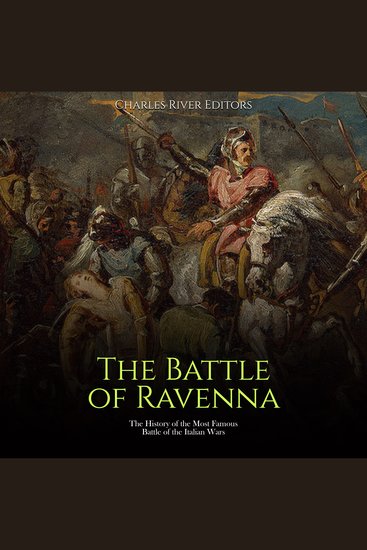
  • Battle of Ravenna The: The History of the Most Famous Battle of the Italian Wars - cover

    Battle of Ravenna The: The...

    Editors Charles River

    • 0
    • 0
    • 0
    In 1494, there were five sovereign regional powers in Italy: Milan, Venice, Florence, the Papal States and Naples. In 1536, only one remained: Venice. These decades of conflict precipitated great anxiety among Western thinkers, and Italians responded to the fragmentation of Latin Christendom, the end of self-governance for Italians, and the beginning of the early modern era in various ways. They were always heavily influenced by the lived experience of warfare between large Christian armies on the peninsula. The diplomatic and military history of this 30-year period is a complex one that one eminent Renaissance historian, Lauro Martines, has described as "best told by a computer, so many and tangled are the treatises, negotiations and battles." At the same time, the fighting went in tandem with the Renaissance and was influenced by it.  
    	Before 1494, death tolls were counted in hundreds rather than thousands, but that would change over the next generation, and among the many battles fought, few stood out like the Battle of Ravenna in 1512. Ravenna is an ancient city in northern Italy on the Adriatic Coast that replaced Rome as capital of the Western Roman Empire for much of the 5th century and continued to serve as a regional center for its successor states, including the Ostrogoths, Byzantines, and Papal States. On April 11 of that year, two great armies met near Ravenna, which had been the site of conflict at least six times before on account of its strategic importance. It was a well-protected city with connections to rich Mediterranean ports, and it guarded the routes to central and southern Italy. Over 44,000 troops gathered, a vast number for the time, to fight over Italy’s destiny, which had become important to France, Austria, and Spain, the great powers of the time.
    Ver libro

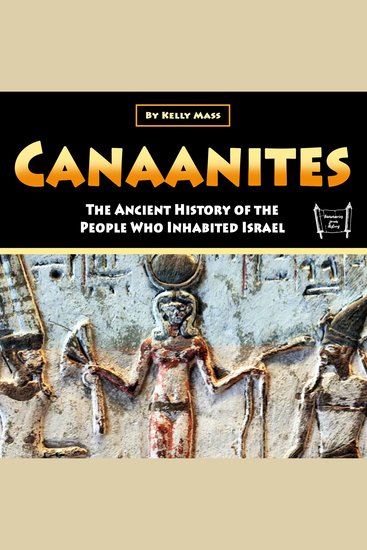
  • Canaanites - The Ancient History of the People Who Inhabited Israel - cover

    Canaanites - The Ancient History...

    Kelly Mass

    • 0
    • 0
    • 0
    During the late 2nd millennium BC, Canaan was a Semitic-speaking civilization located in the Ancient Near East. The region held significant geopolitical importance, especially during the Late Bronze Age Amarna Period in the 14th century BC, when it became a crossroads for major empires. The Egyptian, Hittite, Mitanni, and Assyrian Empires all had areas of interest that converged or overlapped in Canaan, making it a key territory for trade, warfare, and cultural exchange. Much of our understanding of Canaan comes from archaeological excavations at sites such as Tel Hazor, Tel Megiddo, En Esur, and Gezer, where remnants of ancient Canaanite life have been uncovered. 
    In biblical texts, the term "Canaan" frequently appears to refer to the broader geographical region known as the Levant, particularly the Southern Levant. This area includes several territories that are central to the Bible’s narrative, such as the Land of Israel, Philistia, and Phoenicia. The Canaanites were the indigenous peoples of this region, and their diverse societies included both settled agricultural communities and nomadic-pastoral groups.
    Ver libro
  • Crime and Punishment in the American Colonies: The History of the Legal Systems in North America Before the Revolutionary War - cover

    Crime and Punishment in the...

    Charles River Editors

    • 0
    • 0
    • 0
    Even though the colonists eventually broke free from Great Britain, plenty of British customs and practices affected the fledgling United States, particularly when it came to law. While the most notable ramifications can be found in the Fourth Amendment to the Constitution, which forbids illegal searches and seizures by the government, the extensive legal background from Britain impacted how American lawyers and courts operated as well, even as legal codes differed considerably from colony to colony because of their charters. The local codes had to broadly conform with the current laws in England, and the early equivalent of the Colonial Office examined colonial laws if someone sued. Laws found to be inconsistent with English practice were sometimes voided.  
    	On paper, the New England codes were extremely harsh, but in practice, they were often mildly enforced, if enforced at all. One law on the books was that a son could be executed if he cursed his parents, but no one was ever executed for it. Many crimes were offenses against public decorum, but there was a wide range of things considered misbehaviors. Punishments varied but tended to be either financial or public, with humiliation and shame being a large part of it.  
    	Conversely, while the New Englanders tended to base their codes on the Old Testament, in Pennsylvania, the Quaker establishment sought to reform criminals rather than punish them. Consequently, they probably had the least number of capital offenses of any place in the English-speaking world. Furthermore, over time, the list of what constituted crimes changed somewhat, as did the emphasis. The fast growth of populations brought large numbers of immigrants and indentured servants and a more complex society. Diversity increased, and the rise of slavery concentrated in (but was not limited to) the Southern colonies, bringing with it codes of law to control slaves and deal with offenses committed by them.
    Ver libro