¡Acompáñanos a viajar por el mundo de los libros!
Añadir este libro a la estantería
Grey
Escribe un nuevo comentario Default profile 50px
Grey
Suscríbete para leer el libro completo o lee las primeras páginas gratis.
All characters reduced
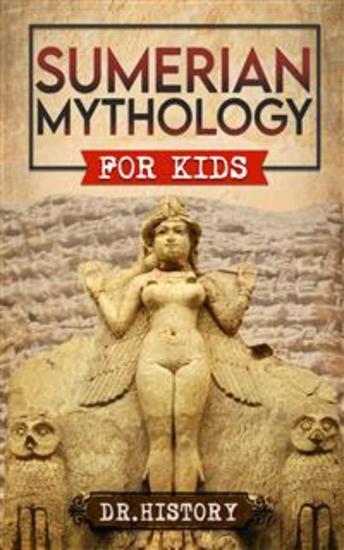
Sumerian Mythology - Enchanting Ancient History and the Most Influential Events of Sumerian Mythology for Kids - cover

Sumerian Mythology - Enchanting Ancient History and the Most Influential Events of Sumerian Mythology for Kids

Dr. History

Editorial: Dr. History

  • 0
  • 0
  • 0

Sinopsis

Get enchanted with Sumerian Mythology history and its remarkable events.

Are you struggling to make sense of what happened at that specific point in history? Do you want to learn all of the historical stories in an easier manner? Pick up this overview history book today to learn the inspiring history behind Sumerian Mythology! This is the perfect book for history fans for all kids to enjoy.

The Sumerian civilization may be relatively short-lived; however, they were the originator of mythology. Greek Mythology and other works were inspired by it. Sumerian mythology, or the sacred tales of the non-Semitic, non-Indo-European people who once populated Sumer, is still relatively unknown to us today. However, this highly advanced civilization established numerous technological inventions and a highly efficient writing system. The divine and theological ideas found in the ancient writings infiltrated the present culture. Ancient mythology's character, disposition, language, and soul were of paramount relevance for the development of our civilization as we see and know it today.

Ancient History for Kids for includes:

• A complete guide - crucial major events from the beginning to the end for a comprehensive overview
• Fascinating moments - the defining moments that everyone should know
• Tons of fun facts - makes learning fun with little known stats, trivia, and more. The interesting events that happened to historical figures.
• Chapter by chapter activities - delightful exercises for kids to make history fun, whether alone or with others

History has generally had a bad reputation of being boring and too complicated. But this series catered to kids will leave young readers learning history in a more interesting and fun manner!

If you’ve been interested in history but don’t have time to read long and dragging textbooks, grab this Ancient History for Kids to get enchanted with its amazing stories!

Scroll up and click the “add to cart” button to begin learning more about the Sumerian Mythology!
Disponible desde: 10/08/2024.

Otros libros que te pueden interesar

  • Spanish So White - Conversations on the Inconvenient Racism of a ‘Foreign’ Language Education - cover

    Spanish So White - Conversations...

    Adam Schwartz

    • 0
    • 0
    • 0
    Explicit discussions of race and racial identity have traditionally been omitted from Spanish language education in the US – especially in curricula designed for imagined 'native' speakers of English. Consequences of this de-racialization of Spanish language learning include the perpetuation of institutional racisms and missed opportunities to build productive conversations about the ways race and power are enacted through language. Spanish So White is written specifically for secondary and post-secondary teachers who identify as White and second language learners of Spanish. It supports the development of language education that centers a racially dynamic Spanish-speaking world and challenges interpersonal and institutional forms of racism. Author Adam Schwartz shares stories of his own socialization into Whiteness and Spanish-English bilingualism. He invites readers into the work of reconciling privileges they too may share as White Spanish-language learners and teachers.
    
    Additional resources for the book are available to download here: https://www.multilingual-matters.com/page/ssw/. 
    Ver libro
  • Setting Sights: Histories and Reflections on Community Armed Self-Defense - cover

    Setting Sights: Histories and...

    scott crow

    • 0
    • 0
    • 0
    Decades ago, Malcolm X eloquently stated that communities have the legitimate right to defend themselves “by any means necessary” with any tool or tactic, including guns. This wide-ranging anthology uncovers the hidden histories and ideas of community armed self-defense, exploring how it has been used by marginalized and oppressed communities as well as anarchists and radicals within significant social movements of the twentieth and twenty-first centuries. 
    Far from a call to arms, or a “how-to” manual for warfare, this volume offers histories, reflections, and questions about the role of firearms in small collective defense efforts and its place in larger efforts toward the creation of autonomy and liberation. 
    Featuring diverse perspectives from movements across the globe, Setting Sights includes vivid histories and personal reflections from both researchers and those who participated in community armed self-defense. Contributors include Dennis Banks, Kathleen Cleaver, Mable Williams, Subcomandante Marcos, Kristian Williams, George Ciccariello-Maher, Ashanti Alston, and many more.
    Ver libro
  • On the Parts of Animals - cover

    On the Parts of Animals

    Aristotle

    • 0
    • 0
    • 0
    "On the Parts of Animals" is a biological treatise written by Aristotle, in which he extensively examines the anatomy and physiology of different animals, including humans. The book is divided into four sections, each focusing on a different aspect of animal life. In the first section, Aristotle explores the concept of soul and distinguishes between different types of souls that exist in animals. In the second section, he discusses the structure and function of sensory organs, such as eyes and ears, and how animals use them to interact with their environment. In the third section, he analyzes the digestive system and other internal organs, as well as the reproductive system, to understand how animals sustain themselves and reproduce. Finally, in the fourth section, he looks at the differences between different animal species and the variations in their anatomy and physiology. Read in English, unabridged.
    Ver libro
  • Sting and The Police - Walking in Their Footsteps - cover

    Sting and The Police - Walking...

    Aaron J West

    • 0
    • 0
    • 0
    “An excellent look at how the Police accomplished success . . . West is especially good at examining how the band used the nascent MTV to define themselves.” ―Publishers Weekly   During the 1980s, The Police were one of the biggest bands in the world. Yet after only five albums—and at the peak of their popularity—they disbanded, and Sting began a solo career that made him a global pop star. Today, artists from Puff Daddy to Gwen Stefani credit The Police and Sting as major influences on their own work.   In this book, Aaron J. West explores the cultural and musical impact of Stewart Copeland, Andy Summers, and Sting. West details the distinctive hybrid character of The Police’s musical output, which would also characterize Sting’s post-Police career. Sting’s long-lived solo career embodies the power of the artful appropriation of musical styles, while capitalizing on the modern realities of pop music consumption. The Police—and Sting in particular—were pioneers in music video, modern label marketing, global activism, and the internationalization of pop music.  Sting and The Police: Walking in Their Footsteps is a feast for fans—and by placing the band within its various musical, cultural, commercial, and historic contexts, it’s also fascinating reading for anyone interested in global popular music culture.
    Ver libro
  • Nahum - The World English Bible Book 34 (Unabridged) - cover

    Nahum - The World English Bible...

    Various Authors

    • 0
    • 0
    • 0
    The Book of Nahum is the seventh book of the 12 minor prophets of the Hebrew Bible. It is attributed to the prophet Nahum, and was probably written in Jerusalem in the 7th century BC.
    Ver libro
  • Brandy Station and the March to Gettysburg: The History of the Confederate Invasion of Pennsylvania Before the Biggest Battle of the Civil War - cover

    Brandy Station and the March to...

    Editors Charles River

    • 0
    • 0
    • 0
    As Lee’s army moved into Pennsylvania, Stuart’s cavalry screened his movements, thereby engaging in the more traditional cavalry roles, but it’s widely believed that he was still smarting over the results of June 9. As a result, many historians think it likely that he had already planned to remove the negative effect of Brandy Station by duplicating one of his now famous rides around the enemy army, much as he did to McClellan’s Army of the Potomac during the Peninsula Campaign in 1862. This time, however, as Lee began his march north through the Shenandoah Valley in western Virginia, it is highly unlikely that is what he wanted or expected. 
    To complicate matters even more, as Stuart set out on June 25 on what was probably a glory-seeking mission, he was unaware that his intended path was blocked by columns of Union infantry that would invariably force him to veer farther east than he or Lee had anticipated. Ultimately, his decision would prevent him from linking up with Ewell as ordered and deprive Lee of his primary cavalry force as he advanced deeper and deeper into unfamiliar enemy territory. According to Halsey Wigfall (son of Confederate States Senator Louis Wigfall) who was in Stuart’s infantry, “Stuart and his cavalry left [Lee’s] army on June 24 and did not contact [his] army again until the afternoon of July 2, the second day of the [Gettysburg] battle.” 
    As it would turn out, Lee’s army inadvertently stumbled into Union cavalry and then the Union army at Gettysburg on the morning of July 1, 1863, unaware of the force in their front. From July 1-3, Lee’s army tried everything in its power to decisively defeat George Meade’s Union Army of the Potomac, unleashing ferocious assaults that inflicted nearly 50,000 casualties in all. Lee would try and fail to dislodge the Union army with attacks on both of its flanks during the second day and Pickett’s Charge on the third and final day. 
    Ver libro