Junte-se a nós em uma viagem ao mundo dos livros!
Adicionar este livro à prateleira
Grey
Deixe um novo comentário Default profile 50px
Grey
Assine para ler o livro completo ou leia as primeiras páginas de graça!
All characters reduced
Sarcasm Impact - cover
LER

Sarcasm Impact

Dorian Ashwood

Tradutor A AI

Editora: Publifye

  • 0
  • 0
  • 0

Sinopse

"Sarcasm Impact" explores the intricate world of sarcasm, a communication tool capable of fostering connection or creating division. The book delves into the linguistic and psychological underpinnings of sarcasm, examining how vocal tone, facial expressions, and context contribute to its interpretation. Sarcasm isn't merely a biting remark; it's a sophisticated form of communication that plays a significant role in social dynamics. Did you know, for example, that sarcasm can be used to convey criticism indirectly or to establish group identity? This book uniquely integrates research from linguistics, psychology, and sociology to provide a comprehensive understanding of sarcasm's impact on social interaction. It examines the core components of sarcasm, addresses its societal implications across different cultures, and analyzes its influence on workplace dynamics and interpersonal relationships. The book progresses from defining sarcasm and its key components to exploring the role of context and social functions, concluding with strategies for improving sarcastic communication and reducing misunderstandings.
Disponível desde: 05/05/2025.
Comprimento de impressão: 75 páginas.
Outros livros que poderiam interessá-lo

  • Everyday Leadership - Taking Charge in the Real World - cover

    Everyday Leadership - Taking...

    M.D. Ahron Friedberg, Sandra...

    • 0
    • 0
    • 0
    Everyday Leadership examines how individuals in everyday, relatively small settings can succeed in leadership positions. 


    The book provides tools for tackling the unique psychological and external challenges that everyday leaders face, and offers principles that they can adapt to their own situations. Dr. Ahron Friedberg, who regularly advises leaders and would-be leaders, emphasizes the social aspect of leadership, and explores how those who are new to leadership—and those in established positions—can leverage their support networks and thrive in their roles. The book follows the experience of real people who have faced leadership challenges and learned from them, demonstrating how listeners can learn from these examples and apply them to their own circumstances. Guided by a practical leadership roadmap, chapters examine concepts such as vision, determination, flexibility, planning, organization, and responsibility using extensive case studies, with reflective questions and key takeaways that help the listener consider how to apply these principles to their own leadership challenges. 


    This book is a must-listen for HR professionals, executive coaches, management consultants, leadership trainers, and organizational psychologists as well as those facing leadership challenges in their profession.
    Ver livro
  • Battle of White Mountain The: The History and Legacy of the First Major Battle of the Thirty Years’ War - cover

    Battle of White Mountain The:...

    Editors Charles River

    • 0
    • 0
    • 0
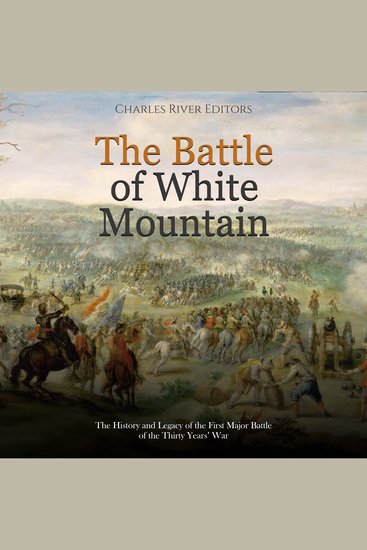
    It has been famously pointed out that the Holy Roman Empire was neither holy, nor Roman, but it was also not an empire in the sense people expect when hearing the term. In theory, the emperor was the highest prince in Christendom, and his dominion extended the length and breadth of Western Europe. The tensions between the Holy Roman Empire and Church over the power to invest bishops with authority led to decades of civil war in Germany on the way to establishing the relationship between Church and State, elevating the status of the papacy and weakening the Holy Roman Empire. 
    	The Thirty Years' War was one of the most horrific conflicts in history, resulting in the deaths of nearly two-thirds of Germany's population, and the Battle of White Mountain in 1620 was the first major battle of that war. The battle was fought mainly due to Holy Roman Emperor Ferdinand II’s dealings with the Bohemians and their new king, Frederick of the Palatinate, who Ferdinand regarded as illegitimate. It was also partly a struggle between the centralizing attempts of the Habsburg dynasty conflicting with the traditional regional autonomy that existed within the legislative institutions called the Estates. What gave it an emotional element was the enmity between Bohemian Protestantism and Ferdinand II’s zealous Catholicism, and that would help draw in several European powers. At the Battle of White Mountain, the armies of the Bohemian Confederation and the Habsburgs met each other near Prague, and the combatants included officers and soldiers from nearly every nation in Europe, including the Netherlands, Germany, Italy, Poland, Bohemia, Moravia, Bavaria, Italy, Spain, Hungary, Transylvania, England, Scotland, and Ireland. The decisive result would permanently affect the course of the conflict over the coming decades, and with it the fate of modern Europe. 
    Ver livro
  • The Unplugged Hours - Cultivating a Life of Presence in a Digitally Connected World - cover

    The Unplugged Hours -...

    Hannah Brencher

    • 0
    • 0
    • 0
    Read by the author. 
    Join the Challenge: One Thousand Unplugged Hours in One Year 
    Former social media addict, Hannah Brencher discovered first-hand that turning off her phone had a substantial impact on her mental health, relationships, time management, and outlook on the world.  
    Like so many of us, Hannah had been turning to her phone to cope with life in a time of isolation and uncertainty. But those coping mechanisms had become habits she didn't know how to break until she truly committed herself to one simple yet profound act: log 1,000 phone-free hours in a year.    
    Now, in The Unplugged Hours, she demonstrates how the act of powering down and reducing the habit of a constantly plugged-in lifestyle can change your entire life. 
    No matter what you do for a living, how much time your apps save you, or how much entertainment your phone brings, it is possible to unplug—and rediscover the richness of life on the other side. 
    A powerful weaving of memoir, cultural commentary, and spiritual insights, this life-changing book will help you:Reclaim your ability to be present and engaged with the world around you.Swap the hurried, constant pace of technology for a steadier, more rooted way of living.Establish your own unplugged rituals and rhythms in daily life. 
      
    The Unplugged Hours gives you the practical ideas and spiritual inspiration you need to stop scrolling and start living. So join the challenge: put your phone down and live your life.
    Ver livro
  • Codependency 10 And Emotional Intelligence 20 - The Step-by-Step Guide to Changing Your Life for the Better Learn to Love Yourself and Close with Toxic Relationships - cover

    Codependency 10 And Emotional...

    Ruby T. Douglas

    • 0
    • 0
    • 0
    Codependency 1.0 And Emotional Intelligence 2.0 is a practical and empowering audiobook for anyone who feels stuck in unhealthy relationship patterns, overwhelmed by other people’s needs, or disconnected from their own emotional well-being. If you often say yes when you want to say no, fear disappointing others, or find yourself trapped in toxic dynamics that drain your energy, this guide will help you understand why, and show you how to change it. 
    Codependency is more than being “too caring.” It can quietly shape your choices, your self-worth, and the way you build relationships. It may lead you to seek validation from others, ignore your own boundaries, and confuse love with sacrifice. At the same time, low emotional awareness can make it even harder to recognize manipulation, regulate your reactions, or communicate your needs with confidence. 
    This audiobook brings these two essential themes together in a clear, step-by-step path toward growth. You will learn how codependent patterns develop, how emotional intelligence affects your daily decisions, and how both influence the quality of your relationships. More importantly, you will discover practical ways to break the cycle. 
    Inside, you will explore how to identify emotional triggers, manage guilt, strengthen self-respect, and stop people-pleasing behaviors that keep you emotionally exhausted. You will also learn how to build healthier boundaries, improve communication, develop self-awareness, and make choices that align with your values instead of your fears. 
    Whether you are dealing with a difficult partner, family conflict, or a long history of putting yourself last, this audiobook offers more than insight, it offers tools for real change. It is designed for listeners who want to improve their relationships without losing themselves, increase their confidence, and create a more balanced and fulfilling life.
    Ver livro
  • Plagues and Their Aftermath - How Societies Recover from Pandemics - cover

    Plagues and Their Aftermath -...

    Brian Michael Jenkins

    • 0
    • 0
    • 0
    From a plague in Athens during the Peloponnesian War in 430 BCE, to another in 540 that wiped out half the population of the Roman empire, down through the Black Death in the Middle Ages and on through the 1918 flu epidemic (which killed between 50 and 100 million people) and this century's deadly SARS outbreak, plagues have been a much more relentless fact of life than many realize. 


    The legacy of epidemics, Brian Michael Jenkins observes, is not only one of lives lost but of devastated economies and social disorder, all of which have severe political repercussions. 


    Thus, each chapter of Plagues and Their Aftermath draws on those historical precursors to focus on one particular aspect of their aftermath: What happens to political systems? What happens in the area of crime and terrorism? Do wars happen? What are the effects on cultures? What was the impact of widespread fear and public hysteria, of increased suspicion and scapegoating, of the spread of rumors and conspiracy theories? 


    Jenkins's sobering analysis is riveting and thought-provoking listening for general listeners and specialists alike, and throws welcome light into what many fear is a dark future.
    Ver livro
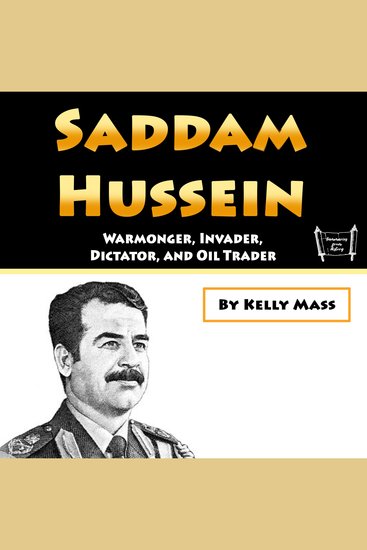
  • Saddam Hussein - Warmonger Invader Dictator and Oil Trader - cover

    Saddam Hussein - Warmonger...

    Kelly Mass

    • 0
    • 0
    • 0
    Saddam Hussein, the sixth president of Iraq, held power from July 16, 1979, until his downfall on April 9, 2003. A central figure in Iraq's political history, Saddam was a founding member of the Arab Socialist Ba'ath Party, which advocated for a fusion of Arab nationalism and socialism, known as Ba'athism. The party's rise to power in Iraq was marked by the 1968 coup, often referred to as the 17 July Revolution, which saw the Ba'ath Party assume control. Saddam, a key figure in the party, was instrumental in establishing its dominance in Iraq. 
    Saddam's path to the presidency was shaped by his political astuteness and ruthless consolidation of power. He became vice president under General Ahmed Hassan al-Bakr, who was severely weakened by ill health. At a time when numerous factions within the country threatened to destabilize the government, Saddam focused on building and strengthening the security forces that would enable him to suppress dissent. He carefully navigated the complexities of power struggles between the administration and the military, ensuring his influence over both the party and the state apparatus. His careful maneuvering eventually led to his formal assumption of power in 1979, though he had already been Iraq's de facto leader for several years. 
    In the early 1970s, Saddam took aggressive steps to nationalize Iraq's most important industries, including the Iraq Petroleum Company and various independent banks. This move, though initially successful in securing Iraq's economic independence, led to long-term financial instability. The nationalization policies, combined with inflation and a series of bad loans, contributed to the eventual collapse of Iraq's financial sector. Nevertheless, Saddam's regime was buoyed by the economic boom fueled by Iraq's oil exports, which provided the government with significant wealth and the ability to fund state projects.
    Ver livro