¡Acompáñanos a viajar por el mundo de los libros!
Añadir este libro a la estantería
Grey
Escribe un nuevo comentario Default profile 50px
Grey
Suscríbete para leer el libro completo o lee las primeras páginas gratis.
All characters reduced
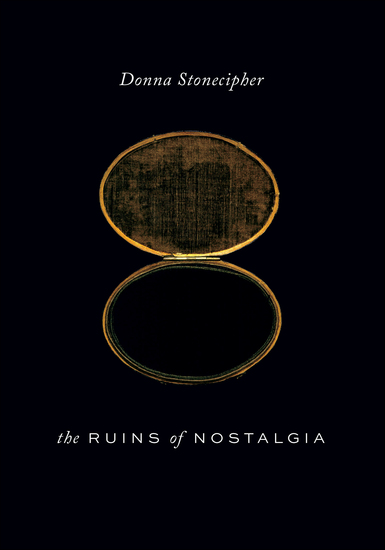
The Ruins of Nostalgia - cover

The Ruins of Nostalgia

Donna Stonecipher

Editorial: Wesleyan University Press

  • 0
  • 0
  • 0

Sinopsis

What is it to feel nostalgia, to be skeptical of it yet cleave intently to the complex truths of feeling and thought? In a series of 64 gorgeous, ramifying, unsettling prose poems addressing late-twentieth- and twenty-first century experience and its discontents, The Ruins of Nostalgia offers a strikingly original exploration of the misunderstood phenomenon of nostalgia as both feeling-state and historical phenomenon. Each poem, also titled The Ruins of Nostalgia, is a kind of lyrical mini-essay, playful, passionate, analytic. Some poems take a location, memory, conceit, or object as their theme. Throughout the series, the poems recognize and celebrate the nostalgias they ironize, which are in turn celebrated and then ironized again. Written often in the fictional persona of the first-person plural, The Ruins of Nostalgia explores the rich territory where individual response meets a collective phenomenon.[sample poem]The Ruins of Nostalgia 13Where once there had been a low-end stationery store minded by an elderly beauty queen, there was now a store for high-end espresso machines minded by nobody. Where once there had been an illegal beer garden in a weedy lot, there was now a complex of luxury lofts with Parisian-style ivory façades. Where once there had been a bookstore and a bike shop and a bakery, there was now a wax museum for tourists. Where once there had been an empty lot there was now a building. Where once there had been an empty lot there was now a building. Where once there had been an empty lot there was now a building. Where once there had been an empty lot there was now a building. Where once there had been farms there were now subdivisions. Where once there had been subdivisions there were now sub-subdivisions. We lived in a sub-subdivision of a subdivision. We ourselves had become subdivided—where once we had merely been of two minds. * Where once there had been a river there was now a road. A vocal local group had started a movement to break up the road and "daylight" the river, which still flowed, in the dark, underneath the road. * Could we daylight the farms, the empty lots, the stationery store, the elderly beauty queen, the city we moved to? Was it still flowing somewhere, under the luxury lofts, deliquescing in the dark, inhabited by our luxury selves, not yet subdivided, because not yet whole? * Could we daylight the ruins of nostalgia?
Disponible desde: 10/10/2023.
Longitud de impresión: 81 páginas.
Otros libros que te pueden interesar

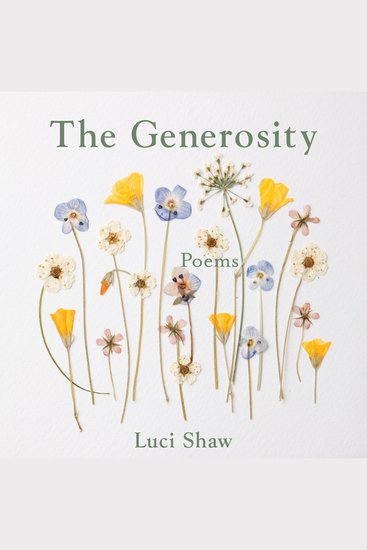
  • The Generosity - cover

    The Generosity

    Luci Shaw

    • 0
    • 0
    • 0
    "Rejoice, readers, as you receive the generosity of Luci Shaw's 76 new grace-infused parable poems. Autobiography once more merges with theology as these poems illuminate in splendored natural detail  how the seasons of creation  parallel and explain the seasons of her  life as a poet. Again and again, these poems shower us with glorious epiphanies from the natural world as it reflects God's generosity at work such as "spring's impossible news of green." These poems confirm that in poetry as in faith "ripeness is all." Like Wordsworth, Luci is celebrated for being a highly gifted landscape poet whose works are rich in imagery from the physical world—meadows filled with seeds, flowers, and also poems which are like "shoots" in Luci's writing life. Animals, too, great and small (beetles, cricket, and voles to bears and whales) play a major role in Luci's poetics of creation; God is likened to a great bear who leaves paw tracks for us to follow. In their deep faith and vibrant colors and designs, the poems in Generosity might be considered Luci's Book of Kells. We need to be like Luci's father who carried her poems in his briefcase to show his friends." —Philip C. Kolin, Author, Reaching Forever: Poems; Distinguished Professor of English (Emeritus), University of Southern Mississippi
    Ver libro
  • The Odyssey - cover

    The Odyssey

    Homer Homer

    • 0
    • 0
    • 0
    "The Odyssey" is an ancient Greek epic poem traditionally attributed to Homer, dating back to the 8th century BCE. It is the sequel to "The Iliad" and focuses on the hero Odysseus's long journey home to Ithaca after the fall of Troy. Along the way, he encounters mythical creatures, gods, and goddesses, and undergoes numerous trials and adventures. The epic also follows his wife Penelope and son Telemachus as they contend with suitors who have invaded their home during Odysseus's absence. "The Odyssey" explores themes of heroism, homecoming, loyalty, and the human condition.
    Ver libro
  • My Hope Within Syllables - A collection of Haiku & Tanka poetry - cover

    My Hope Within Syllables - A...

    Alta H Haffner

    • 0
    • 0
    • 0
    Hope within syllables was and always will be my "soul child". 
    When I wrote my 1st ever Haiku, I knew that I would be counting syllables until my last breath. 
    This book is a little sad but incredibly hopeful.
    Ver libro
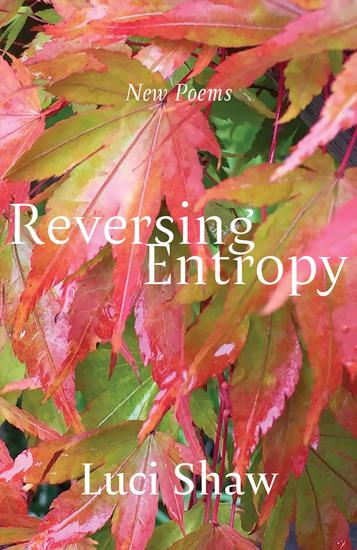
  • Reversing Entropy - Poems - cover

    Reversing Entropy - Poems

    Luci Shaw

    • 0
    • 0
    • 0
    From the pen of beloved poet Luci Shaw comes a new collection that celebrates inspired creativity as an antidote to chaos.
    The poet's own words best describe the heart of this pinnacle collection of new work by beloved writer Luci Shaw:
    
    Entropy: A measure of the molecular disorder, or randomness, of a system, its lack of order or predictability, resulting in a gradual decline into disorder. 
    
    Our universe, and the systems within it, constantly shift from their created states of order towards disorder, or chaos. The second law of thermodynamics asserts that entropy, or disorder, always increases with time. Creative human activities such as art, architecture, music, story or film are human efforts to halt and reverse this loss of meaning. Thus, smaller systems, like individual poems, become highly ordered as they receive energy from outside themselves, from the poet. They reverse entropy because they are moving from a state of disorder (all the random ideas, words and phrases available to the writer) into an orderly form designed by the writer to create meaningful images and concepts in the reader's mind (which is where the word "imag-ination" comes from.) This transfer of images, concepts and ideas into the mind of a reader is the task of poetry and the calling of the poet. Just as a composer of music gathers rhythms, notes, melodies, or harmony, organizing them into fugues or sonatas or concertos, so poets work and write to discover ways of arranging their responses to the world in words that introduce meaning and beauty in the mind of the reader. 
    
    Which is what I've been trying to do for most of my life. 
    Ver libro
  • Behind the Web - cover

    Behind the Web

    Fimalia McNoll

    • 0
    • 0
    • 0
    Tears, dropping, running like a river 
    Genuine attention needed 
    But how to wipe them with hands tied 
    Call for help, people will hear 
    Some might hear and turn a blind eye 
    Others might pretend they don't hear you cry 
    Yet a kind one must come running 
    If not running, to your aid, walking, scrambling
    Ver libro
  • Sunset Gun - Poems by Dorothy Parker - Unabridged - cover

    Sunset Gun - Poems by Dorothy...

    Dorothy Parker

    • 0
    • 0
    • 0
    In this follow up to her best-selling debut collection of poetry ("Enough Rope" from 1926) Dorothy Parker published "Sunset Gun" (1928) her second of three volumes of short verse. One of the 20th century's most celebrated and renowned humorists, Parker once again delivers a biting, satiric and insightful look at love, life and literature in this brilliant collection.  Dorothy Parker - social commentator, political reformer and legendary wit - has enjoyed a special place in American culture and "Sunset Gun" is another early example of Parker's unique and wry commentary on modern life. It is presented here in its original and unabridged format.
    Ver libro