¡Acompáñanos a viajar por el mundo de los libros!
Añadir este libro a la estantería
Grey
Escribe un nuevo comentario Default profile 50px
Grey
Suscríbete para leer el libro completo o lee las primeras páginas gratis.
All characters reduced
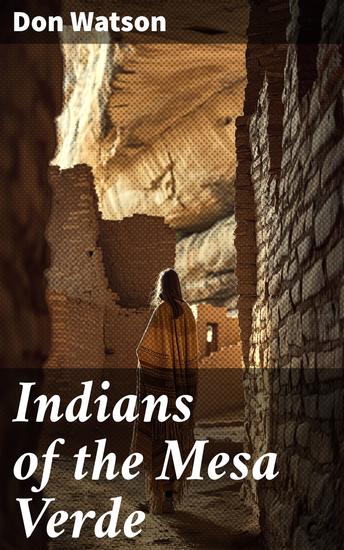
Indians of the Mesa Verde - Enriched edition Unveiling the Mysteries of Mesa Verde: An Archaeological Journey into Ancestral Puebloan Culture - cover

Indians of the Mesa Verde - Enriched edition Unveiling the Mysteries of Mesa Verde: An Archaeological Journey into Ancestral Puebloan Culture

Don Watson

Editorial: Good Press

  • 0
  • 0
  • 0

Sinopsis

In "Indians of the Mesa Verde," Don Watson intricately weaves a narrative that explores the rich tapestry of Native American history in the southwestern United States, specifically focusing on the Ancestral Puebloans of the Mesa Verde region. Through meticulous research and vivid prose, Watson elucidates the cultural practices, architectural ingenuity, and spiritual beliefs of these indigenous peoples. The book employs a blend of descriptive ethnography and historical analysis, set against the backdrop of the stunning and harsh landscape that shaped their way of life. It serves as both a scholarly examination and a tribute to the resilience of the Ancestral Puebloans. Don Watson, an esteemed historian and anthropologist, draws upon a wealth of fieldwork and personal passion for indigenous cultures to illuminate the lives of these remarkable people. His profound respect for their traditions and struggles is evident throughout the text, reflecting his commitment to bringing marginalized voices into the broader historical discourse. Watson's work is informed by a deep understanding of the socio-political challenges faced by indigenous groups, shaped by his extensive academic background and field studies in anthropology. "Indians of the Mesa Verde" is an indispensable read for anyone interested in Native American history, anthropology, or environmental studies. Watson's engaging narrative not only honors the legacy of the Ancestral Puebloans but also encourages contemporary readers to reflect on the importance of cultural preservation and the lessons that can be learned from the past. This book promises to inspire a deeper appreciation for the complexities and richness of indigenous cultures.

In this enriched edition, we have carefully created added value for your reading experience:
- Hand‐picked Memorable Quotes shine a spotlight on moments of literary brilliance.
- Interactive footnotes clarify unusual references, historical allusions, and archaic phrases for an effortless, more informed read.
Disponible desde: 11/11/2023.
Longitud de impresión: 155 páginas.

Otros libros que te pueden interesar

  • The Shortest History of Japan - From Mythical Origins to Pop Culture Powerhouse―The Global Drama of an Ancient Island Nation - cover

    The Shortest History of Japan -...

    Lesley Downer

    • 0
    • 0
    • 0
    Zen, haiku, martial arts, sushi, anime, manga, film, video games . . . Japanese culture has long enriched our Western way of life. Yet from a Western perspective, Japan remains a remote island country that has long had a complicated relationship with the outside world. 


    Even at the nearest point, Japan—an archipelago strung like a necklace around the Asian mainland—is considerably farther from Asia than Britain is from Europe. The sea provides an effective barrier against invasion and has enabled the culture to develop in unique and distinctive ways. During the Edo period, the Tokugawa shoguns successfully closed the country to the West. After Japan opened, it swung in the opposite direction, adopting Western culture wholesale. Both these strategies enabled it to avoid colonization, one of the very few non-Western countries to do so, and to retain its traditions and way of life. 


    This history will be of interest to people who know nothing about Japan, but also full of insights for those who do. Lesley Downer takes the listener through the great sweep of Japanese history, focusing on the dramatic stories of larger-than-life individuals—from emperors descended from the Sun Goddess to warlords, samurai, merchants, court ladies, women warriors, geisha, and businessmen who shaped this extraordinary modern society.
    Ver libro
  • Think and Grow Rich - Original Edition - cover

    Think and Grow Rich - Original...

    Napoleon Hill

    • 0
    • 0
    • 0
    This is the original 1937 edition. Think and Grow Rich is the number-one inspirational and motivational classic for individuals interested in reaching their goals by learning from important figures in history. This audiobook is the original 1937 edition written by Napoleon Hill and inspired by Andrew Carnegie, and while it has often been reproduced, no updated version has ever been able to compete with the original. It is the roadmap to achievement.The 13 Steps to Riches described in this audiobook offer the shortest dependable philosophy of individual achievement ever presented for the benefit of the man or woman who is searching for a definite goal in life. It comes directly from the experiences of hundreds of America's most successful people.Hill interviewed 504 people, including Ford, Wrigley, Wanamaker, Eastman, Rockefeller, Edison, Woolworth, Darrow, Burbank, Morgan, Firestone, and three United States presidents. The process of conducting these interviews required an investment of 20 years of Napoleon Hill's life.This audiobook will guide many to success, and has sold millions of printed copies for nearly three quarters of a century. Yes, one can gather from the title that the starting place for wealth is in a person's thoughts - and this title is the source for most of today's motivational speakers.
    Ver libro
  • Genocidal Maniacs - The Biography of Evil Dictators Like Pol Pot and Enver Pasha - cover

    Genocidal Maniacs - The...

    Kelly Mass

    • 0
    • 0
    • 0
    This bundle of two audiobooks consists of the following topics: 
    1 - It doesn’t seem like Enver Pasha was a good man. His war crimes have caused the deaths of millions of innocent citizens. Sure, during a war and a collapsing empire, you try to do what you can to stop losing, but I doubt anyone in the right mind can justify his actions, which included the slaughter of minorities in the Ottoman Empire during World War 1, and even the Armenian Genocide, which consisted of releasing prisoners upon the Armenian population to have their way and abuse, murder, rape, and pillage. Deportation of Armenians to remote areas, away from their homes, caused many to starve, drown, or become severely ill. And to this day, the Turkish government is still somewhat reluctant to acknowledge the severity of that historical atrocity. Let’s learn more about Enver Pasha in this book, as far as history reaches into the depths of time, and find out what made him the way he became, what circumstances contributed to his reactions and commands, and the details of what he did. 
    2 - He sure had a funny name. And what’s so strange, is that during most of the biggest events in Cambodia, he wasn’t really there. It seems like he was some big orchestrator hiding behind the curtains and silently directing officers to make it all happen. The Cambodia genocide that killed an estimated 2 million of their own citizens has been partially attributed to this maniac. Pol Pot was a Cambodian political leader and revolutionary who worked as Prime Minister of Democratic Kampuchea from 1975 till 1979. He was a key member of Cambodia's communist company, the Khmer Rouge, from 1963 to 1997, and acted as the General Secretary of the Communist Party of Kampuchea from 1963 to 1981. He was a Marxist-- Leninist and a Khmer nationalist. Cambodia was changed into a one-party communist state under his management, and the Cambodian genocide happened.
    Ver libro
  • Anglo-Ashanti Wars and the Anglo-Zulu War The: The History of the British Empire’s Costliest Campaigns against Indigenous Africans - cover

    Anglo-Ashanti Wars and the...

    Editors Charles River

    • 0
    • 0
    • 0
    By the mid-19th century, other European powers became interested not only in the exploration of Africa but the exploitation of it, especially once the German Empire unified after the Franco-Prussian War. This began a rush, spearheaded mainly by European commercial interests in the form of chartered companies, to penetrate the African interior and woo its leadership with guns, trinkets and alcohol, and having thus obtained their marks or seals upon spurious treaties, begin establishing boundaries of future European colonies. The ease with which this was achieved was due to the fact that, at that point, traditional African leadership was disunited, and the people had just staggered back from centuries of concussion inflicted by the slave trade. Thus, to usurp authority, to intimidate an already broken society, and to play one leader against the other was a diplomatic task so simple, much of Africa would come under European influence in a short time.  
    	For almost a century, the British in West Africa were faced with a powerful and stubborn African opponent: the Ashanti Empire. The Ashanti were formed by alliance and the conquest of the Akan people in the rainforest zone between the West African coast and the Sahel country to the north. 	The Ashanti fought the British in five wars over the nineteenth century, and they were the only West African people inflicting more than one defeat on the British. War in tropical West Africa was different from most of the rest of the world. The prevalence of endemic diseases like malaria typically killed half of the Europeans posted there per year; it was called “The White Man’s Grave” for a reason. A second factor was the presence of the tsetse fly that carried a disease able to kill horses quickly. Military expeditions were left to move entirely on foot, carrying whatever drafted or hired laborers could carry. There were no carts, no wagons, no pack animals, and no cavalry. 
    Ver libro
  • Update Liberalism - Liberal Answers to the Challenges of Our Time - cover

    Update Liberalism - Liberal...

    Ralf Fücks, Rainald Manthe

    • 0
    • 0
    • 0
    »Update Liberalism« takes a self-critical look at the crises of liberalism and gives liberal answers the challenges of the 21st century.
    Ver libro
  • Twelve Years With Hitler - Secretary to the Führer - cover

    Twelve Years With Hitler -...

    Albert Zoller, Christa...

    • 0
    • 0
    • 0
    In 1930, as a young woman, Christa Schroeder became a stenographer for the Nazi party, before being noticed by Hitler who, in 1933, hired her as his private secretary. 


    Schroeder remained by Hitler's side, fiercely loyal, for twelve years, living at the Wolfsschanze and even joining him and his staff in the Führerbunker in Berlin in January 1945. 


    In 1945, interned in the Augsburg camp, Christa Schroeder was interrogated by French liaison officer Albert Zoller who asked her to recount her years spent with the Führer. Schroeder's testimony, published here in the form of interviews with Zollers, gives an intimate, astonishing, and incredibly detailed insight into the private life and personality of Adolf Hitler throughout the 1930s and 1940s. 


    An exceptional testimony, Twelve Years With Hitler is an essential source document on Nazi Germany and Adolf Hitler. Translated into English here for the first time, Albert Zoller's interviews with Christa Schroeder are guaranteed to shock and fascinate any military history enthusiast.
    Ver libro