Junte-se a nós em uma viagem ao mundo dos livros!
Adicionar este livro à prateleira
Grey
Deixe um novo comentário Default profile 50px
Grey
Assine para ler o livro completo ou leia as primeiras páginas de graça!
All characters reduced
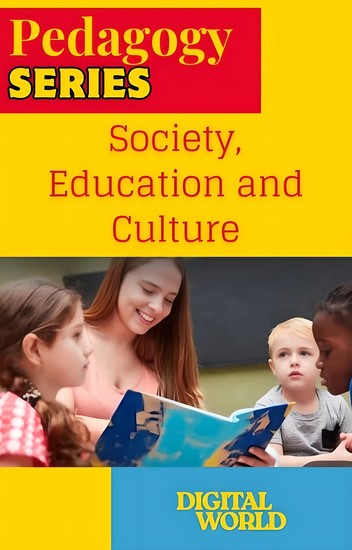
Society Education and Culture - cover
LER

Society Education and Culture

Digital World

Editora: Publishdrive

  • 0
  • 0
  • 0

Sinopse

Education is one of the most important pillars for the development of contemporary societies. In today's world, marked by rapid technological, social, and cultural transformations, understanding the interactions between society, education, and culture has become essential for education professionals, managers, entrepreneurs, and all those who wish to contribute significantly to the development of individuals and communities.
 
This book, Society, Education, and Culture, is the second volume in the Pedagogy Series, designed to offer a comprehensive guide that combines theory, practice, and innovation. Inspired by great educational thinkers such as Jean Piaget, Lev Vygotsky, Paulo Freire, Maria Montessori, Jean-Jacques Rousseau, Darcy Ribeiro, and Maria Nilde Mascellani, this volume provides a deep dive into the social and cultural aspects that shape education, connecting them to pedagogical practice, educational entrepreneurship, and the use of new technologies.
 
Throughout the pages, you'll find a clear and accessible approach, structured to transform knowledge into action. Each chapter presents theoretical concepts, practical examples, and case studies, along with carefully designed activities and exercises so readers can immediately apply what they've learned to their professional practice. From early childhood education to graduate school, including special education and inclusion, the content of this book was designed to meet the needs of a diverse audience, including students, teachers, school administrators, and educational entrepreneurs.
 
In addition to exploring classical theories of pedagogy, this book integrates contemporary data and statistics from recognized institutions such as UNESCO, the OECD, and the Ministry of Education, offering an up-to-date overview of trends, challenges, and opportunities in the field of education. This provides readers with a grounded, practical, and strategic understanding of how education can act as a driver of social, cultural, and economic transformation.
 
The goal of this volume is not only to provide information but also to inspire action. You will learn to identify opportunities, develop innovative projects, improve pedagogical practices, and use technology intelligently to enhance results. In other words, this book is a tool for those who want to go beyond the classroom and positively impact society, building bridges between knowledge, culture, and innovation.
 
Prepare for a transformative journey. Society, Education, and Culture invite you to reflect, experiment, and act, placing education as a true agent of change for a more inclusive, just, and promising future.
Disponível desde: 14/09/2025.
Comprimento de impressão: 125 páginas.

Outros livros que poderiam interessá-lo

  • History of Marathas EP15 - 1761 Third battle of Panipat - cover

    History of Marathas EP15 - 1761...

    Vikrant Pande

    • 0
    • 0
    • 0
    The flat plains of Panipat had seen the battle in 1526 and 1555 where Babar defeated Ibrahim Lodi and Akbar defeated the Afghan army led by Hemchandra, aka Hemu, who was captured and beheaded by Behram Khan.
    Now two and half centuries later, two mega armies stood waiting for a battle.
    What kind of enemy's strength are we talking of? There are many records, one of them is written by Kasiraj, a sixty year old man, who was part of Bhau's huge army. He wrote his Kasiraj bakhar, nearly nineteen years after the war. He estimates Abdali's men to be around eighty thousand while the Marathas had seventy thousand. There are many historians who have given different figures but what we are looking is the fact that they two armies were well matched.
    Ver livro
  • We Tell Ourselves Stories - Joan Didion and the American Dream Machine - cover

    We Tell Ourselves Stories - Joan...

    Alissa Wilkinson

    • 0
    • 0
    • 0
    In this riveting cultural biography, New York Times film critic Alissa Wilkinson examines Joan Didion's influence through the lens of American mythmaking. As a young girl, Didion was infatuated with John Wayne and his on-screen bravado, and was fascinated by her California pioneer ancestry and the infamous Donner Party. The mythos that preoccupied her early years continued to influence her work as a magazine writer and film critic in New York, offering glimmers of the many stories Didion told herself that would come to unravel over the course of her career. But out west, show business beckoned. 


    We Tell Ourselves Stories eloquently traces Didion's journey from New York to her arrival in Hollywood as a screenwriter at the twilight of the old studio system. She spent much of her adult life deeply embroiled in the glitz and glamour of the Los Angeles elite, where she acutely observed—and denounced—how the nation's fears and dreams were sensationalized on screen. Meanwhile, she paid the bills writing movie scripts like A Star Is Born, while her books propelled her to celestial heights of fame. 


    Peering through a scrim of celluloid, Wilkinson incisively dissects the cinematic motifs and machinations that informed Didion's writing—and how her writing, ultimately, demonstrated Hollywood's addictive grasp on the American imagination.
    Ver livro
  • The Notebook - A History of Thinking on Paper - cover

    The Notebook - A History of...

    Roland Allen

    • 0
    • 0
    • 0
    A Kirkus Most Anticipated Book of Fall 2024 


    We see notebooks everywhere we go. But where did these indispensable implements come from? How did they revolutionize our lives? And how can using a notebook help change the way you think? In this wide-ranging history, Roland Allen reveals how the notebook became our most dependable and versatile tool for creative thinking. He tells the notebook stories of Leonardo and Frida Kahlo, Isaac Newton and Marie Curie, and writers from Chaucer to Henry James; shows how Darwin developed his theory of evolution in tiny pocket books and Agatha Christie plotted a hundred murders in scrappy exercise books; and introduces a host of cooks, kings, sailors, fishermen, musicians, engineers, politicians, adventurers, and mathematicians, all of whom used their notebooks as a space to think—and in doing so, shaped the modern world. 


    In an age of AI and digital overload, the humble notebook is more relevant than ever. Allen shows how bullet points can combat ADHD, journals can ease PTSD, and patient diaries soften the trauma of reawakening from coma. The everyday act of moving a pen across paper, he finds, can have profound consequences, changing the way we think and feel: making us more creative, more productive—and maybe even happier.
    Ver livro
  • Conquer Discipline - The Magic Of Creating Mental Toughness Freedom & Becoming The Best You! - cover

    Conquer Discipline - The Magic...

    N.M. Hill

    • 0
    • 0
    • 0
    How to stop making excuses, ditch delaying tactics, and achieve your goals without feeling like it’s a chore. 
    Is there something you want to accomplish but can’t seem to follow through with, whether it’s making healthier choices, learning a new language, or limiting social media time? 
    If so, then CONQUER DISCIPLINE is for you! 
    How often do you give in to distractions or struggle to finish what you’ve started, then beat yourself up for feeling like a failure? 
    Do you wish you could be one of those people who have laser focus and keep their eyes on the prize no matter what? 
    Here’s a reality check: What spells the difference between one’s success and failure is not merely talent, intelligence, or even luck – it’s self-discipline. 
    Self-discipline, according to the dictionary, is the ability to control yourself and to make yourself work hard or behave in a particular way without needing anyone else to tell you what to do. 
    Unfortunately, while the benefits of self-discipline have long been established, it has earned a bad reputation. 
    Many people – perhaps including yourself – react negatively to it, most likely because it’s often associated with ideas of harsh punishment, heavy burden, and basically a rigid, joyless life. 
    But that notion cannot be farther from the truth. In fact, a study has shown that practicing self-control makes you happier and more satisfied both in the moment and in the long run. 
    Experts also say that self-discipline is like a muscle – the more you exercise it, the stronger it gets. The good news is, unlike a rigorous exercise routine, you don’t need to hire a professional trainer or have fancy equipment and tools to master self-discipline - read the book to discover more...
    Ver livro
  • A Rare Recording of Gertrude Stein Reading Her Own Writing - cover

    A Rare Recording of Gertrude...

    Gertrude Stein

    • 0
    • 0
    • 0
    Gertrude Stein (February 3, 1874 - July 27, 1946) was an American novelist, poet, playwright, and art collector. Born in Allegheny, Pennsylvania, and raised in Oakland, California, Stein moved to Paris in 1903, and made France her home for the remainder of her life. She hosted a Paris salon, where the leading figures of modernism in literature and art, such as Pablo Picasso, Ernest Hemingway, F. Scott Fitzgerald, Sinclair Lewis, Ezra Pound, Sherwood Anderson and Henri Matisse, would meet. The following three recordings are from Stein's novel, The Making of Americans (1925), and her poems, How She Bowed to her Brother (1931) and If I Told Him - A Completed Portrait of Picasso (1923)
    Ver livro
  • Pestilence and Trade - The Dark Side of the Middle Ages (3 in 1) - cover

    Pestilence and Trade - The Dark...

    Harris Ropes

    • 0
    • 0
    • 0
    This volume explores how devastating plagues, ambitious trade networks, and long-standing wars defined a darker, yet transformative, side of the Middle Ages. 
    Start with The Black Death, the infamous pandemic that swept across Europe and Asia in the 14th century, killing millions and leaving entire cities and economies in ruin. The plague reshaped societies, led to labor shortages, and sparked deep religious and cultural shifts that altered the trajectory of history. 
    Next, explore The Hanseatic League, a powerful commercial and defensive confederation of merchant guilds and market towns in Northwestern and Central Europe. While it brought prosperity and trade connections, it also exposed cities to disease, piracy, and political tensions, showing the complex balance between wealth and vulnerability. 
    Finally, uncover The Byzantine-Sassanian Wars, a series of intense military conflicts between the Eastern Roman (Byzantine) and Persian (Sassanian) empires. These prolonged wars exhausted both empires, disrupted trade routes, and made the region vulnerable to later invasions and upheaval, particularly the rise of Islam. 
    Together, these three stories illuminate how interconnected the medieval world was—how disease could travel along trade routes, how commerce brought both wealth and danger, and how war weakened even the mightiest of empires.
    Ver livro