Junte-se a nós em uma viagem ao mundo dos livros!
Adicionar este livro à prateleira
Grey
Deixe um novo comentário Default profile 50px
Grey
Assine para ler o livro completo ou leia as primeiras páginas de graça!
All characters reduced
Origin of Bangla Third Part Sundarban - cover
LER

Origin of Bangla Third Part Sundarban

Dibyendu Chakraborty

Editora: BookRix

  • 0
  • 0
  • 0

Sinopse

Sundarban Forest, presently called ‘Sundarbans National Park’ in India, is a mangrove forest spanning the eastern coastal deltaic areas of West Bengal and the western coastal deltaic areas of Bangladesh. UNESCO has declared it a World Heritage Site. 
  
It is mentioned almost universally that the presence of ‘Sundari’ trees gave rise to the word 'Sundarban'. A small question arises in the mind. If the Sundari tree is at the root of the name, then wouldn't the name have been Sundariban instead of Sundarban? Why had the name been changed to Sundarban? 
  
There is no apparent explanation for dropping the very important and gender-sensitive ‘i' from the name. The exclusion of the letter ‘i’ makes the word go from a feminine one to a masculine one. Generally, prehistoric names don’t change their names under the influence of the corrupted pronunciation practices of the commoners. Even if it is done, traces of the original names remain available from one source or the other. Nowhere has it been told that the name of this forest was ‘Sundariban’ in the distant past ever. Always it remained ‘Sundarban’. In that case, there must be a source for this name that is independent of the word ‘Sundari’. 
  
Naru, a Bengali by birth, has applied his acquired knowledge to find a logically consistent explanation of the name Sundarban. This book tries to provide the derivation of the name independent of the ‘Sundari’ tree.
Disponível desde: 19/12/2023.
Comprimento de impressão: 45 páginas.


Outros livros que poderiam interessá-lo

  • Mortuary Confidential - Undertakers Spill the Dirt - cover

    Mortuary Confidential -...

    Todd Harra, Kenneth McKenzie

    • 0
    • 0
    • 0
    When the casket reached the front of the sanctuary, there was a loud cracking sound as the bottom fell out. And with a thump, down came Father Iggy. 


    From shoot-outs at funerals to dead men screaming and runaway corpses, undertakers have plenty of unusual stories to tell—and a special way of telling them. 


    In this macabre and moving compilation, funeral directors across the country share their most embarrassing, jaw-dropping, irreverent, and deeply poignant stories about life at death's door. Discover what scares them and what moves them to tears. Learn about rookie mistakes and why death sometimes calls for duct tape. 


    Enjoy tales of the dearly departed spending eternity naked from the waist down and getting bottled and corked—in a wine bottle. And then meet their families—the weepers, the punchers, the stolidly dignified, and the ones who deliver their dead mother in a pickup truck. 


    If there's one thing undertakers know, it's that death drives people crazy. These are the best "bodies of work" from America's darkest profession.
    Ver livro
  • No Holding Back - Operation Totalize Normandy August 1944 - cover

    No Holding Back - Operation...

    Brian A Reid

    • 0
    • 0
    • 0
     A groundbreaking study of the Canadians’ first major operation in Normandy with new revelations on the death of German panzer ace Michael Wittmann.   On the morning of August 8, 1944, the Canadian Army roared into action in Operation Totalize, a massive armored attack that aimed to break through enemy defenses south of Caen and trap the Germans in Normandy by linking up with Patton’s U.S. Third Army. After initial gains, the assault lost momentum and failed to achieve all of its objectives. Brian A. Reid’s landmark account the strategic context and planning of this controversial operation, details the actions of the men who fought and bled in this sector of Normandy, and sheds new light on who killed German panzer ace Michael Wittmann.  
    Ver livro
  • The Atomic Bombings of Hiroshima & Nagasaki - cover

    The Atomic Bombings of Hiroshima...

    Usac Engineers

    • 0
    • 0
    • 0
    On 6 and 9 August 1945, the United States detonated two atomic bombs over the Japanese cities of Hiroshima and Nagasaki respectively. The bombings killed between 129,000 and 226,000 people, most of whom were civilians, and remain the only use of nuclear weapons in an armed conflict. Japan surrendered to the Allies on 15 August, six days after the bombing of Nagasaki and the Soviet Union's declaration of war against Japan and invasion of Japanese-occupied Manchuria. The Japanese government signed the instrument of surrender on 2 September, effectively ending the war.
    Ver livro
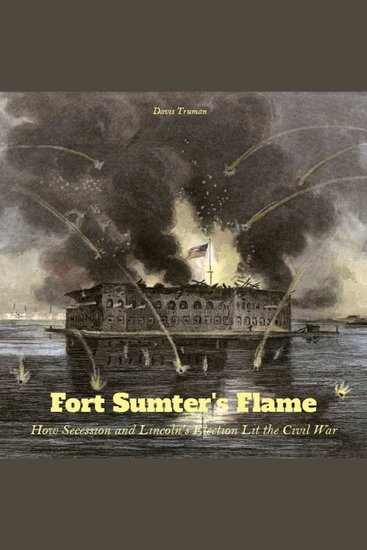
  • Fort Sumter's Flame - How Secession and Lincoln's Election Lit the Civil War - cover

    Fort Sumter's Flame - How...

    Davis Truman

    • 0
    • 0
    • 0
    This audiobook is narrated by an AI Voice.   
    "Fort Sumter's Flame: How Secession and Lincoln's Election Lit the Civil War" delves deep into the turbulent months leading up to the American Civil War, when the nation teetered on the edge of destruction. This meticulously researched book traces the chain of events that began with Abraham Lincoln's election in 1860, which sent shockwaves through the Southern states, igniting their cries for secession. As tensions escalated, the focus of the nation's turmoil turned to Fort Sumter, a small federal outpost in Charleston Harbor. Here, the first shots of the Civil War were fired, sparking a conflict that would define the nation's future. 
    Authoritative and compelling, "Fort Sumter's Flame" examines the political and social factors that fueled the secessionist movement, bringing to life the key figures whose decisions set the stage for war. The book vividly portrays a divided nation where compromise seemed impossible and conflict inevitable. From the bitter debates in Congress to the anxious uncertainty of everyday Americans, this book captures the passion, fear, and resolve that led to the Civil War. 
    Through gripping narratives and insightful analysis, "Fort Sumter's Flame" offers readers a front-row seat to the events that transformed the United States forever. It's an essential read for anyone seeking to understand the origins of America's most devastating conflict and the enduring legacy of the Civil War.
    Ver livro
  • Self Reliance - cover

    Self Reliance

    Ralph Waldo Emerson

    • 0
    • 0
    • 0
    Discover the timeless wisdom of Ralph Waldo Emerson's "Self-Reliance," an audiobook that empowers listeners to embrace individualism, self-reliance, and authenticity. 
    In this influential essay, Emerson challenges conventional wisdom and encourages readers to trust their intuition, follow their own path, and cultivate their unique talents and abilities. With eloquent prose and profound insights, he explores the importance of self-trust, nonconformity, and the pursuit of one's true calling. 
    Emerson's words resonate as strongly today as they did when first published in 1841, offering invaluable guidance for navigating life's challenges and uncertainties. Whether you're seeking personal growth, creative inspiration, or simply a fresh perspective on life, "Self-Reliance" provides a roadmap to living with purpose, passion, and integrity. 
    Narrated with clarity and passion, this audiobook brings Emerson's timeless teachings to life, inspiring listeners to embrace their inner strength, forge their own path, and chart a course towards fulfillment and self-discovery. 
    So if you're ready to embark on a journey of self-discovery and empowerment, don't wait any longer. Start listening to "Self-Reliance" today and unlock the secrets to living a life of authenticity, courage, and freedom.
    Ver livro
  • Amorite Kingdoms The: The History of the First Babylonian Dynasty and the Other Mesopotamian Kingdoms Established by the Amorites - cover

    Amorite Kingdoms The: The...

    Editors Charles River

    • 0
    • 0
    • 0
    As the Canaanites established themselves in most of the Levant and the Hurrians carved out space for themselves in northwestern Syria, a West Semitic ethnic group known as the Amorites entered Mesopotamia and Syria from the Arabian Desert. The movement of the Amorites and Hurrians coincided with the collapse of the Ur III Dynasty after 2004 BCE (Haywood 2005, 28), although it is not known for sure if the collapse of Ur III led to the movement of peoples, or if the movement at least partially led to the collapse. As the Ur III Dynasty grew weak internally, it could be that the Amorite attacks were a major factor in the destruction of the state. It must be stated, though, that it was the Elamites who ultimately delivered the coup de grace that brought Ur III to its knees. The more likely scenario is that the Amorites simply took advantage of the power vacuum that was created when Ur III collapsed. 
    The Amorites actually belonged to several sub-tribes and did not necessarily move in unison, but they did migrate in such large numbers that they were able to overwhelm much of Mesopotamia and northeastern Syria by about 1800 BCE. All of the notable political dynasties and city-states from this period – Babylon, Mari, Assyria, Eshnunna, and Yamhad – were established by ethnic Amorites, although only traces of the Amorite identity were retained. The Amorites accepted standard Mesopotamian and Syrian religious practices, utilized the Akkadian language and the cuneiform writing style extensively, and built monumental architecture based on the Sumerian and Akkadian styles. Some bands of Amorites did in fact retain their semi-nomadic lifestyle, but they often found their former kinsmen were not so tolerant of their wandering traditions. Some of the early sedentary Amorites used the still semi-nomadic Amorites as mercenaries in their armies, but they also often fought them and did whatever they could to keep them out of their boundaries.
    Ver livro