¡Acompáñanos a viajar por el mundo de los libros!
Añadir este libro a la estantería
Grey
Escribe un nuevo comentario Default profile 50px
Grey
Suscríbete para leer el libro completo o lee las primeras páginas gratis.
All characters reduced
50 Masterpieces You Have to Read Before You Die - cover

50 Masterpieces You Have to Read Before You Die

Jerome K. Jerome, James Joyce, Charles Kingsley, Rudyard Kipling, La Fayette, Pierre Choderlos de Laclos, D.H. Lawrence, Sheridan Le Fanu, Matthew Gregory Lewis, Sinclair Lewis, Jack London, H.P. Lovecraft, Thomas Mann, William Somerset Maugham

Editorial: Zenith Maple Leaf Press

  • 0
  • 0
  • 0

Sinopsis

Fifty books. Endless inspiration. One collection that will last a lifetime.

50 Masterpieces You Have to Read Before You Die gathers the world's greatest novels, plays, epics, and stories into a single volume. From ancient epics and Shakespearean drama to modern classics of love, tragedy, and adventure, this anthology offers a journey through the very best of world literature.

Inside this landmark collection you'll find:
✔ 50 complete works by legendary authors who defined culture and storytelling
✔ A wide range of genres: novels, poetry, drama, and philosophical works
✔ An essential guide to the masterpieces every reader should experience

Why readers love it:

Unparalleled value. Fifty complete books in one convenient edition.

A journey through time. Explore works spanning centuries and civilizations.

Perfect for collectors and learners. A must-have library of essential reading.

Celebrated across generations
This collection includes works by authors such as Homer, Dante, Shakespeare, Jane Austen, Charles Dickens, Leo Tolstoy, Fyodor Dostoevsky, and many others whose masterpieces continue to shape literature and thought today.

✨ Start your ultimate reading journey and discover the works that changed the world.

👉 Click "Buy Now" and claim 50 Masterpieces You Have to Read Before You Die—a definitive collection of the greatest classics ever written.
Disponible desde: 26/08/2025.
Longitud de impresión: 12348 páginas.

Otros libros que te pueden interesar

  • Great Schism and the Western Schism The: The History and Legacy of the Most Important Splits in the Catholic Church - cover

    Great Schism and the Western...

    Editors Charles River

    • 0
    • 0
    • 0
    For nearly a thousand years following its foundation, there was only one Christian Church. Centered in the city of Rome, the Church expanded and grew until it became the dominant religion in Europe and beyond. The early growth of the Church had been suppressed by the Romans until the Emperor Constantine became the first to convert the empire to Christianity, and from that point forward, the growth of the Church was inextricably linked with the Roman Empire, the most powerful military, economic, and political force in the ancient world. 
    However, once the Western Roman Empire collapsed, Rome’s preeminence was not a situation that was welcomed in Constantinople, now the center of the Byzantine Empire and a thriving and wealthy metropolis. After being sacked by outsiders, Rome had become a virtual ghost town, partially ruined and inhabited by a small number of hardy survivors, yet in the center of the crumbling city was the Vatican Borgo, the Palace of the Supreme Pontiff and the heart of the Church. In retrospect, it is easy to see that this was a situation that was bound to lead to conflict and disagreement, with the Greek-speaking Eastern Orthodox Church centered in Constantinople and being governed by Latin-speaking popes in a faraway city. 
    To many, the pope is the embodiment of godly love in its purest form. No matter the weather or the inconvenience, millions upon millions of fervid devotees brave the congested streets of their cities, all for the once-in-a-lifetime opportunity to welcome the beloved Vicar of Christ. However, the modern perception of the pope is a far cry from how things were just a couple of centuries ago. There was a time when the holiest men of the world were constantly at each other's throats, willing to go to any lengths to secure the coveted papal title. By the late 14th century, tensions within the Church reached its breaking point, resulting in the Western Schism, an infamous split of the Catholic Church.
    Ver libro
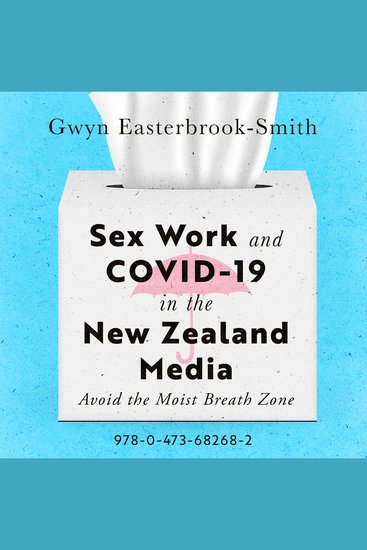
  • Sex Work and COVID-19 in the New Zealand Media - Avoid the Moist Breath Zone - cover

    Sex Work and COVID-19 in the New...

    Gwyn Easterbrook-Smith

    • 0
    • 0
    • 0
    New Zealand’s relatively recent decriminalisation of sex work and its unusual success in combatting COVID-19 have both attracted international media interest. This accessibly written book uses the lens of news media coverage to consider the pandemic’s impacts on both sex workers and public perceptions of the industry. Analysing the stigmatisation of sex work in both short- and long-term contexts, the book addresses the impacts of intersectional oppressions or marginalisations on sex workers, and the ways sex work advocacy relates to other social justice movements. It unpicks how New Zealand’s decriminalisation approach functions under stress, offering valuable information for advocates, activists and scholars.
    Ver libro
  • Albert Einstein’s "Why Socialism?" - The Enduring Relevance of His Classic Essay - cover

    Albert Einstein’s "Why...

    Albert Einstein

    • 0
    • 0
    • 0
    A contemporary look at Albert Einstein's classic call for socialism 


    First published more than seventy-five years ago in the inaugural issue of Monthly Review: An Independent Socialist Magazine, Albert Einstein's "Why Socialism?" is an unheralded classic. Written during the McCarthyite witch-hunt in the United States, it constituted an act of defiance, making a case for socialism unrivaled in its time or ours. Yet, its very existence has been an embarrassment to an establishment which has continually sought to downplay the significance of his iconoclastic essay, together with Einstein's socialism itself. 


    This volume includes Einstein's essay along with a detailed commentary on his essay by Monthly Review editor, John Bellamy Foster. Foster's introduction tells the story of Einstein's life-long commitment to socialism and the events leading to the publication of "Why Socialism?" and contextualizes the importance of his essay as we enter a time of planetary crisis and new threats of world war. Over the three-quarters of century since its publication, "Why Socialism?" is one of those rare statements whose power has only grown, reaching untold numbers of readers over the years. It is of crucial importance that―for the sake of the future of humanity―Einstein's message continues to proliferate.
    Ver libro
  • Anne Boleyn - Her Execution for Treason and Her Political and Religious Upheaval - cover

    Anne Boleyn - Her Execution for...

    Kelly Mass

    • 0
    • 0
    • 0
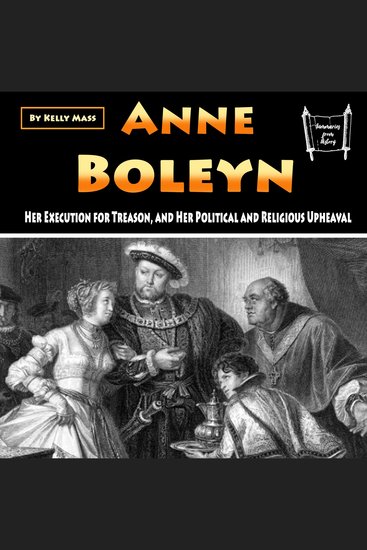
    As King Henry VIII's 2nd marriage partner, Anne Boleyn ruled as Queen of England from 1533 till 1536. Her marriage and execution by beheading for treason and other criminal offenses made her an essential player in the political and religious chaos that identified the start of the English Reformation. Anne was the daughter of Thomas Boleyn, first Earl of Wiltshire, and his marriage partner, Girl Elizabeth Howard. She got her education in Holland and France, mainly as a housemaid of honor to Queen Claude of France. Anne went to England in early 1522, meaning to wed her Irish cousin James Butler, 9th Earl of Ormond; nevertheless, the marriage failed, and she found work as a housemaid of honor to Henry VIII's partner, Catherine of Aragon.Anne was secretly betrothed to Henry Percy, child of Henry Percy, fifth Earl of Northumberland, in early 1523, but their engagement was aborted when the Earl refused to support them. In January 1524, Cardinal Thomas Wolsey opposed the match, and Anne was returned to Hever Castle. Henry VIII started his courtship of Anne in the month of February or March 1526. She withstood his efforts to charm her, declining to follow in her sister Mary's steps and become his girlfriend. Henry quickly focused his exertions on having his marriage to Catherine annulled so that he may wed Anne. Wolsey could not encourage Pope Clement VII to annul Henry's marriage, and Anne played a part in his failure and death in the year 1529-- 30. When it ended up being apparent that Clement wouldn't cancel the marriage, Henry and his therapists, and that includes Thomas Cromwell, started the process of deteriorating the Catholic Church in England by shutting abbeys and nunneries. Henry made Anne the Marquess of Pembroke in the year 1532.There is more, way more, to Anne Boleyn. In this book, we won’t leave you in the dark.
    Ver libro
  • Swift Blaze of Fire - The Life of Robert Hilliard: Olympian Cleric Brigadista - cover

    Swift Blaze of Fire - The Life...

    Lin Clark

    • 0
    • 0
    • 0
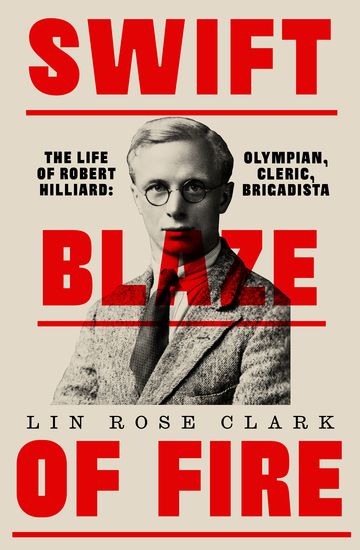
     Celebrated in song by Christy Moore and affectionately recalled in many memoirs, Robert "Bob" Hilliard, the author's grandfather, is one of Ireland's best-known International Brigadistas. His short life blazed with a rare intensity; his death in Spain left a dark shadow hanging over his family. This book unravels Hilliard's enigmas to bring us an absorbing character and a fresh understanding of the times that shaped him.  
     Hilliard was radicalised at school by the Irish revolution. Variously a journalist, an Olympic boxer for Ireland and a Church of Ireland priest, he became a communist and anti-fascist in London, fought with the International Brigades in the Spanish Civil War and died of wounds sustained at the Battle of Jarama. Eloquent and colourful, he inspires puzzlement as well as admiration. Why was his life so full of contradictions? One question haunted the author's mother: how could he leave his children?  
     Lin Rose Clark sets out to find answers. Through meticulous research and a deeply personal exploration of her family's past, she brings together an engrossing picture of the man and a tale of flawed romance, passionate commitment and war, portraying Hilliard as part of a turbulent history that still reverberates today.  
    Ver libro
  • The American Revolution - A History - The Conflict That Shaped a Nation - cover

    The American Revolution - A...

    Harry Montgomery

    • 0
    • 0
    • 0
    The path leading to the American Revolution was shaped by a series of escalating conflicts between the British Crown and its colonies. Tensions began to rise in the mid-18th century as Britain sought to assert more control over its American territories. After the costly French and Indian War, Britain faced a significant national debt and turned to its colonies as a source of revenue. The imposition of new taxes on the colonies, including the Sugar Act of 1764 and the Stamp Act of 1765, marked the beginning of widespread discontent. These laws were seen by many colonists as an infringement on their rights, as they had no direct representation in the British Parliament. The rallying cry of "no taxation without representation" became a powerful slogan for those opposing the British measures. 
    In response to these policies, the colonists began organizing protests. The Stamp Act Congress of 1765 was a significant early attempt at collective action, bringing together representatives from nine colonies to challenge the Stamp Act. The colonists boycotted British goods, and the resistance movement began to take shape. The British government responded by repealing the Stamp Act in 1766, but the damage had already been done. The colonists had tasted the power of collective action, and their resistance continued to grow. 
    In the following years, Britain enacted other measures that further exacerbated tensions. The Townshend Acts of 1767, which imposed duties on glass, paper, and tea, were met with widespread opposition. Colonists viewed these taxes as another attempt to control them without their consent. The Boston Massacre of 1770, in which British soldiers killed five colonists during a confrontation, further fueled anger and resentment. The event was widely publicized by colonial leaders like Samuel Adams, who used it as a propaganda tool to rally support for the cause of independence.
    Ver libro