Begleiten Sie uns auf eine literarische Weltreise!
Buch zum Bücherregal hinzufügen
Grey
Einen neuen Kommentar schreiben Default profile 50px
Grey
Jetzt das ganze Buch im Abo oder die ersten Seiten gratis lesen!
All characters reduced
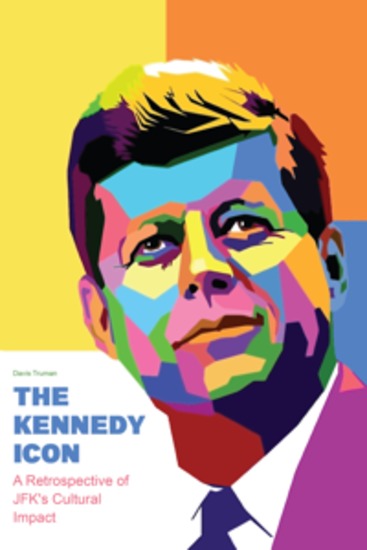
The Kennedy Icon - A Retrospective of JFK's Cultural Impact - cover

The Kennedy Icon - A Retrospective of JFK's Cultural Impact

Davis Truman

Verlag: Davis Truman

  • 0
  • 0
  • 0

Beschreibung

Discover the captivating story of John F. Kennedy, the iconic figure whose influence went far beyond politics. In The Kennedy Icon: A Retrospective of JFK's Cultural Impact, you will explore Kennedy's cultural impact and delve into the intricate tapestry of his evolution as a leader amidst societal change. From his aspirational presence in 1950s America to his lasting imprint on the nation's psyche, uncover the reasons behind Kennedy's enduring status as an American icon. It's a compelling journey through history, shedding light on why Kennedy's legacy resonates profoundly in the hearts of the American people.
Verfügbar seit: 20.05.2025.

Weitere Bücher, die Sie mögen werden

  • Modern Age Slavery - cover

    Modern Age Slavery

    Mladen Jakovljevic

    • 0
    • 0
    • 0
    Modern Age Slavery is a marvellous opportunity for people to find out some of the most hidden, uncensored truths about a seaman’s life on board cruise ships. This poignant memoir will open a sensational perspective about the cruel operational standards of cruise line companies globally. It is an excellent chance to sneak “behind the curtain” and taste the actual bitterness of the seaman’s life, understand the big picture, and realise what the cruise liners are hiding under those glorious, sensational sailing lights. This inspiring book will also help you overcome your most significant life obstacles personally; it will motivate you to become more resilient and search deeper for your inner strengths and undiscovered potentials. After reading some eye-opening chapters, you will be motivated to keep pushing your limits in life to the next level, regardless of any difficult circumstances or adversity. Modern Age Slavery breaks the silence about many irregularities in the cruise ship industry. Behind those glorious and shiny lights of the guest area at the cruise ship, a dark part of the slavery regime still goes unnoticed and is kept away from the public. This book will give you an opportunity to discover the deviant daily life at sea.
    Zum Buch
  • Mozart in Italy - Coming of Age in the Land of Opera - cover

    Mozart in Italy - Coming of Age...

    Jane Glover

    • 0
    • 0
    • 0
    'You don’t have to be able to hum Mozart to find this book utterly engrossing . . . I couldn’t put it down' - Joanna LumleyAn expertly researched and vividly written account of Mozart’s formative trips to Italy. At thirteen years old Wolfgang Amadeus Mozart was a child prodigy who had captured the hearts of northern Europe, but his father Leopold was now determined to conquer Italy. Together, they made three visits there the last when Mozart was seventeen, all vividly recounted here by acclaimed conductor Jane Glover.Father and son travelled from the theatres and concert salons of Milan to the church-filled streets of Rome to Naples, poorer and more dangerous than the prosperous north, and to Venice, the carnivalesque birthplace of public opera. All the while Mozart was absorbing Italian culture, language, style and art, and honed his craft. He met the challenge of writing Italian opera for Italian singers and audiences and provoked a variety of responses, from triumph and admiration to intrigue and hostility: in a way, these Italian years can be seen as a microcosm of his whole life.Evocative, beautifully written and with a profound understanding of eighteenth-century classical music, Mozart in Italy reveals how what he experienced during these Italian journeys changed Mozart – and his music – for ever.
    Zum Buch
  • Diary of a Man in Despair - cover

    Diary of a Man in Despair

    Friedrich Reck, Richard J. Evans

    • 0
    • 0
    • 0
    Hailed as one of the most important works on the Hitler period, this is an "astonishing, compelling, and unnerving" portrait of life in Nazi Germany between 1936 and 1944—from a man who nearly shot Hitler himself (The New Yorker). 


    Friedrich Reck might seem an unlikely rebel against Nazism. Not just a conservative but a rock-ribbed reactionary, he played the part of a landed gentleman, deplored democracy, and rejected the modern world outright. To Reck, the Nazis were ruthless revolutionaries in Gothic drag, and helpless as he was to counter the spell they had cast on the German people, he felt compelled to record the corruptions of their rule. 


    The result is less a diary than a sequence of stark and astonishing snapshots of life in Germany between 1936 and 1944. We see the Nazis at the peak of power, and the murderous panic with which they respond to approaching defeat; their travesty of traditional folkways in the name of the Volk; and the author's own missed opportunity to shoot Hitler. This riveting book is not only, as Hannah Arendt proclaimed it, "one of the most important documents of the Hitler period," but a moving testament of a decent man struggling to do the right thing in a depraved world.
    Zum Buch
  • Mumu - Turgenev brilliantly displays the relationship between man and mans best friend and an awful choice it will bring - cover

    Mumu - Turgenev brilliantly...

    Ivan Turgenev

    • 0
    • 0
    • 0
    Ivan Sergeyevich Turgenev was born on 9th November 1818 in Oryol, Russia to parents from the nobility.  He and his two brothers were raised by their mother on the family estate.  Surrounded by foreign governesses he became fluent in French, German, and English.  Their father spent little time with them and this undoubtedly had an effect on him and his brothers.  When he was nine the family moved to Moscow to give their children a better education. 
     
    Turgenev studied for a year at the University of Moscow and then at the University of St Petersburg to study Classics, Russian literature, and philology.  During that time his father died from kidney stone disease.  In 1838 Turgenev studied philosophy and history at the University of Berlin for 3 years before returning to St Petersburg for his master's. 
     
    He started his career with the Russian Civil Service and it was only in 1852, after several earlier publications, that he made his name with his short story collection, ‘A Sportsman's Sketches’, based on his observations of peasant life and nature. 
      
    That same year he wrote an obituary for Nikolai Gogol: "Gogol is dead!... What Russian heart is not shaken by those three words?... He is gone, that man whom we now have the right (the bitter right, given to us by death) to call great."  The St Petersburg censor banned publication but the Moscow censor allowed it.  He was dismissed but Turgenev was held responsible and imprisoned for a month, and then exiled to his country estate.  
     
    Along with many other intellectuals Turgenev left Russia and settled in Paris in 1854.  During this period he wrote his finest stories and four novels.  
     
    Alexander II ascended the Russian throne in 1855, and the political climate relaxed.  Turgenev returned home.  
     
    ‘Fathers and Sons’, Turgenev's most famous and enduring novel, appeared in 1862. Its leading character is considered the first ‘Bolshevik’ in Russian literature. But the hostile reaction prompted Turgenev's decision to again leave Russia.  
     
    His health declined during his later years.  In January 1883, an aggressive malignant tumor was removed but by then it had metastasized in his upper spinal cord, causing him intense pain in his final few months of life.  
     
    Ivan Turgenev died on 3rd September 1883 of a spinal abscess, a complication of the metastatic liposarcoma, in his house near Paris.  He was buried in St Petersburg.  
     
    In Mumu, Turgenev hauntingly tells the story of a Gerasim, a six foot five deaf mute with the menial job of yard-porter who is ostracized by all those around him.  A dog, Mumu, becomes his only true and faithful friend.  One day he is given a dreadful and agonizing choice.
    Zum Buch
  • Pandamonium! - How (Not) to Run a Record Label - cover

    Pandamonium! - How (Not) to Run...

    Simon Williams

    • 0
    • 0
    • 0
    'Hilarious, heart-wrenching and packed with British music history.' - COLDPLAY A Virgin Radio Book of the YearIt's a life-and-near-death story. But whose life? And whose near-death?As a one-time NME journalist, former Xfm radio presenter, toilet-circuit promoter and the founder of enduring homespun British record label Fierce Panda, Simon Williams has been at the cutting, cutting, cutting edge of all things 'indie' for over thirty years. During his tenure as managing director of Fierce Panda (a role he holds to this day), Simon was responsible for tripping over bands such as Coldplay, Keane, Placebo and countless other acts of independent hue - some of whom have gone on to achieve earth-shattering musical superstardom, while others have merely baffled the crowd at the Bull & Gate in north London on a wet Wednesday evening.Unfiltered and unflinching, Pandamonium! is the story of Simon's time at the indie coalface, filled with insider anecdotes to entertain music enthusiasts everywhere - from the origins of a bootlegged Oasis release to Chris Martin's delight at reaching number ninety-two in the charts. But it is also the story of how Simon tried to bring a premature end to proceedings, documenting in blunt, matter-of-fact detail his longstanding mental-health struggles.Yet, despite his raw and often poignant honesty, Simon writes with the warmth, wit, self-deprecation and wide-eyed good fortune of someone who has stared into the abyss and survived, bounding down a few indie rabbit holes along the way.
    Zum Buch
  • Bipolar Faith - A Black Woman's Journey with Depression and Faith - cover

    Bipolar Faith - A Black Woman's...

    Monica A. Coleman, Thema...

    • 0
    • 0
    • 0
    Overcome with mental anguish, Monica A. Coleman's great-grandfather had his two young sons pull the chair out from beneath him when he hanged himself. That noose remained tied to a rafter in the shed, where it hung above the heads of his eight children who played there for years to come. 


    As it had for generations before her, a heaviness hung over Monica throughout her young life. As an adult, this rising star in the academy saw career successes often fueled by the modulated highs of undiagnosed Bipolar II Disorder, as she hid deep depression that even her doctors skimmed past in disbelief. Serendipitous encounters with Black intellectuals like Henry Louis Gates Jr., Angela Davis, and Renita Weems were countered by long nights of stark loneliness. Only as Coleman began to face her illness was she able to live honestly and faithfully in the world. And in the process, she discovered a new and liberating vision of God. 


    Written in crackling prose, Monica's spiritual autobiography examines her long dance with trauma, depression, and the threat of death in light of the legacies of slavery, war, sharecropping, poverty, and alcoholism that masked her family history of mental illness for generations.
    Zum Buch