¡Acompáñanos a viajar por el mundo de los libros!
Añadir este libro a la estantería
Grey
Escribe un nuevo comentario Default profile 50px
Grey
Suscríbete para leer el libro completo o lee las primeras páginas gratis.
All characters reduced
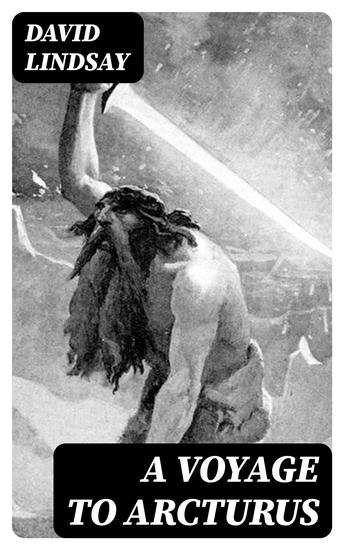
A Voyage to Arcturus - cover

A Voyage to Arcturus

David Lindsay

Editorial: DigiCat

  • 0
  • 0
  • 0

Sinopsis

In "A Voyage to Arcturus," David Lindsay crafts a remarkable blend of philosophical inquiry and science fiction, propelling readers into an enigmatic and allegorical journey through alien landscapes. The protagonist, Maskull, traverses the far reaches of the universe, encountering a series of unique beings and experiences that reflect the inner struggles of the human condition. Lindsay's distinctive literary style melds rich imagery with dense, imaginative prose, drawing comparisons to the works of H.G. Wells and D.H. Lawrence while anchoring itself in early 20th-century existential thought. The novel investigates themes of identity, reality, and the nature of existence, prompting readers to contemplate the limits of human understanding against the boundless possibilities of the cosmos. David Lindsay, a Scottish author and mystic, was influenced by early evolutionary thought, philosophical contemplation, and personal quests for truth, which deeply informed his fiction. His background in philosophy and his exploration of metaphysical questions shaped his literary vision, driving him to create a work that embodies both escapist adventure and profound introspection. Despite being published in 1920, the themes present in Lindsay's narrative resonate strongly with contemporary inquiries into the self and the universe. For those seeking a thought-provoking exploration of existence intertwined with imaginative storytelling, "A Voyage to Arcturus" stands as a seminal work in the canon of speculative fiction. It challenges readers to journey beyond the surface of reality and examine their own beliefs, making it a significant read for enthusiasts of philosophical literature and science fiction alike.
Disponible desde: 11/10/2022.
Longitud de impresión: 242 páginas.

Otros libros que te pueden interesar

  • Wapping Workhouse (Unabridged) - cover

    Wapping Workhouse (Unabridged)

    Charles Dickens

    • 0
    • 0
    • 0
    Charles Dickens was a writer and social critic who created some of the world's best-known fictional characters and is regarded as the greatest novelist of the Victorian era. His works enjoyed unprecedented popularity during his lifetime, and by the twentieth century critics and scholars had recognised him as a literary genius. His novels and short stories enjoy lasting popularity.
    WAPPING WORKHOUSE: My day's no-business beckoning me to the East-end of London, I had turned my face to that point of the metropolitan compass on leaving Covent-garden, and had got past the India House, thinking in my idle manner of Tippoo-Sahib and Charles Lamb, and had got past my little wooden midshipman.
    Ver libro
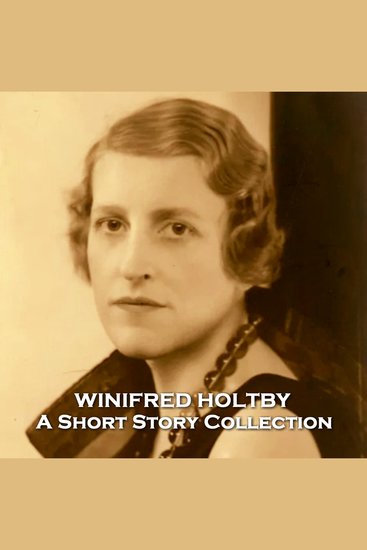
  • Winifred Holtby - A Short Story Collection - Ardent feminist and activist who wrote many stories before tragically dying young - cover

    Winifred Holtby - A Short Story...

    Winifred Holtby

    • 0
    • 0
    • 0
    Winifred Holtby was born on 23rd June 1898 to a prosperous farming family in the village of Rudston in Yorkshire.  
     
    A governess provided her early education before she went to Queen Margaret's School in Scarborough.  After passing the entrance exam for Somerville College, Oxford in 1917, she decided to join the Women's Army Auxiliary Corps in early 1918.  However, soon after her arrival in France, the War ended. 
     
    She returned to study at Oxford and met fellow student Vera Brittain.  After graduating from Oxford, in 1921, Winifred and Vera moved to London, hoping to establish themselves as authors. 
     
    Her early novels met with only moderate success but as a journalist she was both prolific and increasingly well-known.  Her articles graced more than 20 newspapers and magazines, including the Manchester Guardian newspaper.   
     
    Winifred was a committed feminist, socialist and pacifist.  She gave many lectures for the League of Nations Union.  She was also active in the Independent Labour Party and was a campaigner for the unionisation of black workers in South Africa. 
     
    In 1931 the symptoms of high blood pressure, recurrent headaches and bouts of lassitude brought forth a diagnosis of Bright's disease.  She was given two years to live and now put all her efforts into what was to become her crowning achievement: South Riding.  Released posthumously it received lavish praise and enormous sales.  Her canon of works tackle difficult subjects head on, many in unusual ways, brimming with verve and usually strong female protagonists. 
     
    Winifred Holtby died on 29th September 1935 in London.  She was 37. 
     
    1 - Winifred Holtby - A Short Story Collection - An Introduction 
    2 - The Voice of God by Winifred Holtby 
    3 - Truth is Not Sober by Winifred Holtby 
    4 - The Casualty List by Winifred Holtby 
    5 - The Man Who Hated God by Winifred Holtby 
    6 - Why Herbert Killed His Mother by Winifred Holtby
    Ver libro
  • Troilus and Cressida - cover

    Troilus and Cressida

    William Shakespeare

    • 0
    • 0
    • 0
    Troilus and Cressida is a tragedy by William Shakespeare, believed to have been written in 1602. It was described by Frederick S. Boas as one of Shakespeare's problem plays. The play ends on a very bleak note with the death of the noble Trojan Hector and destruction of the love between Troilus and Cressida. The work has in recent years "stimulated exceptionally lively critical debate".
    Throughout the play, the tone lurches wildly between bawdy comedy and tragic gloom, and readers and theatre-goers have frequently found it difficult to understand how one is meant to respond to the characters. Several characteristic elements of the play (the most notable being its constant questioning of intrinsic values such as hierarchy, honour and love) have often been viewed as distinctly "modern". 
    Among the most significant works William Shakespeare: Hamlet, Othello, King Lear, Macbeth, Orpheus, Romeo and Juliet, Julius Caesar, Troilus and Cressida, The Tempest, Venus and Adonis, Antony and Cleopatra, Measure for Measure, The Winter's Tale and many more.
    Ver libro
  • What Will Pay? (Unabridged) - cover

    What Will Pay? (Unabridged)

    Booker T. Washington

    • 0
    • 0
    • 0
    Booker Taliaferro Washington (April 5, 1856 - November 14, 1915) was an American educator, author, orator, and adviser to several presidents of the United States. Between 1890 and 1915, Washington was the dominant leader in the African American community and of the contemporary black elite. Washington was from the last generation of black American leaders born into slavery and became the leading voice of the former slaves and their descendants. They were newly oppressed in the South by disenfranchisement and the Jim Crow discriminatory laws enacted in the post-Reconstruction Southern states in the late 19th and early 20th centuries.
    WHAT WILL PAY: I wish to talk with you for a few minutes upon a subject that is much discussed, especially by young people-What things pay in life? There is no question, perhaps, which is asked oftener by a person entering upon a career than this-What will pay? Will this course of action, or that, pay?
    Ver libro
  • The Merchant Of Venice - cover

    The Merchant Of Venice

    William Shakespeare

    • 0
    • 0
    • 0
    The Merchant of Venice by William Shakespeare is a timeless classic that explores themes of justice, mercy, love, and prejudice. Set in the vibrant city of Venice, the story follows the complex relationship between Antonio, a melancholic merchant, and Shylock, a Jewish moneylender. 
     
    Antonio’s dear friend Bassanio seeks to court the wealthy and beautiful Portia but lacks the funds to do so. To help his friend, Antonio borrows money from Shylock, offering a pound of his own flesh as collateral if he cannot repay the loan. As circumstances unfold, Antonio’s ships are lost at sea, and he finds himself unable to repay the debt. Shylock, deeply wronged by the discrimination he has faced, seeks to enforce their bond and claim his pound of flesh, sparking a tense legal battle that tests the concepts of justice and revenge. 
     
    Portia, disguised as a lawyer, enters the courtroom in a dramatic attempt to save Antonio, ultimately challenging Shylock’s rigid interpretation of the law. Through its intricate plot and memorable characters, the play delves into the moral and ethical dilemmas faced by each individual, offering a thought-provoking reflection on human nature and the consequences of our choices. 
     
    This audiobook brings the rich language of Shakespeare to life, immersing listeners in the intensity of the courtroom drama, the romance of Bassanio and Portia, and the profound struggles of identity and morality. With its engaging narration and timeless relevance, The Merchant of Venice continues to captivate audiences with its exploration of loyalty, vengeance, and the complexity of mercy. A must-listen for lovers of classic literature, this audiobook provides a fresh and dynamic interpretation of one of Shakespeare's most iconic works.
    Ver libro
  • Esme - From their pens to your ears genius in every story - cover

    Esme - From their pens to your...

    Saki Saki

    • 0
    • 0
    • 0
    Hector Hugh Munro, more familiarly known by his pen-name ‘Saki’ was born in what was then Akyab in British Burma on 18th December 1870. His father was an Inspector General for the Indian Imperial Police, and his mother the daughter of a Rear Admiral. 
    When he was 2 his mother died and he and his siblings were sent back to England to be raised by their grandmother and paternal maiden aunts in a strict, puritanical household near Barnstaple, Devon. Educated by governesses Saki used many of these women as character models for his later writing. 
    At 17 his father retried and returned to England and then embarked on a series of European travels with Saki and his siblings. 
    After a short stint working in Burma with the Indian Imperial Police Saki decided to move to London to make a living as a writer. Initially he wrote as a journalist for a number of newspapers and magazines before attempting an historical study, ‘The Rise of the Russian Empire’, whose real value lay in directing him to writing short stories instead, the first of which, ‘Dogged’, he published in 1899. 
    From here it was a short stab of the pen to writing political satire before in 1902 he became the foreign correspondent for The Morning Post, first in the Balkans, then Russia, Paris and back to London in 1908, where 'the agreeable life of a man of letters with a brilliant reputation awaited him.'  
    Collections of his short stories full of witty, mischievous and often macabre stories that satirized Edwardian society and two novels now appeared in the years up to the Great War.  At its’ outbreak he was 43 but managed to join as an ordinary trooper. More than once he returned to the battlefield when officially too sick or injured.  
    On 14th November 1916 Hector Hugh Munro was sheltering in crater during the Battle of the Ancre, when he was shot and killed by a German sniper. According to several sources, his last words were "Put that bloody cigarette out!"
    Ver libro