¡Acompáñanos a viajar por el mundo de los libros!
Añadir este libro a la estantería
Grey
Escribe un nuevo comentario Default profile 50px
Grey
Suscríbete para leer el libro completo o lee las primeras páginas gratis.
All characters reduced
A World of Struggle - How Power Law and Expertise Shape Global Political Economy - cover

A World of Struggle - How Power Law and Expertise Shape Global Political Economy

David Kennedy

Editorial: Princeton University Press

  • 0
  • 0
  • 0

Sinopsis

How today's unjust global order is shaped by uncertain expert knowledge—and how to fix itA World of Struggle reveals the role of expert knowledge in our political and economic life. As politicians, citizens, and experts engage one another on a technocratic terrain of irresolvable argument and uncertain knowledge, a world of astonishing inequality and injustice is born.In this provocative book, David Kennedy draws on his experience working with international lawyers, human rights advocates, policy professionals, economic development specialists, military lawyers, and humanitarian strategists to provide a unique insider's perspective on the complexities of global governance. He describes the conflicts, unexamined assumptions, and assertions of power and entitlement that lie at the center of expert rule. Kennedy explores the history of intellectual innovation by which experts developed a sophisticated legal vocabulary for global management strangely detached from its distributive consequences. At the center of expert rule is struggle: myriad everyday disputes in which expertise drifts free of its moorings in analytic rigor and observable fact. He proposes tools to model and contest expert work and concludes with an in-depth examination of modern law in warfare as an example of sophisticated expertise in action.Charting a major new direction in global governance at a moment when the international order is ready for change, this critically important book explains how we can harness expert knowledge to remake an unjust world.
Disponible desde: 01/05/2018.
Longitud de impresión: 336 páginas.

Otros libros que te pueden interesar

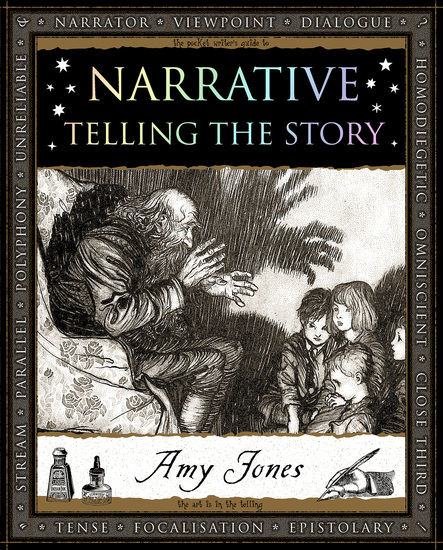
  • Narrative - Telling the Story - cover

    Narrative - Telling the Story

    Amy Jones

    • 0
    • 0
    • 0
    What is the best way to tell a story? In first-person peripheral, or third-person focalised? Unfolding in the present, or as events in the past? Where is the camera? What is the lens? Where is the action? In this concise little book, educator Amy Jones describes the different ways that novelists and scriptwriters tell their stories. Packed with examples and insights, this is an essential reference guide for writers of all ages and disciplines. It’s not the story, it’s how you tell it!
    Ver libro
  • GIftedness: Tips and Tricks to Help Your Genius Child Stay Calm and Motivated (2 in 1 Combo) - cover

    GIftedness: Tips and Tricks to...

    Angela Wayning

    • 0
    • 0
    • 0
    This book consists of 2 titles, which are the following:Title 1: Is your child gifted? And how do you know that?In this comprehensive guide, you will learn more about common qualities of gifted children, and more specifically, the symptoms of such a distinct brain. Through the tips you will be given, you will be able to detect those attributes even in the earlier years, so that you can be prepared for the future. People have been using the term “gifted” in different ways, and it’s important to know what the differences are of those terms. You will learn more about those terms and their meanings.Additionally, this guide covers topics that relate to considering tests for giftedness, the advantages of specific classes in schools and gifted programs, and general tips for higher academic achievements. In short, this is a guide that can really help you along the path of discovery. Your child’s talents and skills can become a greater opportunity by detecting them and adjusting your educational choices according to them.Title 2: Giftedness can be a blessing or a struggle. The stimulation of the senses is different in a gifted child. They experience life, impulses and emotions differently. But there are ways to play into those talents and provoke curiosity and fascination in preschoolers and older children. This book covers some of those suggestions.Sometimes, parents think high grades is a good thing, and it can be. But did you know that this is not always the case? Did you know that some gifted children actually underachieve for various reasons? And then comes the big question: Should you tell a child that he or she is gifted? What are the pros and cons of doing so? Don’t remain in the dark. The achievements of gifted students are the consequences of their psyche, but it’s a vulnerable process to stimulate that intelligence in the right way. To do so, this book can help you along the way.
    Ver libro
  • The United States of English - The American Language from Colonial Times to the Twenty-First Century - cover

    The United States of English -...

    Rosemarie Ostler

    • 0
    • 0
    • 0
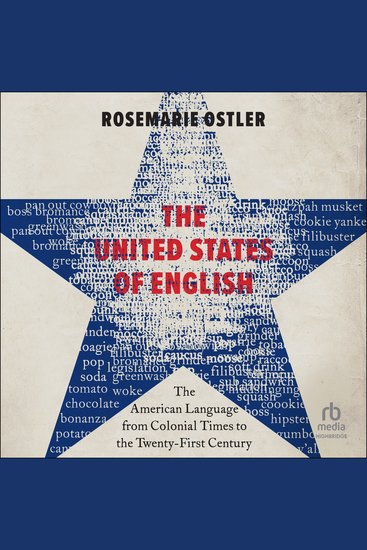
    The story of how English became American—and how it became Southern, Bostonian, Californian, African American, Chicano, elite, working-class, urban, rural, and everything in between 


    By the time of the Revolution, the English that Americans spoke was recognizably different from the British variety. Americans added dozens of new words to the language, either borrowed from Native Americans (raccoon, persimmon, caucus) or created from repurposed English (backwoods, cane brake, salt lick). Americans had their own pronunciations (bath rhymed with hat, not hot) and their own spelling (honor, not honour), not to mention a host of new expressions that grew out of the American landscape and culture (blaze a trail, back track, pull up stakes). Americans even invented their own slang, like stiff as a ringbolt to mean drunk. American English has continued to grow and change ever since. 


    The United States of English tells the engrossing tale of how the American language evolved over four hundred years, explaining both how and why it changed and which parts of the "mother tongue" it preserved (I guess was heard in the British countryside long before it became a typical Americanism). Plentiful examples of the American vernacular, past and present, bring the language to life and make for an engaging as well as enlightening listen.
    Ver libro
  • Stoicism - Finding Strength in Adversity Through Ancient Philosophy - cover

    Stoicism - Finding Strength in...

    Coral Nunez

    • 0
    • 0
    • 0
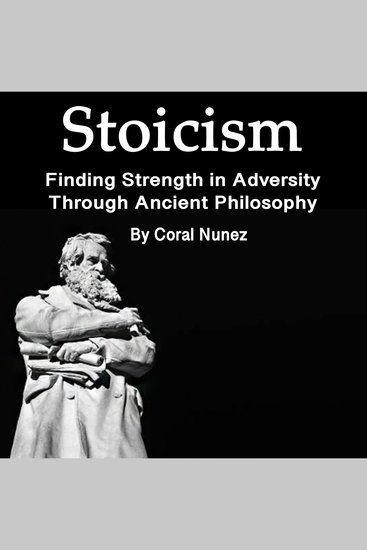
    Stoicism is an ancient Greek philosophy that teaches how to live a good life, one filled with virtue, wisdom, and tranquility. Founded by Zeno of Citium in the early 3rd century BCE, Stoicism is built on the idea that the key to happiness and fulfillment lies not in external circumstances, but in how we choose to respond to them. The philosophy emphasizes the development of self-control, rational thought, and resilience in the face of adversity. While it originated in ancient Greece, Stoicism has influenced many philosophers and continues to resonate with modern thinkers, offering practical tools for navigating life’s challenges. 
    At the core of Stoicism is the belief in distinguishing between what we can control and what we cannot. According to Stoic principles, we cannot control external events, but we can control our responses to them. This idea, known as the Dichotomy of Control, encourages individuals to focus on their actions, thoughts, and emotions rather than worrying about things beyond their influence. This shift in perspective can lead to greater peace of mind and less suffering, as it frees us from the emotional turmoil of trying to change the uncontrollable. 
    Stoicism is often associated with a few key figures, including Epictetus, Seneca, and Marcus Aurelius. Each of these philosophers contributed their own insights into the practice of Stoicism, emphasizing different aspects of the philosophy. Epictetus, for example, taught that true freedom comes from mastering our internal world, while Seneca focused on the importance of reflection and mindfulness in everyday life. Marcus Aurelius, a Roman emperor, applied Stoic principles to leadership and the challenges of ruling an empire, demonstrating how Stoicism can be practiced by anyone, no matter their role in society.
    Ver libro
  • Be Brave - cover

    Be Brave

    Dalai Lama

    • 0
    • 0
    • 0
    “We must think globally, but act locally.” —His Holiness the Dalai Lama Simple and accessible wisdom from His Holiness the Dalai Lama on how we are human, how we are not alone, and how we must come together.The latest edition in the popular Be Inspired series, Be Brave is filled with wisdom concerning how to live your best life, improve the world for yourself and others, and how to be a helpful person.His Holiness the Dalai Lama, a perennial source of inspiration, is one of the most eminent spiritual leaders in the world. Recipient of the Noble Peace Prize, His Holiness’s life and works have inspired millions of lives throughout the world. In this specially curated volume, His Holiness shares words of encouragement to deal with new realities in a pandemic-stricken world.“We must recognize that we are not individuals who are alone. We depend on our community and are a part of it. No matter how right your family is, without the community you cannot survive. In the past, there has been too much emphasis on one’s continent, region, and religion. Now that sort of thinking is considered outdated. What we really need is a sense of oneness among seven billion human beings. This could be one of the positive outcomes of the coronavirus crisis.” —His Holiness the Dalai Lama
    Ver libro
  • Brain Training: 8-in-1 Bundle to Master Memory Speed Reading Concentration Accelerated Learning Study Skills Mind Mapping Mental Models & Neuroplasticity - cover

    Brain Training: 8-in-1 Bundle to...

    Troye Bates

    • 0
    • 0
    • 0
    BRAIN TRAINING - 8 MANUSCRIPTS IN 1 BOOK: 
      
    1) 
    HOW TO IMPROVE MEMORY: 
    7 Steps to Master Memory Improvement, Memorization Techniques & Photographic Memory. 
      
    2) 
    HOW TO READ FASTER: 
    7 Steps to Master Speed Reading Techniques, Reading Comprehension & Fast Reading. 
      
    3) 
    HOW TO FOCUS YOUR MIND: 
    7 Steps to Master Concentration Techniques, Attention Management & Staying Focused. 
      
    4) 
    HOW TO LEARN FASTER: 
    7 Steps to Master Accelerated Learning Techniques, Learning Strategies & Fast Self-learning. 
      
    5) 
    HOW TO STUDY EFFECTIVELY: 
    7 Steps to Master Effective Study Skills, Student Success, Note Taking & Exam Preparation. 
      
    6) 
    HOW TO MIND MAP: 
    7 Steps to Master Mind Mapping Techniques, Note-taking, Creative Thinking & Brainstorming Skills. 
      
    7) 
    HOW TO THINK DIFFERENTLY: 
    7 Steps to Master Mental Models, Critical Thinking, Decision Making & Problem Solving. 
      
    8) 
    HOW TO REWIRE YOUR BRAIN: 
    7 Steps to Master Neuroplasticity, Mind Hacking, Think Habits & Practical Neuroscience. 
      
    TRAIN YOUR BRAIN TODAY!
    Ver libro