¡Acompáñanos a viajar por el mundo de los libros!
Añadir este libro a la estantería
Grey
Escribe un nuevo comentario Default profile 50px
Grey
Suscríbete para leer el libro completo o lee las primeras páginas gratis.
All characters reduced
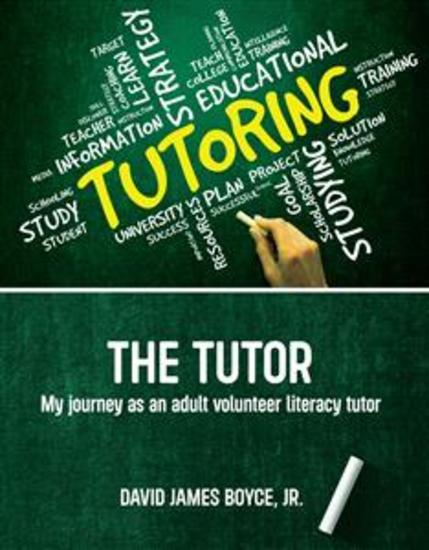
The Tutor - My journey as an adult volunteer literacy tutor - cover

The Tutor - My journey as an adult volunteer literacy tutor

David James Boyce

Editorial: BooxAi

  • 0
  • 0
  • 0

Sinopsis

This work, entitled The Tutor, chronicles my path helping adult non readers become more independent after learning reading, writing and life skills. As a volunteer, teaching non reading adults is the one thing that can only be paid forward and the benefits last a lifetime.
Disponible desde: 09/03/2022.
Longitud de impresión: 120 páginas.

Otros libros que te pueden interesar

  • The Problems of Philosophy - cover

    The Problems of Philosophy

    Bertrand Russell

    • 0
    • 0
    • 0
    "The Problems of Philosophy" is a book written by Bertrand Russell and first published in 1912. The book is a concise introduction to some of the central problems in philosophy, and it aims to explain them in an accessible way to a general audience. 
    Russell begins by outlining the distinction between appearance and reality, arguing that things are not always as they seem. He then moves on to discuss the nature of knowledge and truth, and explores the question of how we can be sure that our beliefs are justified. 
    Another important topic in the book is the nature of existence, and Russell asks whether the external world is real or simply a construct of our minds. He also discusses the relationship between mind and body, and the problem of free will. 
    Russell's writing is clear and straightforward, and he uses examples and analogies to help the reader understand complex philosophical concepts. While the book is not intended to be a comprehensive survey of all philosophical problems, it provides an excellent introduction to some of the most important issues in the field, and is a valuable resource for anyone interested in philosophy.
    Ver libro
  • The Invisible Machine - The Startling Truth About Trauma and the Scientific Breakthrough That Can Transform Your Life - cover

    The Invisible Machine - The...

    Jamie Mustard, MD Eugene Lipov,...

    • 0
    • 0
    • 0
    Despite its prevalence, post-traumatic stress, PTSD, is often seen as an unbeatable lifelong mental disorder. Leading trauma doctors and neuroscientists now understand that the result of trauma is not a disorder, but rather a physical injury to the body—invisible but tangible, and most importantly, treatable. 


    Meet Dr. Eugene Lipov. His research and partnerships have led to an amazing discovery that all trauma has at its root a single piece of human hardware: the stellate ganglion. The symptoms of post-traumatic stress are the same for all of us, whether from childhood poverty or abandonment, the ravages of war, or the brutality of sexual assault. Dr. Lipov's pioneering procedure appears to treat injury to the stellate ganglion, relieving even the worst symptoms of PTSD—irritability, hypervigilance, insomnia, and more—in a fifteen-minute treatment. 


    Weaving hard science with moving human stories, The Invisible Machine reveals how this treatment was developed. It also tells the incredible story of the unlikely team, including the doctor, an artist, Special Forces leadership, and a sheriff, who are working together to change our understanding of post-traumatic stress and why it matters to society.
    Ver libro
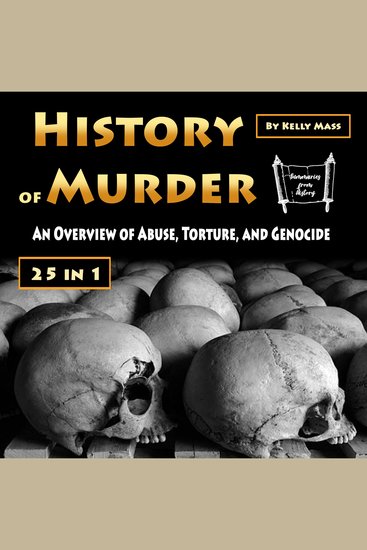
  • History of Murder - An Overview of Abuse Torture and Genocide - cover

    History of Murder - An Overview...

    Kelly Mass

    • 0
    • 0
    • 0
    This is a combination of books that will expose you to the darker side of mankind and some of the atrocities committed in history. The following topics will be addressed: 
    1 Alexander the Great 
    2 Attila the Hun 
    3 Genghis Khan 
    4 Hannibal Barca 
    5 Napoleon Bonaparte 
    6 Suleiman the Magnificent 
    7 Vlad the Impaler 
    8 William the Conqueror 
    9 Adolf Eichmann 
    10 Benito Mussolini 
    11 Enver Pasha 
    12 Francisco Pizarro 
    13 Josef Mengele 
    14 Oliver Cromwell 
    15 Paul Joseph Goebbels 
    16 Pol Pot 
    17 Robespierre 
    18 Rudolf Hoess 
    19 Torquemada 
    20 Armenian genocide 
    21 Cambodian genocide 
    22 Genocide in Darfur 
    23 Holocaust 
    24 Rwandan genocide 
    25 Yugoslavian genocide 
    This ultimate bundle will give you more insights in history and the dramatic events that took place in the past, whether related to war, genocide, or suppressing the masses by totalitarian regimes. Learn more now!
    Ver libro
  • Falklands War - History of Its Causes Consequences and Casualties - cover

    Falklands War - History of Its...

    Kelly Mass

    • 0
    • 0
    • 0
    The Falklands War (Guerra de las Malvinas) was a brief but intense conflict in the South Atlantic between Argentina and the United Kingdom. Fought over the sovereignty of the Falkland Islands and their territorial dependencies—South Georgia and the South Sandwich Islands—the war lasted from April to June 1982. The confrontation marked a significant chapter in the longstanding dispute between the two nations over these remote territories. 
    On April 2, 1982, Argentina launched an invasion of the Falkland Islands, quickly seizing control. The following day, Argentine forces invaded South Georgia. These aggressive actions were framed by the Argentine government as a reclamation of their sovereign territory, asserting claims they had maintained since the early 19th century. However, the United Kingdom, viewing the invasion as an attack on a British Crown colony, responded decisively. On April 5, the British government dispatched a naval task force to the South Atlantic. After intense naval and air engagements, the British launched an amphibious assault on the islands. The conflict concluded 74 days later, on June 14, 1982, with Argentina’s surrender and the restoration of British control over the islands.
    Ver libro
  • Benedict of Nursia: A short biography - 5 Minutes: Short on time – long on info! - cover

    Benedict of Nursia: A short...

    5 Minutes, 5 Minute Biographies,...

    • 0
    • 0
    • 0
    Benedict of Nursia, church teacher, saint and founder of the Benedictine order: Life and work in a short biography! Everything you need to know, brief and concise. Infotainment, education and entertainment at its best!
    Ver libro
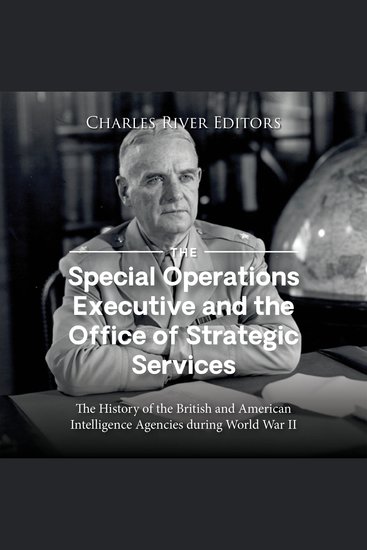
  • Special Operations Executive and the Office of Strategic Services The: The History of the British and American Intelligence Agencies during World War II - cover

    Special Operations Executive and...

    Editors Charles River

    • 0
    • 0
    • 0
    When people think about the Second World War, they seldom think in terms of silence and small acts. This was a war in which the industry of entire nations was rearranged to feed fighting, and it was fought on a scale in which battles could include hundreds of thousands of combatants. Whole cities and populations were destroyed, with millions of casualties occurring at places like Leningrad. 
    But World War II was also a conflict in which modern covert operations first hit their stride. From the jungles of Burma to the streets of Paris, spies, saboteurs, and commandos carried out missions built on secrecy and cunning. Precise, self-contained operations could be as important to the outcome of the war as acts of massive destruction, whether it involved targeted assassinations, sabotaging key logistics, or counterintelligence to break up the enemy’s own rings. At the time, most of these operations were hidden from the public since that was the only way they could be successfully carried out, but in the years since, stories about various missions have emerged. They paint a picture of incredible courage and ingenuity, whether in war zones, enemy territory, or far from the front lines. 
    Though it might be hard to believe, the Americans did not have a covert operations organization when they joined the war, and like the British, it took them some time to realize it could be a powerful tool. In time, all the hard work led to the growth of the OSS into an organization with over 13,000 staff and 40 offices scattered across the world. Its purposes were initially similar to that of Britain’s Special Operations Executive, including espionage, sabotage, and intelligence assessments, but with time and experience, it expanded to include economic, psychological, and guerrilla warfare, as well as counter-intelligence work. And of course, it would all chart a path for the early days of America’s most famous intelligence agency, the CIA. 
    Ver libro