Junte-se a nós em uma viagem ao mundo dos livros!
Adicionar este livro à prateleira
Grey
Deixe um novo comentário Default profile 50px
Grey
Assine para ler o livro completo ou leia as primeiras páginas de graça!
All characters reduced
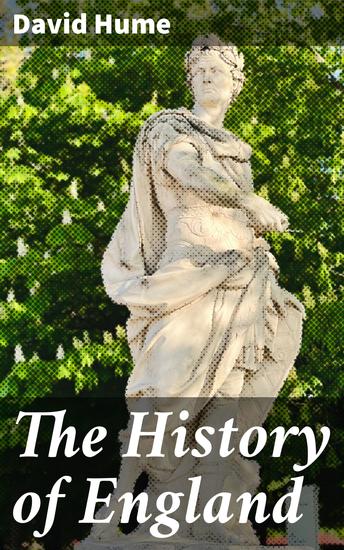
The History of England - Revolutionizing English History with Critical Analysis and Empiricism - cover
LER

The History of England - Revolutionizing English History with Critical Analysis and Empiricism

David Hume

Editora: Good Press

  • 0
  • 0
  • 0

Sinopse

In "The History of England," David Hume masterfully chronicles the political and social evolution of England from the Roman invasion to the Glorious Revolution. Employing a prose style both accessible and richly analytical, Hume intertwines narrative history with philosophical reflection, offering insights into human nature and governance. His meticulous attention to context allows readers to understand the interplay between economic conditions, religious tensions, and political systems that shaped the nation'Äôs trajectory. The book reflects the Enlightenment's embrace of reasoned discourse and critique of established norms, positioning Hume as both historian and philosopher. David Hume, a pivotal figure of the Scottish Enlightenment, drew from his extensive background in philosophy and economics to craft this thorough historical narrative. His unique perspective was influenced by his experiences as a Scottish citizen witnessing the impact of political upheaval and conflict on society. Hume's philosophical inquiries into human behavior and morality permeate his historical writing, as he emphasizes the importance of understanding the motives behind rulers and citizens alike. "The History of England" is an essential read for anyone intrigued by the complexities of English history and its lasting influence on modern governance. Hume's synthesis of empirical evidence and philosophical inquiry provides a profound understanding of the past, making this work invaluable for historians, students, and general readers alike.
Disponível desde: 12/08/2023.
Comprimento de impressão: 607 páginas.
Outros livros que poderiam interessá-lo

  • The Ralph Waldo Emerson Collection - cover

    The Ralph Waldo Emerson Collection

    Ralph Waldo Emerson

    • 0
    • 0
    • 0
    Trust Thyself and Awaken the Divinity Within.
    
    Ralph Waldo Emerson was the "Sage of Concord" and the intellectual father of the American Renaissance. At a time of rigid social and religious tradition, he issued a radical call for individual autonomy and a direct, unmediated relationship with the universe. This comprehensive collection brings together his most influential essays, lectures, and poetry, offering a timeless blueprint for living with purpose, integrity, and intellectual freedom.
    
    This collection explores the pillars of Emerson's revolutionary thought:
    
    The Gospel of Self-Reliance: Discover the classic arguments for non-conformity, intuition, and the courage to follow one's own internal compass against the tide of public opinion.
    
    Nature as a Mirror of the Soul: Explore Emerson's profound belief that the natural world is a physical manifestation of the spiritual, serving as the ultimate teacher for those who know how to see.
    
    The Concept of the Over-Soul: Delve into the metaphysical heart of Transcendentalism—the idea of a collective, divine unity that flows through all living things.
    
    The Power of the Intellect and Art: Engage with his visions for a truly original American culture, urging scholars and creators to stop looking toward the past and begin building a new future.
    
    Emerson's prose is characterized by its "radiant" energy and aphoristic brilliance. His work served as the catalyst for a new American identity, influencing figures from Henry David Thoreau to Walt Whitman. This volume is an essential cornerstone for any library of philosophy, spirituality, and classic American thought.
    
    Enlarge your world. Buy "The Ralph Waldo Emerson Collection" today and join the ranks of the self-reliant.
    Ver livro
  • Polynesian Mythology - Legends from the Islands of the Pacific - cover

    Polynesian Mythology - Legends...

    Odessa Nightshade

    • 0
    • 0
    • 0
    Polynesian mythology is a vast and intricate tapestry of stories, gods, and legendary heroes that have shaped the cultures of the Pacific Islands for centuries. Spanning across a region known as the Polynesian Triangle—bounded by Hawaii, New Zealand (Aotearoa), and Easter Island (Rapa Nui)—these myths have been passed down through generations via oral tradition. Each island group has its own variations, yet many of the themes, characters, and cosmic beliefs remain deeply connected, reflecting a shared ancestry and worldview.  
      
    At the heart of Polynesian mythology is a deep reverence for nature and the forces that shape the world. The ocean, sky, and land are not merely elements of the physical environment but sacred entities, often personified by gods and spirits. The vast Pacific, for example, is not only a means of travel but also a living force, ruled by deities like Tangaroa, the god of the sea. The sun, moon, stars, and winds play crucial roles in these legends, guiding great navigators and influencing the balance of life.  
      
    Oral tradition is the foundation of Polynesian storytelling. Before the arrival of writing, myths and legends were preserved through chants, songs, and performances. Storytellers, often elders or priests, ensured that each retelling remained faithful to tradition while also adapting to the audience and setting. This fluidity allowed myths to evolve while maintaining their core meanings. Through these stories, people learned about their ancestry, moral values, and the origins of their world. 
    Ver livro
  • The Socratic Dialogues - Alcibiades and Other Attributed Dialogues - cover

    The Socratic Dialogues -...

    Plato

    • 0
    • 0
    • 0
    The influence of Plato, his Dialogues and his ‘Academy’, cast a long shadow. Around 35 Dialogues, almost all featuring Socrates as the principal figure, are generally ascribed to Plato and form one of the most important threads in Western philosophy  These four Dialogues may fall into the ‘Attributed Texts’ category, but they are of sufficient interest to warrant study in our time and when set against the principal canon.  
     
    The recording opens with Alcibiades I. Socrates’ interlocuter is well known as a young, charismatic figure of the time, and appears in the Symposium and Protagoras. The subject under discussion is justice and injustice. Socrates questions the over-confident Alcibiades about his understanding of these issues, which is crucial for someone about to play an active role in public life. It is the longest Dialogue of the four. 
     
    Hippias is another young man. A Sophist, brimming with the confidence of youth to the extent of being vain and boastful. He appears in two Dialogues on this recording, the Lesser Hippias and the Greater Hippias. The Lesser Hippias is a witty and lively conversation in which Hippias is keen to display his abilities only to be shaken by patient questioning by the astute Socrates. The Greater Hippias, a discussion about beauty, contains some interesting elements, while also showing how the form became diluted in the hands of lesser followers of Plato.  
     
    The final Dialogue, Menexenus is a special case. It was an important form in Athenian society and this is a rare surviving example. It has been included here in a new recording so it can be listened to in the context of ‘Attributed Dialogues’, rather than a fully accepted work by Plato. The background to each Dialogue is set by Benjamin Jowett. David Rintoul continues his persuasive characterisation of the masterful Socrates.
    Ver livro
  • Democratic Delusions - How the Media Hollows Out Democracy and What We Can Do About It 1st Edition - cover

    Democratic Delusions - How the...

    Natalie Fenton

    • 0
    • 0
    • 0
    A free media is inextricably linked to a healthy democracy, but in many parts of the world liberal democracies are deemed to be dying or on the demise—a demise that many forms of media have enabled while heralding themselves as democracy's savior. The hollowing out of democracy in these ways has left many people questioning the value of (neo)liberal democratic societies. What can we do about it? 


    Democratic Delusions explores the potential of our media and tech systems to be democratic and contribute to a just and transformative democracy. This is only possible, Natalie Fenton argues, by first situating our political systems and mediated worlds within global capitalism. By interrogating different media and their relationship to seven key elements of democracy—power, participation, freedom, equality, public good, trust, and hope—the book asks: What is the response of society when the ability of news media to speak truth to power has been restricted by corporate logic? And, how do we tackle a deep-rooted market logic that shifts public debate towards private interest and marginalizes progressive perspectives? The book explores how these elements can be reimagined through newly conceived media and tech landscapes and, ultimately, what democracy might be in a future mediated world that places more power in the hands of more people.
    Ver livro
  • Germany Between the World Wars: The History and Legacy of the Weimar Republic and Nazi Germany in the Interwar Period - cover

    Germany Between the World Wars:...

    Editors Charles River

    • 0
    • 0
    • 0
    The Weimar Republic has become a byword for a failed, tragic, political experiment. The official period of its existence, 1919-1933, marked the inter-war years in Germany and their related uncertainty, chaos and the state’s ultimate collapse. Historians have found the roots of Nazism embedded in the Weimar years and that in the final analysis, Weimar politicians voluntarily handed over power to the man who wrought destruction on an epic scale, Adolf Hitler. Yet the Weimar era encapsulated a number of trends and fissures within German society, as well as the international community. The Weimar Republic was a prisoner of events and in the long run had little power to shape them. Historians are fond of interpreting the past as a tension between human agency, that is to say decision-making, and structural developments that evade individual choices. Both these interpretations are crucial when examining the tumultuous years of Germany’s Weimar Republic. 
    The early 1930s were a tumultuous period for German politics, even in comparison to the ongoing transition to the modern era that caused various forms of chaos throughout the rest of the world. In the United States, reliance on the outdated gold standard and an absurdly parsimonious monetary policy helped bring about the Great Depression. Meanwhile, the Empire of Japan began its ultimately fatal adventurism with the invasion of Manchuria, alienating the rest of the world with the atrocities it committed.  
    It was in Germany, however, that the strongest seeds of future tragedy were sown. The struggling Weimar Republic had become a breeding ground for extremist politics, including two opposed and powerful authoritarian entities: the right-wing National Socialists and the left-wing KPD Communist Party. As the 1930s dawned, these two totalitarian groups held one another in a temporary stalemate, enabling the fragile ghost of democracy to continue a largely illusory survival for a few more years.
    Ver livro
  • Hope Rising - How Christians Can End Extreme Poverty in This Generation - cover

    Hope Rising - How Christians Can...

    Scott Todd

    • 0
    • 0
    • 0
    Extreme poverty does not have to exist. When Christians accept that fact and start living accordingly, we will find the solution is already within our reach. 
    Worldwide, 18,000 children die from preventable causes every day. If that statistic leaves you feeling powerless, you are not alone—but you are wrong. If a false sense of powerlessness has lulled you into apathy, it’s time to shake off the grogginess of low expectations and get to work. We can make this world a place where kids do not die from easily preventable diseases. 
    In Hope Rising, Scott Todd of Compassion International pens a galvanizing, comprehensive vision of the movement that will eradicate extreme global poverty through transformative Christian generosity—and do it within our lifetime. Todd provides riveting evidence to show that we are much closer to that goal than you might think. 
    According to Todd, we live in an historic moment, and chances are you are already part of it. The gospel is already reshaping lives from thoughtless consumption to informed concern. Twenty-first-century Christians are generating multi-continent grassroots movements through communications and travel. Public and private sectors are working together.  It’s a whole new era of philanthropy, compassion, and justice aimed at eradicating the pandemic of extreme global poverty. 
    This is a future we have the God-given power to create. This is the history we hope to write. 
    As Todd envisions, “The twenty-first-century Christians embraced the entirety of their gospel—the truths it proclaims and the muscles it demands—with a new integrity. They did not deteriorate into humanist liberalism, as some had feared. Nor did they pile works on top of Grace…They simply determined that their world did not need to have children dying of preventable causes such as dirty water.”
    Ver livro