¡Acompáñanos a viajar por el mundo de los libros!
Añadir este libro a la estantería
Grey
Escribe un nuevo comentario Default profile 50px
Grey
Suscríbete para leer el libro completo o lee las primeras páginas gratis.
All characters reduced
The Dark Ages Collection - Chronicles of a Transformative Era - cover

The Dark Ages Collection - Chronicles of a Transformative Era

David Hume, Edward Gibbon, John Bagnell Bury, Edward Creasy, Henry Bradley, Zenith Crescent Moon Press

Editorial: Zenith Crescent Moon Press

  • 0
  • 0
  • 0

Sinopsis

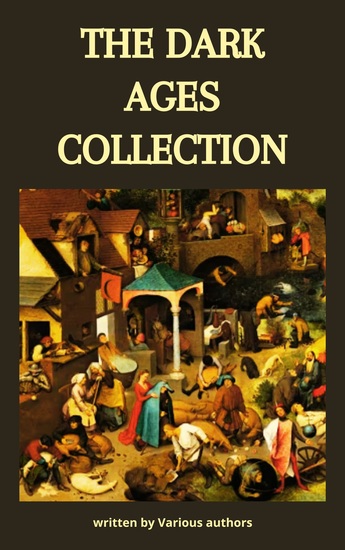
Step into the fascinating world of The Dark Ages Collection, a comprehensive anthology that explores the pivotal moments of the Middle Ages. This collection brings together historical accounts, cultural narratives, and scholarly insights, offering readers a vivid portrayal of an era marked by transformation, resilience, and discovery 🌟
📚 This eBook includes

🌟 What readers are saying
"A captivating collection that brings the Middle Ages to life with depth and clarity" – History Enthusiast
"An essential resource for anyone seeking to understand the foundations of modern Europe"
🌍 Perfect for history buffs, scholars, and readers intrigued by the medieval world. Let The Dark Ages Collection guide you through centuries of transformation

Don't miss this extraordinary anthology of The Dark Ages Collection 📖✨. Click "Buy Now" to embark on a journey through history
Disponible desde: 24/03/2025.
Longitud de impresión: 2727 páginas.


Otros libros que te pueden interesar

  • Life in the Neck Advent of Christmas - cover

    Life in the Neck Advent of...

    Diane Davies

    • 0
    • 0
    • 0
    Learn the meaning of advent in a simple gentle way on the porch of Fort Eli in the Neck among the forest animals. Two children celebrate the coming of Christmas with an advent wreath, lanterns for candles, Bible verses and a manager explaining the significance of each as they move forward bringing His light into the world.
    Ver libro
  • Ride the High Country - cover

    Ride the High Country

    Robert Nott

    • 0
    • 0
    • 0
    Director Sam Peckinpah was just starting out when MGM released Ride the High Country in 1962. He was a new kind of director: young, brash, and in a hurry to help the Western "grow up" by treating it with adult themes. Ride the High Country was something new and different, a changing Western to match a changing West. Stars Randolph Scott and Joel McCrea were old hands at this sort of thing. Ride the High Country gave the two veteran actors one last job to do and a chance to go out with some dignity. 


    Ride the High Country helped the genre mature and adapt to turbulent, changing times. It launched Peckinpah's career by invoking the themes of honor, loyalty, and compromised ideals, the destruction of the West and its heroes, and the difficulty of doing right in an unjust world—themes developed to their pinnacle in Peckinpah's later masterpiece, The Wild Bunch.
    Ver libro
  • The BEST WAY to Start a Business - cover

    The BEST WAY to Start a Business

    Michel Daley

    • 0
    • 0
    • 0
    An important guidebook for budding entrepreneurs who want to start a business, including "gems" of information based on  the author's years of senior management experience starting, organizing and operating small businesses.
    Ver libro
  • Teacherverance - Nurturing Hope While Embracing Perseverance in Education - cover

    Teacherverance - Nurturing Hope...

    Dr. Jen Mott

    • 0
    • 0
    • 0
    What about the teachers who stay?  
    Teachers are leaving! There is a teacher shortage!  
    …and still… 
    Every year we celebrate the careers of veteran teachers who are retiring after thirty or more rewarding years of serving students and staff in their communities and local school districts.  
    What about them? What about the teachers who stay?  
    What if we asked these veteran teachers about their perseverance? What kept them going? What helped them overcome the challenges of changing societal pressures for - and perceptions of - teachers?  
    Turns out, there are four themes that best capture their perseverance in such a way where educators still in the trenches can learn from them and try to focus their efforts to sustain a challenging career. The best part? There are universal takeaways for anyone losing hope in the current, volatile job market.  
    In this book, readers will…Learn how Higher Calling, Community, “The Only Option” and Contextual Joy can help you - and others - persevere through the challenges of teaching. Read narratives and personal stories of veteran teachers who have stayed to inspire hope in the ones who are still serving classrooms and schools daily.Experience journal-like prompts to help connect personally with the content and to do the real heart work needed to encourage the educators we need to stay by reminding them how much they - and the work they do - matter.
    Ver libro
  • Willingness to Serve - Eagerly Offering Your Assistance - cover

    Willingness to Serve - Eagerly...

    Esther Jameson

    • 0
    • 0
    • 0
    The journey of service begins with an understanding that true giving is born from within. The heart of service is not about fulfilling obligations or performing tasks for recognition; it is an inner calling that drives us to connect with others in meaningful ways. This chapter invites us to reflect on how genuine service originates from a desire to alleviate suffering, share joy, and foster unity in our communities. It is an exploration of the transformative power of selflessness—a power that inspires us to step beyond our personal interests and contribute to the collective well-being. 
    At the center of this approach lies the belief that every human interaction is an opportunity for connection and healing. When we serve others, we engage in an act that goes beyond simple assistance; we offer empathy and understanding that can bridge divides and mend broken spirits. This process begins with a willingness to be vulnerable, to acknowledge our own limitations, and to reach out to those in need with humility and compassion. By doing so, we not only enrich the lives of others but also discover the latent potential within ourselves—a potential that grows with each act of kindness. 
    Embracing the heart of service means accepting that our actions, no matter how small, can spark significant change. Each moment of compassion, every instance of thoughtful help, builds a foundation of trust and mutual respect in our relationships. This mindset challenges the prevailing culture of self-interest by affirming that our shared humanity is what truly defines us. In recognizing the interconnectedness of all lives, we find that our service to others is also a form of service to ourselves. It nurtures our growth, strengthens our resolve, and deepens our understanding of what it means to be truly alive.
    Ver libro
  • Deconstructionism - Dismantling Meaning in Text and Culture - cover

    Deconstructionism - Dismantling...

    Hector Davidson

    • 0
    • 0
    • 0
    Deconstructionism emerged in the late 20th century as a philosophical and literary movement that fundamentally questioned the nature of meaning, language, and interpretation. It is primarily associated with the work of French philosopher Jacques Derrida, who, in the 1960s and 1970s, began to develop ideas that would challenge long-held assumptions in philosophy, literary theory, and critical thought. The movement was a response to structuralism, which sought to uncover the underlying structures that govern language and society. In contrast, deconstruction aimed to show that meaning is inherently unstable and that texts and concepts can never be fully fixed or understood in a singular, unchanging way. 
      
    The foundational work of Jacques Derrida is central to deconstructionism. His concept of différance (a term he coined in 1968) highlighted the ways in which meaning is always deferred and never fully attainable. Derrida’s analysis of language showed that words and concepts derive meaning not from a stable, inherent essence, but from their relationships with other words. In this sense, meaning is always in flux, and any attempt to pin it down is doomed to fail. Derrida’s critique of binary oppositions—such as presence/absence, speech/writing, and truth/falsehood—argued that these pairs are not neutral but are hierarchically structured, with one term always subordinating the other. Through works like De la grammatologie (1967) and La Voie et le Voice (1967), Derrida redefined how we understand texts, insisting that they are always open to multiple interpretations.
    Ver libro