Junte-se a nós em uma viagem ao mundo dos livros!
Adicionar este livro à prateleira
Grey
Deixe um novo comentário Default profile 50px
Grey
Assine para ler o livro completo ou leia as primeiras páginas de graça!
All characters reduced
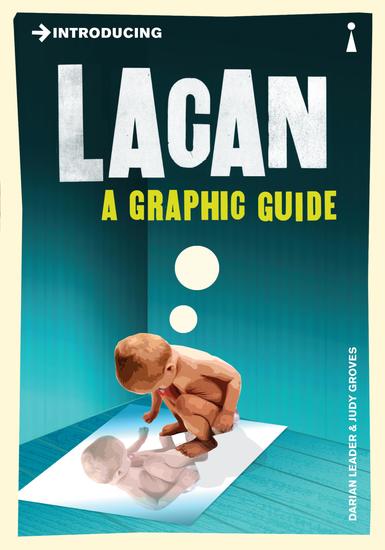
Introducing Lacan - A Graphic Guide - cover
LER

Introducing Lacan - A Graphic Guide

Darian Leader

Editora: Icon Books

  • 0
  • 1
  • 0

Sinopse

Jacques Lacan is now regarded as a major psychoanalytical theorist alongside Freud and Jung, although recognition has been delayed by fierce arguments over his ideas. Written by a leading Lacanian analyst, "Introducing Lacan" guides the reader through his innovations, including his work on paranoia, his addition of structural linguistics to Freudianism and his ideas on the infant 'mirror phase'. It also traces Lacan's influence in postmodern critical thinking on art, literature, philosophy and feminism. This is the ideal introduction for anyone intrigued by Lacan's ideas but discouraged by the complexity of his writings.
Disponível desde: 01/12/2014.
Comprimento de impressão: 176 páginas.


Outros livros que poderiam interessá-lo

  • Suleiman the Magnificent: An Enthralling Guide to the Sultan Who Ruled during the Golden Age of the Ottoman Empire - cover

    Suleiman the Magnificent: An...

    Billy Wellman

    • 0
    • 0
    • 0
    Suleiman the Magnificent is regarded as the greatest ruler of the Ottoman Empire. 
    Suleiman the Magnificent certainly earned his name. He not only had a huge impact on the history of Turkey and the Middle East but also on the European politics of his day, allying himself with France against the Habsburgs of Spain. He is also known for his life-long love affair with Roxelana, a slave girl who became his wife and, some say, co-ruler of the empire. 
    The exploits of this legendary ruler come to life in this audiobook. Enjoy a thrilling story of a man who changed history and brought the Ottoman Empire to new heights. 
    In this audiobook, you will find out:Why Suleiman was a master goldsmith as well as a sultanHow he became a major patron of the arts, employing the famous architect Sinan and changing the skyline of IstanbulWhy he is known to the Turks as “Suleiman the Law Maker (Kanuni)”How close he came to taking Vienna—twice!—and why he failedHow the Ottoman Empire was run almost exclusively by former Christian slavesHow Suleiman’s faithful slave Ibrahim rose to be Grand Vizier—and how he fell from favorHow Suleiman was responsible for the execution of two of his sonsWhy Egypt was so important to the Ottoman EmpireAnd how Suleiman may have been ultimately responsible for the creation of the croissant! 
    Scroll up and click the “add to cart” button to begin learning about Suleiman today!
    Ver livro
  • Golda Meir: A short biography - 5 Minutes: Short on time – long on info! - cover

    Golda Meir: A short biography -...

    5 Minutes, 5 Minute Biographies,...

    • 0
    • 0
    • 0
    Golda Meir, Israelite stateswoman and pioneer: Life and work in a short biography! Everything you need to know, brief and concise. Infotainment, education and entertainment at its best!
    Ver livro
  • Phoenician Language and Writing: The History and Legacy of the Ancient World’s Most Influential Script - cover

    Phoenician Language and Writing:...

    Editors Charles River

    • 0
    • 0
    • 0
    There is no doubt that the alphabets and forms of writing employed by most European languages comes directly from the Phoenicians, but the process by which that took place is still a mystery. Some of the ancient historians provided theories concerning how the Phoenicians gave their alphabet and system of writing to the Greeks, and Herodotus offered an account that is probably more accurate than most. He claimed, “The Phoenicians who came with Cadmus – amongst whom were the Gephyraei – introduced into Greece, after their settlement in the country, a number of accomplishments, of which the most important was writing, an art till then, I think, unknown to the Greeks. At first, they used the same characters as all the other Phoenicians, but as time went on, and they changed their language, they also changed the shape of their letters. At that period most of the Greeks in the neighborhood were Ionians; they were also taught these letters by the Phoenicians and adopted them, with a few alterations, for their own use, continuing to refer to them as Phoenician characters – as was only right, as the Phoenicians had introduced them.”  
    Like many of Herodotus’ other passages in Histories, there is truth wrapped with some errors. The Greeks certainly knew of the concept of writing before the Phoenicians, as the Mycenaeans used the Linear B script, but that knowledge had vanished at the end of the Bronze Age (Morkot 1996, 18). Perhaps what makes Herodotus’ account accurate and most interesting is his description of how the writing evolved. He mentions how the Greeks “changed the shape of their letters”, which is the normal course when any group of people adopts a script to write their native language. For example, there are slight variations in the Latin script employed by most modern Western European languages, such as the umlauts in German or the various accents in French and Spanish.
    Ver livro
  • Plato's Crito - cover

    Plato's Crito

    Plato

    • 0
    • 0
    • 0
    The Athenian court has found Socrates guilty and sentenced him to death. While he is waiting to be executed, his friend Crito comes to the prison to persuade him to escape and go into exile. Socrates responds by examining the essence of law and community, probing the various kinds of law, making distinctions that go far beyond the particular issue of whether or not Socrates should escape.
    Ver livro
  • Common Sense - cover

    Common Sense

    Thomas Paine

    • 0
    • 0
    • 0
    "Common Sense" is a political pamphlet written by Thomas Paine in 1776. It played a crucial role in inspiring American colonists to take up arms against the British and fight for independence. 
    In the pamphlet, Paine argues that it is only common sense for the American colonies to break away from Britain and become an independent nation. He criticizes the British monarchy and the idea of hereditary succession, arguing that power should be based on merit and ability, not birthright. 
    Paine also argues that the British government has failed to protect the interests of the American colonists and that they should be free to govern themselves. He appeals to the sense of patriotism and self-interest of his readers, arguing that American independence would lead to greater prosperity and a better way of life. 
    Overall, "Common Sense" is a passionate and persuasive argument for American independence, written in clear and accessible language that appealed to a wide audience. It remains one of the most influential political writings in American history.
    Ver livro
  • Ancient Civilizations Explored - A Journey Through the Foundations of Human History and Culture - cover

    Ancient Civilizations Explored -...

    Virversity Online Courses

    • 0
    • 0
    • 0
    This course offers a comprehensive exploration of ancient civilizations, tracing the development of early human societies and their lasting impact on the modern world. Students gain insights into the historical, cultural, social, and technological advancements that shaped humanity’s past, enriching critical thinking and providing context for understanding today’s societies.Explore the origins and growth of early civilizations from Mesopotamia to ancient China. Study social structures, belief systems, and cultural expressions across diverse societies. Examine key technological innovations, economic systems, and trade routes connecting ancient peoples. Understand the roles of writing, art, architecture, and governance in shaping civilization and the causes behind the decline of ancient empires. Learn archaeological methods that reveal the secrets of the past.The course begins with the earliest human societies and their transition to complex civilizations, highlighting Mesopotamia as the “Cradle of Civilization” and the emergence of city-states. Discover Egypt’s riverine empires, Greece’s democratic and philosophical contributions, and Rome’s political and engineering achievements. Delve into writing systems like cuneiform and hieroglyphics, religious beliefs, social hierarchies, economic structures, and technological advances that shaped tools and infrastructure. Explore arts and architecture as expressions of power, faith, and identity.Further, examine Asian ancient civilizations such as the Indus Valley and early Chinese empires, emphasizing their unique contributions and roles in trade networks. The course addresses the complex causes behind the rise and fall of these societies and their enduring legacies. Students also learn archaeological techniques that help reconstruct historical narratives.
    Ver livro