Junte-se a nós em uma viagem ao mundo dos livros!
Adicionar este livro à prateleira
Grey
Deixe um novo comentário Default profile 50px
Grey
Assine para ler o livro completo ou leia as primeiras páginas de graça!
All characters reduced
The Divine Comedy - cover
LER

The Divine Comedy

Dante Alighieri

Tradutor H. W. Longfellow

Editora: DigiCat

  • 0
  • 0
  • 0

Sinopse

The Divine Comedy, written by Dante Alighieri in the early 14th century, is a monumental epic poem that explores the soul's journey towards God, encapsulated within the structure of Hell (Inferno), Purgatory (Purgatorio), and Heaven (Paradiso). Dante employs a rich tapestry of allegory and symbolism, blending classical mythology with Christian theology, and his innovative use of the vernacular Tuscan dialect marks a pivotal shift in Italian literature. This work not only reflects the medieval worldview and the interplay of fate, free will, and divine justice but also serves as a profound meditation on human nature and moral philosophy, contributing significantly to the literary context of the Renaissance and beyond. Dante Alighieri, a political figure and a poet from Florence, was deeply influenced by the tumultuous events of his life, including exile from his beloved city. This personal strife, combined with his extensive knowledge of classical texts and Christian teachings, shaped the moral and spiritual themes of The Divine Comedy. His dedication to using literature as a means of societal reflection underscores his desire to guide readers towards enlightenment and moral rectitude. Readers seeking an illuminating exploration of the human condition will find The Divine Comedy indispensable. Dante's intricate narrative and philosophical depth invite both scholars and casual readers to reflect on the universal themes of sin, redemption, and the pursuit of divine truth. This timeless masterpiece continues to resonate with contemporary audiences, making it an essential read for anyone interested in literature, theology, or the human experience.
Disponível desde: 13/11/2022.
Comprimento de impressão: 412 páginas.

Outros livros que poderiam interessá-lo

  • Unfolding Light - Poems - cover

    Unfolding Light - Poems

    Steve Garnaas-Holmes

    • 0
    • 0
    • 0
    Poetry, like religion, is the practice of wonder—a way of being open, a way of reaching out to touch the hem of the world’s garment. Like the great spiritual teachers, poetry invites us to be radically present, to inhabit the world a little more closely, to attend a little more lovingly, with an awareness beyond the mere mind. The numinous shines right before our eyes, nonchalantly hidden, poorly disguised. The Divine lurks in the shadowy places. The Realm of Grace is at hand, among you, within you. There’s delight and suffering and mystery: everything the heart desires. We’re embedded in it. All we have to do is slow down and pay attention. Poetry is a way of letting the world come to you. These poems are offered to waylay us from the grind of productivity, off into the weeds of the divine. 
    Unfolding Light is a collection of 184 poems gathered from 45 years of writing. They are part of my practice of wonder. They include reflections on daily life, scripture passages, walking in the woods, contemplative prayer, the natural world, dogs, bees, and driving across Montana with a peach. They’re rooted in my observation that the world is a thin place, filled with mystery, the divine presence, tears of every kind, and abundant blessing.
    Ver livro
  • Duino Elegies - cover

    Duino Elegies

    Rainer Maria Rilke

    • 0
    • 0
    • 0
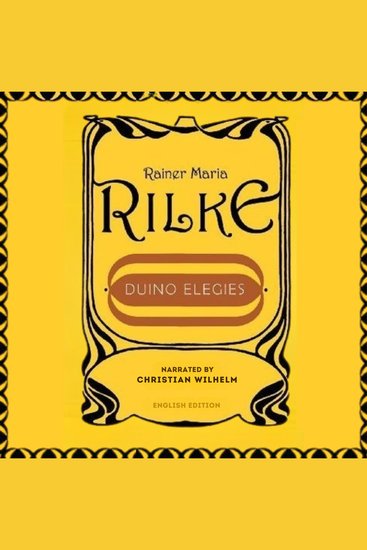
    We have a marvelous, almost legendary image of the circumstances in which the composition of this great poem began. Rainer Maria Rilke was staying at Duino Castle, on a rocky headland of the Adriatic Sea near Trieste. 
    One morning, he walked out onto the battlements and climbed down to where the cliffs dropped sharply to the sea. From out of the fierce wind, Rilke seemed to hear a voice: Wer, wenn ich schriee, horte mich denn aus der Engel Ordnungen? (If I cried out, who would hear me up there, among the angelic orders?). 
    He wrote these words, the opening of the first Duino Elegy, in his notebook, then went inside to continue what was to be his major opus—completely only after another ten, tormented years of effort—and one of the literary masterpieces of the century.  
    Duino Elegies speaks in a voice that is both intimate and majestic on the mysteries of human life and our attempt, in the words of the translator David Young, “to use our self-consciousness to some advantage: to transcend, through art and the imagination, our self-deception and our fear.”
    Ver livro
  • The Comedy of Errors - cover

    The Comedy of Errors

    William Shakespeare

    • 0
    • 0
    • 0
    The Comedy of Errors is one of Shakespeare's earliest and shortest plays. This comedy utilizes slapstick humor, word play, and mistaken identities to create a series of farcical accidents. Over time, the play's title has become an idiom used to describe "an event or series of events made ridiculous by the number of errors that were made throughout."
    In Ephesus, the law forbids entry to any merchants from Syracuse, and if they are discovered within the city, they must pay a thousand marks or be put to death. Aegeon, an old Syracusian merchant, is arrested and Solinus, the Duke of Ephesus, listens to his story of coming to the city. Long ago, Aegeon was on a sea voyage. Traveling with him was his wife, his twin sons, and their twin slaves. The family becomes separated during a tempest; Aegeon, one son, and one slave were rescued together, and the others were never to be seen again. Years later his son Antipholus and his slave Dromio left to search for their long lost siblings; after the boys didn't return, Aegeon set out to bring his son back home. Moved by this story, the duke allows Aegeon one day to get the money to pay his fine and to find his family.
    Ver livro
  • Rhyme A Dozen A - British Countryside - 12 Poets 12 Poems 1 Topic - cover

    Rhyme A Dozen A - British...

    John Clare, Ivor Gurney, Alfred...

    • 0
    • 0
    • 0
    ‘A dime a dozen’ as known in America, is perhaps equal to the English ‘cheap as chips’ but whatever the lingua franca of your choice in this series we hereby submit ‘A Rhyme a Dozen’ as 12 poems on many given subjects that are a well-rounded gathering, maybe even an essential guide, from the knowing pens of classic poets and their beautifully spoken verse to the comfort of your ears. 
     
    01 - A Rhyme A Dozen - 12 Poems, 12 Poets, 1 Topic - British Countryside - An Introduction 
    02 - On a Lane in Spring by John Clare 
    03 - The Lambs of Grassmere by Christina Georgina Rossetti 
    04 - Daffodils by William Wordsworth 
    05 - Binsey Poplars by Gerard Manley Hopkins 
    06 - In Sutton Woods by Alfred Austin 
    07 - The Malvern Hills by Radclyffe Hall 
    08 - The Downs by Robert Seymour Bridges 
    09 - Adlestrop by Edward Thomas 
    10 - The Darkling Thrush by Thomas Hardy 
    11 - Autumn Dawn by Charles Sorley 
    12 - By Severn by Ivor Gurney 
    13 - In Springtime by Rudyard Kipling
    Ver livro
  • Mother Daughter Augur - cover

    Mother Daughter Augur

    Mary Simmons

    • 0
    • 0
    • 0
    Mary Simmons’s debut is a world unto itself: a dark storybook realm, lush and full of eerie possibility, a place outside of time where women move in different forms and pass on warnings and wisdom. In the spirit of a Victorian naturalist’s collection, this book brings together found elements from nature, folklore, mythology, ballet, and oral tradition, crafting a strange, kaleidoscopic beauty and complicating inherited definitions of femininity. As these poems blur dichotomies—maiden and witch, mother and daughter, friend and lover—they reach for a new vision of womanhood beyond the bounds of roles and expectations, one that is mystical, ethereal, a little dangerous, and inherently queer. In the process, they tap into deep currents of yearning, grapple with corporeality, raise larger questions about love and what lasts, and find meaning in the uncanny and the macabre. In these pages are insects and omens, wolves and birds and weird apparitions, Odile and Ophelia, even a seventeenth-century professional poisoner. Original, atmospheric, and immersive, this is a work like no other: a tour through an enchanted forest, a darkness that’s illuminating.
    Ver livro
  • Home Burial - Poem about the challenges of everyday life from a Pulitzer prize winner - cover

    Home Burial - Poem about the...

    Robert Frost

    • 0
    • 0
    • 0
    Robert Lee Frost was born on the 26th March 1874 in San Francisco, California. 
    His father found providing for the family a constant challenge and he died, when Frost was 11, from tuberculosis and left an estate valued at only $8.  The family moved east to Lawrence, Massachusetts, and a better life with his grandfather. 
    After graduating from High School, and then a few months at Dartmouth college, he returned home to take on a variety of menial jobs to help support his mother.  Their drudgery and poor money encouraged him to move in a different direction: a career as a poet. 
    He sold his first poem in 1894 for $15.  With this milestone he proposed to his high school sweetheart who declined as she was still studying at university.  The following year she graduated and they married.  A year later the first of their six children arrived.   
    After a stint at Harvard for two years he received the gift of a farm from his ailing grandfather.  Frost worked the farm and wrote unpublished poetry for several years before turning to a teaching position. 
    Upon the death of one of his children the grief-stricken family decided to quit everything and live in England, moving across the Atlantic in 1912.  The following year he published his first poetry book and with it came critical acclaim.  He was now in his late thirties. 
    The onset of World War I saw Frost return to America with a glowing reputation, and here he launched himself into a career of writing, teaching and lecturing.  
    In 1924 he received the first of four Pulitzer Prizes, for his book ‘New Hampshire: A Poem with Notes and Grace Notes’.  He received a second Pulitzer in 1931 for ‘Collected Poems’.  A third Pulitzer Prize was presented in 1937 for ‘A Further Range’.  His fourth Pulitzer was awarded in 1943 for ‘A Witness Tree’. 
    Frost was also nominated for the Nobel Prize in Literature 31 times. 
    During these years personal tragedy had enveloped him.  A daughter had died in her late 20s from the effects of her puerperal fever at childbirth, his wife had died of breast cancer, and a son had committed suicide.  
    Then, at the age of 86, was asked to read his poem ‘The Gift Outright’ at President John F Kennedy’s inauguration on the 20th January, 1961.  
    Robert Frost died on the 29th January 1963 in Boston of complications arising from prostate surgery.  He was 88.
    Ver livro