¡Acompáñanos a viajar por el mundo de los libros!
Añadir este libro a la estantería
Grey
Escribe un nuevo comentario Default profile 50px
Grey
Suscríbete para leer el libro completo o lee las primeras páginas gratis.
All characters reduced
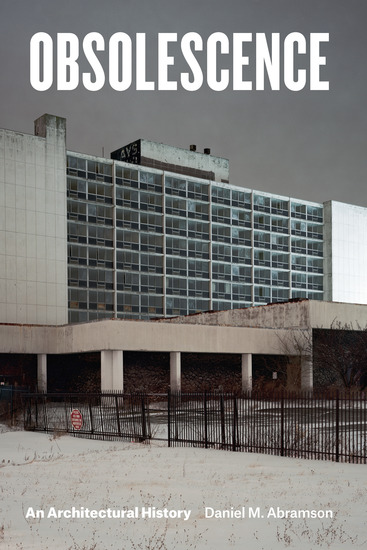
Obsolescence - An Architectural History - cover

Obsolescence - An Architectural History

Daniel M. Abramson

Editorial: The University of Chicago Press

  • 0
  • 0
  • 0

Sinopsis

In our architectural pursuits, we often seem to be in search of something newer, grander, or more efficient—and this phenomenon is not novel. In the spring of 1910 hundreds of workers labored day and night to demolish the Gillender Building in New York, once the loftiest office tower in the world, in order to make way for a taller skyscraper. The New York Times puzzled over those who would sacrifice the thirteen-year-old structure, “as ruthlessly as though it were some ancient shack.” In New York alone, the Gillender joined the original Grand Central Terminal, the Plaza Hotel, the Western Union Building, and the Tower Building on the list of just one generation’s razed metropolitan monuments. In the innovative and wide-ranging Obsolescence, Daniel M. Abramson investigates this notion of architectural expendability and the logic by which buildings lose their value and utility. The idea that the new necessarily outperforms and makes superfluous the old, Abramson argues, helps people come to terms with modernity and capitalism’s fast-paced change. Obsolescence, then, gives an unsettling experience purpose and meaning. Belief in obsolescence, as Abramson shows, also profoundly affects architectural design. In the 1960s, many architects worldwide accepted the inevitability of obsolescence, experimenting with flexible, modular designs, from open-plan schools, offices, labs, and museums to vast megastructural frames and indeterminate building complexes. Some architects went so far as to embrace obsolescence’s liberating promise to cast aside convention and habit, envisioning expendable short-life buildings that embodied human choice and freedom. Others, we learn, were horrified by the implications of this ephemerality and waste, and their resistance eventually set the stage for our turn to sustainability—the conservation rather than disposal of resources. Abramson’s fascinating tour of our idea of obsolescence culminates in an assessment of recent manifestations of sustainability, from adaptive reuse and historic preservation to postmodernism and green design, which all struggle to comprehend and manage the changes that challenge us on all sides.
Disponible desde: 12/02/2016.
Longitud de impresión: 202 páginas.
Otros libros que te pueden interesar

  • English Grammar and Writing Made Easy - Learn to Speak English with Fluency and Write Like an Expert by Building Your Vocabulary Speaking Eloquently and Increasing Pronounciation - cover

    English Grammar and Writing Made...

    Philip Jacobs

    • 0
    • 0
    • 0
    Learn the English language faster than you ever thought possible.
    Ver libro
  • The Appeal to Emotion Fallacy - Manipulating Emotions Rather Than Presenting Valid Arguments - cover

    The Appeal to Emotion Fallacy -...

    William Rands

    • 0
    • 0
    • 0
    Logical fallacies are errors in reasoning that undermine the validity of an argument. They are often used unintentionally, but in many cases, they are deliberately employed to manipulate or persuade others. A logical fallacy may seem convincing on the surface, yet it lacks a sound basis when scrutinized more closely. Understanding logical fallacies is crucial because they can mislead audiences, derail thoughtful discussion, and obstruct the pursuit of truth. 
    The study of logical fallacies dates back to ancient Greece, where philosophers like Aristotle laid the foundations for reasoning and argumentation. Throughout history, these fallacies have evolved and manifested in various forms, adapting to the cultural and rhetorical needs of each era. While some fallacies are easy to identify, others are more subtle and sophisticated, making them harder to detect. 
    A logical fallacy is not necessarily about the truth or falsity of the conclusion; it pertains to the quality of the reasoning that leads to that conclusion. In other words, even if the conclusion of an argument is correct, the reasoning behind it may still be flawed. For example, an argument that relies on emotional appeals or personal attacks rather than facts and evidence is committing a fallacy, even if the conclusion is true.
    Ver libro
  • You Don't Need Therapy - 7 Steps to Sort Your Sh*t Out - cover

    You Don't Need Therapy - 7 Steps...

    Alan Lucas

    • 0
    • 0
    • 0
    The Sort Your Self Out system (The SYSO System) is a one-stop self-improvement system that can be applied wherever you are on your journey. You can change your life by following 7 simple steps and the book's 70 practical exercises help you DO the changing, rather than just read about it. 
    You'll learn how to expand your awareness, manage your mind, take charge of your emotions, meet your needs in healthy ways, have a crystal-clear philosophy for the purpose of your life, understand that everything is interconnected, and how to make your life more enjoyable by enhancing the lives of others. You'll light up and lighten up, leading more from your heart than your ego, being focused on feeling fulfilled by being useful. By following the steps, you will change the filter through which you experience life and by changing the filter, everything will look different.
    Ver libro
  • Genghis Khan: A short biography - 5 Minutes: Short on time – long on info! - cover

    Genghis Khan: A short biography...

    5 Minutes, 5 Minute Biographies,...

    • 0
    • 0
    • 0
    Genghis Khan, founder of the Mongol empire : Life and work in a short biography! Everything you need to know, brief and concise. Infotainment, education and entertainment at its best!
    Ver libro
  • Freedom of Choice is Not Freedom - cover

    Freedom of Choice is Not Freedom

    Jiddu Krishnamurti

    • 0
    • 0
    • 0
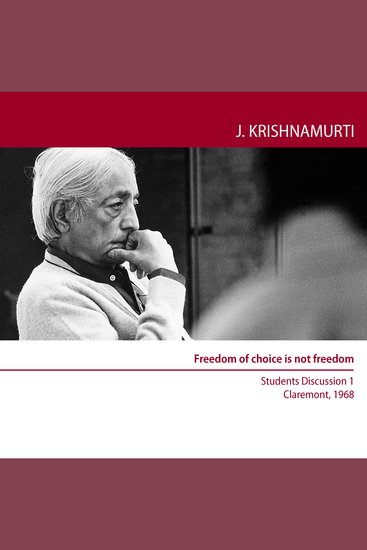
    Freedom of choice is not freedom - 11 November 1968 
    • What do we mean by free will? Is there such thing? 
    • Is choice ever necessary? 
    • Freedom exists only when I perceive very clearly, when the mind sees things as they are. 
    • Q: Is it possible to be free in society? 
    • Q: Is love the absence of hate? 
    • To find out what truth is you must be free of propaganda: the propaganda of 
    the Church, the propaganda of literature, propaganda of tradition, so that you see things clearly for yourself.
    Ver libro
  • Narcissistic Abuse Recovery - Understand Accept and Find Peace After Psychological and Emotional Abuse - Includes 20 Phrases to Disarm a Narcissist - cover

    Narcissistic Abuse Recovery -...

    Janis Bryans

    • 0
    • 0
    • 0
    Lying, cheating, minimising, devaluing, humiliating, guilt-tripping, manipulating, triangulating, gaslighting, projection, covert and overt put-downs. 
    Do they sound familiar to you? 
    They apologised, but this time it will be different... or will they just get better at hiding what they are doing? 
    Will they ever change? 
    Narcissism is an overwhelming and confusing subject. But when you remove the mask, you see that it is basically a lie, told to those who are vulnerable and receptive. 
    Narcissistic abuse, by nature, is created to keep you trapped in a spiral based on shame. It doesn't just go away with awareness. Narcissism brings with it a set of paradigms, beliefs and behaviours that need to be rewired from within. 
    Have you ever asked yourself these questions? 
    ◆ What are the different forms of narcissism? 
    ◆ Is my partner a narcissist? 
    ◆ Why do I keep attracting narcissistic personalities? 
    ◆ Why do they make others feel so bad and what are their tactics? 
    ◆ How can I protect myself from a narcissist? 
    ◆ What happens in a narcissistic family? 
    ◆ Why is it so hard to believe in myself and my future? 
    ◆ What are the health problems associated with narcissistic abuse? 
    ◆ How can I heal and finally find peace? 
    If you have ever asked yourself any of these questions, this book was written for you! 
    If you are still struggling with the effects of an abusive narcissistic relationship and tired of extreme pain and twisted mind games, do yourself a favour, take a deep breath, relax that knot in your stomach and take this book. It's the best gift you can give yourself!
    Ver libro