¡Acompáñanos a viajar por el mundo de los libros!
Añadir este libro a la estantería
Grey
Escribe un nuevo comentario Default profile 50px
Grey
Suscríbete para leer el libro completo o lee las primeras páginas gratis.
All characters reduced
The Political Works of Daniel Defoe - Including the Biography of the Author - cover

The Political Works of Daniel Defoe - Including the Biography of the Author

Daniel Defoe

Editorial: DigiCat

  • 0
  • 0
  • 0

Sinopsis

In "The Political Works of Daniel Defoe," the author unearths the intricate interplay between politics and society through a series of provocative essays and pamphlets. Defoe's literary style, marked by clarity and wit, encapsulates the tumultuous political landscape of early 18th-century England, characterized by a rise in governmental scrutiny and burgeoning civil liberties. His works, including seminal pieces like "The Review" and "The Shortest Way with Dissenters," reveal an astute engagement with contemporary issues such as religious tolerance, the nature of power, and the nuances of public opinion. By contextualizing these writings, Defoe positions himself as a pioneering voice in the discourse of political thought, transcending mere literary craft to influence political ideology itself. Daniel Defoe, a merchant turned writer, lived through the turbulent times of the English Civil War and the Glorious Revolution, which profoundly shaped his perspectives on governance and society. His diverse experiences, including imprisonment for seditious libel and a life as a pamphleteer, endowed him with unique insights into the intersection of private life and public duty. Through his multifaceted career, Defoe channelled his frustrations and hopes into his writings, advocating for an engaged and informed citizenry amid political chaos. This anthology is essential for readers seeking to understand the foundations of modern political discourse and the evolution of public opinion. Defoe's works remain remarkably relevant, offering timeless reflections on freedom, authority, and individual responsibility. Engaging with this collection invites readers to connect the past with current political dilemmas, enriching their understanding of both literature and history.
Disponible desde: 17/05/2022.
Longitud de impresión: 702 páginas.
Otros libros que te pueden interesar

  • We Will Be Heard - Women's Struggles for Political Power in the United States - cover

    We Will Be Heard - Women's...

    Jo Freeman

    • 0
    • 0
    • 0
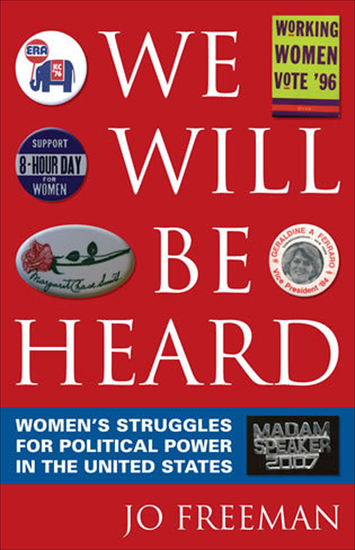
    In We Will Be Heard, noted political scientist Jo Freeman chronicles the struggles of women in the United States for political power. Most of their stories are little-known, but Freeman's compelling portrait of women working for change reminds us that women have never been silent in the political affairs of the nation. From J. Ellen Foster's address to the 1892 Republican Convention to Nancy Pelosi's 2007 election as the first female Speaker of the House, women have worked to influence politics at every level. Well before most could vote, women campaigned for candidates and lobbied to shape public policy. Men welcomed their work, but not their ideas. Even with equal suffrage women faced many barriers to full political participation. The fifteen case studies of women's struggles for political influence in this book provide the historical context for today's political events. Starting with an overview of when and why political women have been studied, the three sections of the book look at different ways in whi
    Ver libro
  • Cheka The: The History of the Soviet Agency that Eventually Became the KGB - cover

    Cheka The: The History of the...

    Editors Charles River

    • 0
    • 0
    • 0
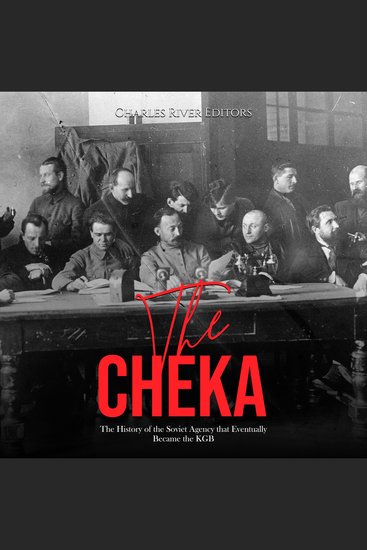
    The KGB is one of the most famous abbreviations of the 20th century, and it has become synonymous with the shadowy and often violent actions of the Soviet Union’s secret police and internal security agencies. In fact, it is often used to refer to the Soviet state security agencies throughout its history, from the inception of the inception of the Cheka (Extraordinary Commission) in 1917 to the official elimination of the KGB in 1992. Whether it’s associated with the Russian Civil War’s excesses, Stalin’s purges, and even Vladimir Putin, the KGB has long been viewed as the West’s biggest bogeyman during the second half of the 20th century. 
    	However, the KGB did not appear out of thin air. Naturally, the earliest Soviet leaders utilized intelligence agencies that collected information both abroad and within the Soviet Union, targeting foreign opponents and domestic opponents alike. Lenin did not imagine the scale of the opposition he would have to face after the revolution, and he quickly came to the conclusion that "a special system of organized violence" must be created to implement the dictatorship of the proletariat. 
    	Thus, from nearly the beginning of the Bolshevik takeover of Russia, Lenin and his successors established and relied on a particularly ruthless agency: the All-Russian Extraordinary Commission for Combating Counter-Revolution and Sabotage, later abbreviated to the Extraordinary Commission. Known colloquially as the Cheka (Extraordinary Commission), it soon became as feared by non-socialists as the Tsar’s secret police had ever been. The main means approved by the Council of People's Commissars on December 20, 1917, which the Cheka had to use to fight the counter-revolution, were "seizure of property, resettlement, deprivation of cards, publication of lists of enemies of the people, etc."
    Ver libro
  • Selling Social Justice - Why the Ruling Class Loves Antiracism - cover

    Selling Social Justice - Why the...

    Jennifer C. Pan

    • 0
    • 0
    • 0
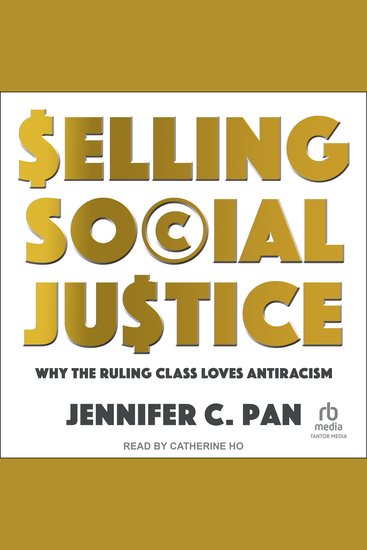
    The national racial reckoning that began in 2020 promised to radically restructure American society from the bottom up. But five years on, it has mainly served to strengthen the ruling class and deliver the rich an opportunity to rehabilitate a profoundly unequal economic order at a moment when the stability of the system and the public's trust in it are deteriorating. 


    Corporations have used antiracism to consolidate their political power and evade government regulation. Employers have surveilled and undermined workers through counterproductive diversity, equity, and inclusion trainings. Affluent professionals and Democratic politicians have exacerbated a stark class divide by pushing half-baked "racial equity" policies that come at the expense of the majority of working people. And the right has reacted to these developments by stoking a toxic culture war against "wokeness" that serves as a distraction from the increasing economic hardship faced by Americans of all races. 


    Selling Social Justice investigates the rise and spread of contemporary antiracist ideology and shows how the rich came to embrace this particular form of justice. In this provocative account, Jennifer C. Pan explores why, in a twenty-first-century economy of increasing scarcity, antiracism is the wrong frame for understanding and fighting inequality.
    Ver libro
  • Storming the Ivory Tower - How a Florida College Became Ground Zero in the Struggle to Take Back Our Campuses - cover

    Storming the Ivory Tower - How a...

    Richard Corcoran, Christopher F....

    • 0
    • 0
    • 0
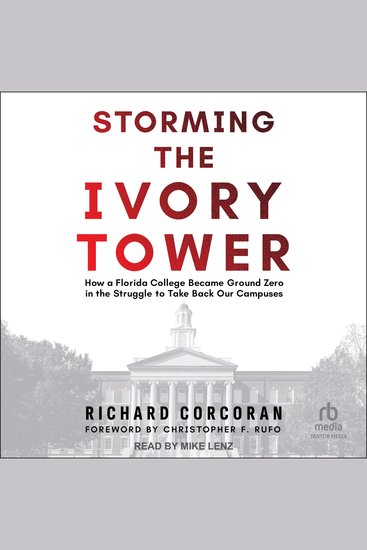
    Covid alerted the nation to the reality that K-12 schools were infested with ideologues bent on indoctrinating children. Then, three years after the beginning of the pandemic, the response to Hamas's genocidal assault on Israel made Americans aware that the same tumor had wholly sickened our country's colleges and universities. Now, conservatives—and increasingly, moderates and old-school liberals—want to know exactly how the radical left captured higher education. 


    Florida has been the vanguard in the war to restore sanity to higher education. And Richard Corcoran has been one of its commanding generals. When Corcoran was Florida's education commissioner, he was the point person for reopening schools and banning mask mandates. He triumphed. Then, he was given a herculean task: remaking a college overrun by radicalism and cancel culture. In 2023, he moved into the president's office in Sarasota, took on a campus mob, and challenged a media firestorm. 


    Just a year later, Corcoran achieved the seemingly impossible. He turned around New College of Florida. Now, free speech is protected. Violence and anti-Semitism are abolished. DEI bureaucracy is eliminated. And enrollment records are being broken. Storming the Ivory Tower is the story of how Corcoran is winning the fight for freedom in hostile territory and how others can join.
    Ver libro
  • On Tyranny - Including the Strauss-Kojève Correspondence - cover

    On Tyranny - Including the...

    Leo Strauss

    • 0
    • 0
    • 0
    An analysis of the classic Greek dialogue about absolute rule and the impassioned commentary it inspired between two philosophers.On Tyranny is Leo Strauss’s classic reading of Xenophon’s dialogue Hiero, or Tyrannicus, in which the tyrant Hiero and the poet Simonides discuss the advantages and disadvantages of exercising tyranny. Included are a translation of the dialogue from its original Greek, a critique of Strauss’s commentary by the French philosopher Alexandre Kojève, and the complete correspondence between the two.This revised and expanded edition introduces important corrections throughout and expands Strauss’s restatement of his position in light of Kojève’s commentary to bring it into conformity with the text as it was originally published in France.“On Tyranny is a complex and stimulating book with its ‘parallel dialogue’ made all the more striking since both participants take such unusual, highly provocative positions and so force readers to face substantial problems in what are often wholly unfamiliar, even shocking ways.” ―History and Theory
    Ver libro
  • Race Marxism: Book Summary & Analysis - cover

    Race Marxism: Book Summary &...

    Briefly Summaries

    • 0
    • 0
    • 0
    This is a concise summary and analysis of Race Marxism, by James Lindsay.
     
    It is not the original book and is not affiliated with or endorsed by James Lindsay.
     
    Ideal those seeking a quick and insightful overview.
     
    Race Marxism explores the complex intersection of critical race theory (CRT) and Marxist ideology, offering a deep dive into how these frameworks influence modern discussions on race, politics, and society. The book examines CRT's origins, its relationship to Marxism, and its impact on culture, education, and institutions. With a critical lens, it questions the philosophical foundations and practical implications of these ideas, aiming to challenge prevailing narratives and encourage intellectual discourse on race and social justice.
    Ver libro