Junte-se a nós em uma viagem ao mundo dos livros!
Adicionar este livro à prateleira
Grey
Deixe um novo comentário Default profile 50px
Grey
Assine para ler o livro completo ou leia as primeiras páginas de graça!
All characters reduced
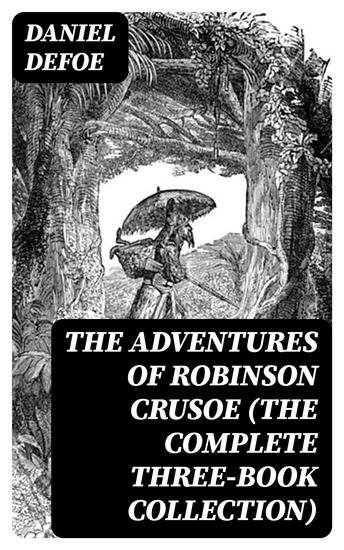
The Adventures of Robinson Crusoe (The Complete Three-Book Collection) - cover
LER

The Adventures of Robinson Crusoe (The Complete Three-Book Collection)

Daniel Defoe

Editora: DigiCat

  • 0
  • 0
  • 0

Sinopse

Daniel Defoe's "The Adventures of Robinson Crusoe" presents a masterful exploration of survival, isolation, and the human spirit through the trials of its titular character, Robinson Crusoe. This complete three-book collection captures Crusoe's harrowing journey as he becomes shipwrecked on a desolate island, where he must rely on his resourcefulness and ingenuity to navigate the perils of nature. Defoe employs a vivid prose style, rich in detail and emblematic of the early 18th-century novelistic tradition, blending realism with adventure and moral reflection, which is essential for understanding the cultural context of the era marked by exploration and imperialism. Defoe, a prominent figure of the Enlightenment, was deeply influenced by his experiences as a merchant, journalist, and pamphleteer. His own tumultuous life, which included imprisonment and financial hardship, informed his portrayal of Crusoe as a symbol of individualism and resilience. Defoe's keen observations on society, economics, and human psychology resonate throughout the narrative, making it not only a tale of adventure but also a profound commentary on self-sufficiency and the relationship between man and nature. This compelling collection is highly recommended for readers seeking an engaging narrative that transcends time. The interplay between adventure and philosophical inquiry makes it a vital text for anyone interested in literature, history, or the human condition. Defoe's classic resonates with contemporary themes of solitude, survival, and self-discovery, encouraging readers to reflect on their own existence and place in the world.
Disponível desde: 13/11/2022.
Comprimento de impressão: 835 páginas.


Outros livros que poderiam interessá-lo

  • Fly-Leaf in a Life A (Unabridged) - cover

    Fly-Leaf in a Life A (Unabridged)

    Charles Dickens

    • 0
    • 0
    • 0
    Charles Dickens was a writer and social critic who created some of the world's best-known fictional characters and is regarded as the greatest novelist of the Victorian era. His works enjoyed unprecedented popularity during his lifetime, and by the twentieth century critics and scholars had recognised him as a literary genius. His novels and short stories enjoy lasting popularity.
    A FLY-LEAF IN A LIFE: Once upon a time (no matter when), I was engaged in a pursuit (no matter what), which could be transacted by myself alone; in which I could have no help; which imposed a constant strain on the attention, memory, observation, and physical powers.
    Ver livro
  • Murat - cover

    Murat

    Alexandre Dumas

    • 0
    • 0
    • 0
    "Murat" by Alexandre Dumas is a vivid historical drama chronicling the life of Joachim Murat, the dashing cavalry officer who became King of Naples. A loyal ally of Napoleon Bonaparte, Murat’s ambition and charisma propel him to power, but his loyalty is tested as political tides shift. Dumas explores Murat’s rise and fall, capturing his battlefield heroics, flamboyant personality, and ultimate betrayal. Set against the tumultuous backdrop of the Napoleonic Wars, the novel delves into themes of loyalty, ambition, and the fragility of power. A blend of adventure and tragedy, it portrays Murat’s relentless drive for glory and the personal cost of his ambitions, offering a poignant reflection on leadership and legacy in times of upheaval.
    Ver livro
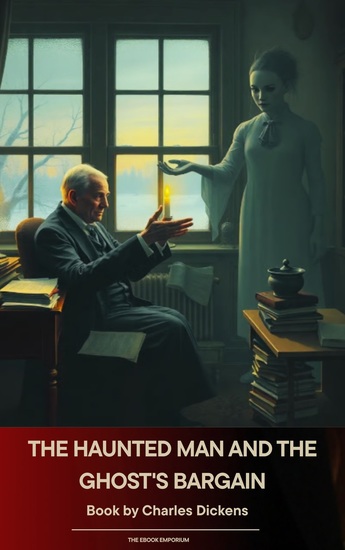
  • The Haunted Man and the Ghost's Bargain - cover

    The Haunted Man and the Ghost's...

    Charles Dickens

    • 0
    • 0
    • 0
    "Lord, keep my memory green!"
    
    Professor Redlaw is a man haunted—not by a malevolent spirit, but by the painful memories of his own past. When a spectral double appears and offers him a "gift"—the power to forget all his sorrows, wrongs, and troubles—Redlaw eagerly accepts. However, the bargain comes with a chilling condition: he will also lose the ability to feel empathy, and he will spread this "forgetfulness" to everyone he touches. As he watches his friends and the struggling Tetterby family turn cold and bitter, Redlaw realizes that to lose one's pain is to lose one's humanity.
    
    A Masterpiece of Psychological Depth: While A Christmas Carol deals with greed, The Haunted Man delves into the inner workings of the mind and heart. Dickens explores the idea that our trials and tribulations are what connect us to one another. Without the memory of suffering, there can be no compassion, no forgiveness, and no joy.
    
    The Warmth of the Dickensian Hearth: Contrast the cold, scholarly isolation of Redlaw with the chaotic, loving home of the Tetterbys and the steadfast kindness of Milly Swidger. Milly serves as the emotional anchor of the story, representing the transformative power of a simple, loving heart. This novella is a beautiful reminder that the "shadows" of our lives are just as important as the light.
    
    Rediscover the gift of remembrance. Purchase "The Haunted Man and the Ghost's Bargain" today and experience Dickens's most philosophical Christmas tale.
    Ver livro
  • King Coal - cover

    King Coal

    Upton Sinclair

    • 0
    • 0
    • 0
    "King Coal" is a novel written by Upton Sinclair, first published in 1917. The book explores the harsh conditions and exploitation faced by coal miners in the United States during the early 20th century. Sinclair, known for his social and political activism, used "King Coal" to expose the oppressive working conditions, corporate greed, and corruption within the coal industry. The novel follows the protagonist, Hal Warner, a wealthy young man who decides to experience life as a coal miner. As he immerses himself in the harsh realities of coal mining, he witnesses the struggles of the working class and becomes an advocate for workers' rights. The story delves into themes of social justice, labor exploitation, and the impact of industrialization on the lives of ordinary people.
    Ver livro
  • Signal-Man The (Unabridged) - cover

    Signal-Man The (Unabridged)

    Charles Dickens

    • 0
    • 0
    • 0
    "The Signal-Man" is a first-person horror/mystery story by Charles Dickens, first published as part of the Mugby Junction collection in the 1866 Christmas edition of All the Year Round.
    The railway signal-man of the title tells the narrator of an apparition that has been haunting him. Each spectral appearance precedes a tragic event on the railway on which the signalman works. The signalman's work is at a signal-box in a deep cutting near a tunnel entrance on a lonely stretch of the railway line, and he controls the movements of passing trains. When there is danger, his fellow signalmen alert him by telegraph and alarms. Three times, he receives phantom warnings of danger when his bell rings in a fashion that only he can hear. Each warning is followed by the appearance of the spectre, and then by a terrible accident.
    Ver livro
  • A Wicked Woman - From their pens to your ears genius in every story - cover

    A Wicked Woman - From their pens...

    Jack London

    • 0
    • 0
    • 0
    John Griffith Chaney was born on January 12th, 1876 in San Francisco.   
    His father, William Chaney, was living with Flora Wellman when she became pregnant.  Chaney insisted she have an abortion.  Flora's response was to turn a gun on herself.  Although her wounds were not severe the trauma made her temporarily deranged. 
    In late 1876 his mother married John London and the young child was brought to live with them as they moved around the Bay area, eventually settling in Oakland where now, calling himself Jack, he completed grade school. 
    Jack worked hard at several jobs, sometimes 12-18 hours a day, but his dream was university.  He studied hard and borrowed the money to enrol in the summer of 1896 at the University of California in Berkeley. 
    In 1897, at 21, Jack searched out newspaper accounts of his mother's suicide attempt and for the name of his biological father. He wrote to Chaney, then living in Chicago, who claimed he could not be Jack’s father because he was impotent and casually asserted that London's mother had relations with other men.  Jack, devastated by the response, quit Berkeley and went to the Klondike. Other accounts suggest that his dire finances presented Jack with the excuse he needed to leave. 
    In the Klondike Jack began to gather material for his writing but also accumulated many health problems, including scurvy, which together with hip and leg problems he would carry for the rest of his life. 
    During the late 1890's Jack was regularly publishing short stories and by the turn of the century full blown novels. 
    By 1904 Jack had married, fathered two children and was now in the process of divorcing.  A stint as a reporter on the Russo-Japanese war of 1904 was equal amounts trouble and experience. But that experience was always put to good use in a continuing and remarkable output of work. 
    In 1905 he married Charmian Kittredge who at last was a soul and companion who brought him some semblance of peace despite his advancing alcoholism and his incurable wanderlust. 
    Twelve years later Jack had amassed both wealth and a literary reputation through such classics as ‘The Call of the Wild’, ‘White Fang’ and many others. He had a reputation as a social activist and was a tireless friend of the workers.   
    Jack London died suffering from dysentery, late-stage alcoholism and uremia, aged only 40, on November 22nd 1916 at his property in Glen Elen in California.
    Ver livro