¡Acompáñanos a viajar por el mundo de los libros!
Añadir este libro a la estantería
Grey
Escribe un nuevo comentario Default profile 50px
Grey
Suscríbete para leer el libro completo o lee las primeras páginas gratis.
All characters reduced
History of the big bonanza - An authentic account of the discovery history and working of the world-renowned Comstock silver lode of Nevada - cover

History of the big bonanza - An authentic account of the discovery history and working of the world-renowned Comstock silver lode of Nevada

Dan De Quille

Editorial: Good Press

  • 0
  • 0
  • 0

Sinopsis

In 'History of the Big Bonanza,' Dan De Quille offers an insightful chronicle of the Comstock Lode, one of the richest silver mines in American history. De Quille's engaging narrative is characterized by a blend of factual rigor and vibrant storytelling, effectively capturing the zeitgeist of mid-19th century America during the Gold Rush era. The book expertly amalgamates personal anecdotes, economic data, and sociopolitical commentary, providing readers with a multifaceted view of how the fabled bonanza influenced the settlement and development of the American West. De Quille's unique approach allows for a thorough exploration of themes such as ambition, greed, and the impact of mining on frontier society. Dan De Quille, born in 1829, was not only a journalist but also a prominent figure in the Nevada mining community. His firsthand experience with the mining industry and his role as a reporter in Virginia City provided him with both the context and the narrative depth required to articulate the intricacies of this transformative era. De Quille was deeply invested in the stories of the local miners, which adds an authentic voice to his historical account, making the narrative both personal and expansive. Recommended for both scholars and casual readers alike, 'History of the Big Bonanza' serves as an essential text for understanding the social and economic ramifications of mining in America. De Quille's work provides valuable insights into the consequences of the gold and silver rush, making it a must-read for those interested in American history, mining, and the ever-evolving narrative of the West.
Disponible desde: 24/04/2025.
Longitud de impresión: 200 páginas.


Otros libros que te pueden interesar

  • Germany Between the World Wars: The History and Legacy of the Weimar Republic and Nazi Germany in the Interwar Period - cover

    Germany Between the World Wars:...

    Editors Charles River

    • 0
    • 0
    • 0
    The Weimar Republic has become a byword for a failed, tragic, political experiment. The official period of its existence, 1919-1933, marked the inter-war years in Germany and their related uncertainty, chaos and the state’s ultimate collapse. Historians have found the roots of Nazism embedded in the Weimar years and that in the final analysis, Weimar politicians voluntarily handed over power to the man who wrought destruction on an epic scale, Adolf Hitler. Yet the Weimar era encapsulated a number of trends and fissures within German society, as well as the international community. The Weimar Republic was a prisoner of events and in the long run had little power to shape them. Historians are fond of interpreting the past as a tension between human agency, that is to say decision-making, and structural developments that evade individual choices. Both these interpretations are crucial when examining the tumultuous years of Germany’s Weimar Republic. 
    The early 1930s were a tumultuous period for German politics, even in comparison to the ongoing transition to the modern era that caused various forms of chaos throughout the rest of the world. In the United States, reliance on the outdated gold standard and an absurdly parsimonious monetary policy helped bring about the Great Depression. Meanwhile, the Empire of Japan began its ultimately fatal adventurism with the invasion of Manchuria, alienating the rest of the world with the atrocities it committed.  
    It was in Germany, however, that the strongest seeds of future tragedy were sown. The struggling Weimar Republic had become a breeding ground for extremist politics, including two opposed and powerful authoritarian entities: the right-wing National Socialists and the left-wing KPD Communist Party. As the 1930s dawned, these two totalitarian groups held one another in a temporary stalemate, enabling the fragile ghost of democracy to continue a largely illusory survival for a few more years.
    Ver libro
  • Social Experiments in the 20th Century: The History of the World’s Most Famous and Infamous Psychological Experiments - cover

    Social Experiments in the 20th...

    Editors Charles River

    • 0
    • 0
    • 0
    The human psyche is one of the most complex, unpredictable, enigmatic, and therefore riveting phenomena in existence, one that psychologists have been working on deciphering since the dawn of modern science. To better understand the multifaceted intricacies of human behavior, and to unlock the secrets of the conscious mind and the subconscious, ambitious professionals in the field have conducted numerous groundbreaking – and at times, problematic – psychological experiments. The practice originated with German philosopher Wilhelm Wundt, one of the fathers of modern psychology and the creator of the world's first experimental psychology laboratory at the University of Leipzig. He sought to measure the average speed of thought processes by assigning a range of reaction time tasks to his subjects.  
    	As the nascent, yet fast-developing scientific discipline took hold around the globe, psychological experiments simultaneously diversified. As revolutionary and eye-opening as many of these experiments were, they often danced on the fine line between ethical and unethical. There was, for instance, the now-infamous Little Albert Experiment, conducted at Johns Hopkins University in 1920, in which a nine-month-old infant was deliberately manipulated into developing an irrational fear for the purpose of studying classical conditioning, and the correlation between adult fears and childhood traumas. The Monster Study, carried out at the University of Iowa in 1939, attempted to convert orphans into stutterers, half of whom were subjected to positive reinforcements and the others to negative ones. Then, there was arguably the most notorious psychological experiment in history: the 1971 Stanford Prison Experiment, in which participants were randomly assigned the character of either prisoner or prison guard. That role-playing study quickly spiraled out of control.
    Ver libro
  • The Story of Joan of Arc - cover

    The Story of Joan of Arc

    Andrew Lang

    • 0
    • 0
    • 0
    Joan of Arc’s tale is one of faith, courage, and destiny. In The Story of Joan of Arc, Andrew Lang recounts the extraordinary life of the young peasant girl who, guided by divine visions, led the French army to victory during the Hundred Years’ War. From her humble beginnings in Domrémy to her triumphant leadership in battle, and ultimately, her tragic trial and martyrdom, Joan’s story remains one of the most compelling in history. 
    Blending historical fact with gripping storytelling, Lang brings Joan’s journey to life, capturing her unwavering spirit and the challenges she faced in a world dominated by war and political intrigue. The Story of Joan of Arc is an inspiring account of faith and perseverance, a timeless legend that continues to captivate readers and listeners alike. 
    This edition, narrated by Luke Oldham, immerses audiences in the grandeur of medieval France, providing a powerful and evocative experience of Joan’s life and legacy.
    Ver libro
  • History of Russia - The 1900s and Soviet Russia - cover

    History of Russia - The 1900s...

    Days of History

    • 0
    • 0
    • 0
    Discover the Unfolding Drama of the 20th Century with "History of Russia: The 1900s and Soviet Russia" 
    - The Final book in Our "Russia's Epic Saga: A Journey Through Time" Series. 
    Complete your exploration of Russia's rich history with the enthralling final book in our Russian history series. This riveting book delves into the dramatic events and influential figures that shaped Russia during the 20th century, as the nation underwent a period of unprecedented change. 
    Witness the fall of the Russian Empire and the rise of the Soviet Union, as revolutionary fervor swept the nation. Explore the lives of iconic leaders like Lenin, Stalin, and Khrushchev, whose actions would forever alter the course of history. Experience the triumphs and tragedies of Soviet Russia, from the heights of its global influence to its eventual collapse. 
    This engrossing volume combines engaging storytelling with expert analysis, presenting a balanced and captivating account of Russia's tumultuous 20th-century journey. Accessible and informative, it's perfect for history lovers and newcomers alike. 
    Don't miss your chance to delve into Russia's remarkable past. Order your copy today, and immerse yourself in the incredible stories of a nation that has faced adversity and emerged transformed.
    Ver libro
  • The Joy of the Disinherited - Essays on Trauma Oppression and Black Mental Health - cover

    The Joy of the Disinherited -...

    Kevin Dedner

    • 0
    • 0
    • 0
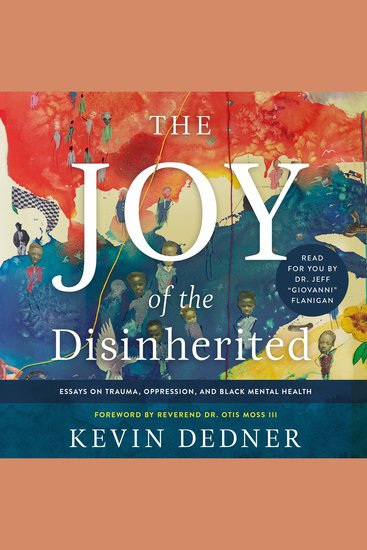
    Could being Black in America make you sick? Over the last decade, Kevin Dedner has been on a mission to explore this powerful and troubling question, shining an unconventional spotlight on the impact of racism on mental health. In his debut book, The Joy of the Disinherited, Dedner articulates his call for urgent change: We must knock down the invisible barriers that make it harder for Black people to get the mental health care they need and deserve. Building on American author and civil rights leader Howard Thurman’s Jesus and the Disinherited, widely considered a manual of resistance for the oppressed, Dedner uses Thurman’s teachings to come to terms with the impact oppression has had on his own mental health and the mental health of Black Americans, digging into family stories as examples of the legacy of unresolved generational trauma of the disinherited.As a public health professional who has spent his career working on high-profile issues, Dedner uses his autobiographical essays to highlight the latest mental health research, while simultaneously interrogating the invisible barriers he has encountered along his own mental health journey. Dedner weaves together research, personal storytelling and a powerful sense of our shared history to drive the conversation about the future of mental health care. This audiobook is intended to be an immersive experience designed to help you navigate and better understand your own struggles with mental health. You are encouraged to listen to it chronologically. However, you may find that certain sections speak more to where you are, where you’ve been, or where you’re going on your personal mental health journey. In addition to the text, our reader has created a song entitled, “The Story of the Disinherited,” which summarizes the entire book. You will hear excerpts from the song at the end of each chapter. At the end of the reading, you can hear the entire song.
    Ver libro
  • Dark Ages - cover

    Dark Ages

    Henry David Thoreau

    • 0
    • 0
    • 0
    In this luminous essay, Thoreau calls us to reconsider how we view the past: not as a rigid ledger of facts, but as a shifting landscape of light and shadow. He asks us to read history “as little critically as we consider the landscape, and be more interested by the atmospheric tints … than by its groundwork and composition.” 
    From the twilight of ages to the dawn of our own perception, this work invites you to sit on the mound of time, gaze through the mist of memory, and recognise that the true monument is not the stone carved in antiquity, but the living moment we inhabit now. Listen as Fiona Spreadborough gives voice to this meditation on existence, memory and the eternal laws of light. 
    Ideal for listeners drawn to thoughtful reflection, transcendental inquiry, and the subtle beauty of ideas.
    Ver libro