"The Dead Do Not Sleep Soundly in the West Country."
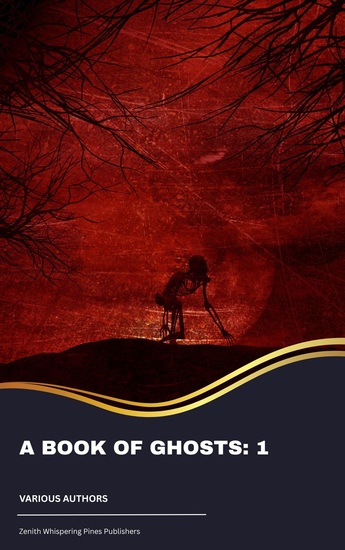
Sabine Baring-Gould was one of the most versatile minds of the 19th century, but it was in the realm of the supernatural that his imagination truly flickered with a dark, cold light. A Book of Ghosts is a cornerstone of Victorian weird fiction, moving away from simple "jump scares" to explore the lingering, uncomfortable presence of those who refuse to leave this world behind.
The Master of the Folkloric Fright: Baring-Gould's ghosts are not mere optical illusions; they are manifestations of history, guilt, and the rugged landscape itself. Drawing on his deep knowledge of English folklore and antiquarian history, he crafts stories where the supernatural feels as tangible as the ancient stone walls and foggy marshes of Devon and Cornwall. His work excels at the "slow burn" of dread—where a simple domestic object or a misunderstood local legend becomes the herald of something truly unsettling.
A contemporary of M.R. James and Bram Stoker, Baring-Gould offers a more grounded, yet equally terrifying, vision of the afterlife. This volume is an essential cornerstone for any library of classic ghost stories, Victorian Gothic, and supernatural fiction.
Step into the shadows of the past. Buy "A Book of Ghosts" today and discover why some doors are better left locked.
🎬 Experience the atmospheric visual edition of this tale by searching "Jonathan Dunne Horror" on YouTube.
Title: The System of Doctor Tarr and Professor Fether
Series Name: Timeless Terrors
Series Entry: 137
Author: Edgar Allan Poe
Narrator: Jonathan Dunne
Original Publication: 1845
Public Domain: Yes
Description:
A curious visitor arrives at a secluded French asylum renowned for its humane treatment of patients. Welcomed by the staff, he is introduced to the peculiar “system” devised by Doctor Tarr and Professor Fether—a method said to replace harsh restraints with kindness and freedom. Yet as the evening unfolds, strange behavior and unsettling inconsistencies begin to surface. In this darkly satirical tale, Poe masterfully blurs the boundary between sanity and madness, building toward a shocking revelation that turns order into chaos and reason into absurdity.
Stanley Featherstonehough Ukridge is willing to do anything to get a buck – except, of course, work. Bombastic and big-eared, Ukridge has a bottomless well of corking ideas that never seem to work out, yet he’s always willing to volunteer others to tackle the inconvenient bits. Whether he’s commandeering a dog college, managing a tender-hearted pugilist, or brushing the perpetual chips off his aunt’s shoulder, Ukridge’s spotty success record never gets him down.
Ukridge had a special place in Wodehouse’s heart, appearing in stories for 60 years, with the last published as late as 1966. Ukridge first appeared to American audiences in Love Among the Chickens (1906). While this collection is the second published (1924), the events take place before the dodgy poultry adventure.
"The Murders in the Rue Morgue" is a short story by Edgar Allan Poe published in Graham's Magazine in 1841. It has been described as the first modern detective story; Poe referred to it as one of his "tales of ratiocination".
The unnamed narrator opens with a lengthy commentary on the nature and practice of analytical reasoning, then describes the circumstances under which he first met Dupin during a visit to Paris. The two share rooms in a dilapidated old mansion and allow no visitors, having cut off all contact with past acquaintances and venturing outside only at night. One evening, Dupin demonstrates his analytical prowess by deducing the narrator's thoughts about a particular stage actor, based on clues gathered from the narrator's previous words and actions.
In the days when England and Spain struggled for the supremacy of the sea, a young lad sails with Sir Francis Drake, the daring sixteenth-century privateer, in this action-packed story based on true historical events. Drake’s superb navigational skill enabled him to outrun or outmaneuver his incessant pursuers. He escaped so often and so ingeniously that he became legendary and was assumed by some to have supernatural powers—even the Spanish tended to have admiration rather than hatred in their hearts. As Drake sails the Pacific on his great voyage of circumnavigation, the heroes pass through a variety of exciting and perilous adventures.
A collection of six Edgar Allan Poe short stories.
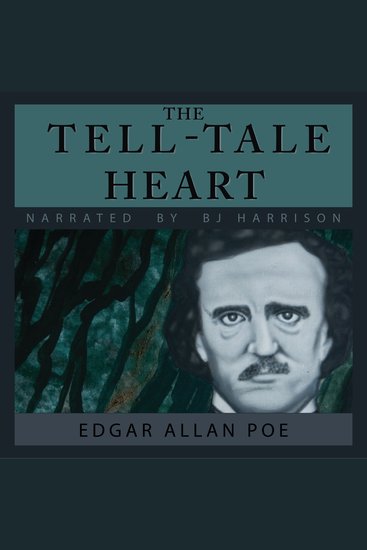
Edgar Allan Poe was an American writer, poet, and literary critic of the early 19th century. He is widely regarded as a central figure in the development of the American Romantic movement and is known for his dark, macabre tales and poems, including "The Raven," "The Tell-Tale Heart," and "The Black Cat." Poe's works have had a lasting impact on American literature and popular culture, and his writing style, which often features atmospheric suspense and the supernatural, continues to be imitated and referenced today.
Francis Marion Crawford was born on August 2nd, 1854 at Bagni di Lucca, Italy. An only son and a nephew to Julia Ward Howe, the American poet and writer of ‘The Battle Hymn of the Republic’.
His education began at St Paul's School, Concord, New Hampshire, then to Cambridge University; University of Heidelberg; and the University of Rome.
In 1879 Crawford went to India, to study Sanskrit and then edited The Indian Herald. In 1881 he returned to America to continue his Sanskrit studies at Harvard University.
At this time in Boston he lived at his Aunt Julia house and in the company of his Uncle, Sam Ward. His family was concerned about his employment prospects. After a singing career as a baritone was ruled out, he was encouraged to write.
In December 1882 his first novel, ‘Mr Isaacs’, was an immediate hit which was amplified by ‘Dr Claudius’ in 1883.
In October 1884 he married Elizabeth Berdan. They went on to have two sons and two daughters.
Encouraged by his excellent start to a literary career he returned to Italy with Elizabeth to make a permanent home, principally in Sant' Agnello, where he bought the Villa Renzi that then became Villa Crawford.
In the late 1890s, he began to write his historical works: ‘Ave Roma Immortalis’ (1898), ‘Rulers of the South’ (1900) and ‘Gleanings from Venetian History’ (1905). The Saracinesca series is perhaps his best work. ‘Saracinesca’ was followed by ‘Sant’ Ilario’ in 1889, ‘Don Orsino’ in 1892 and ‘Corleone’ in 1897, that being the first major treatment of the Mafia in literature.
Francis Marion Crawford died at Sorrento on Good Friday 1909 at Villa Crawford of a heart attack.
Set in Italy, ‘For Blood is the Life’ draws us into a world usually beyond our senses. With Crawford’s pen the uneasy, horrific world of vampires is now upon us.
Ihr Account wird momentan auf einem anderen Gerät benutzt.
Es ist bereits eine Sitzung auf einem anderen Gerät geöffnet.
Abmelden
Erneut verbinden
Ihr Account wird momentan auf einem anderen Gerät benutzt.
Um darauf zugreifen zu können, müssen die Berechtigungen und obligatorischen Richtlinien (markiert mit *) überprüft und akzeptiert werden.
Wenn Sie Hilfe oder weitere Informationen benötigen, schreiben Sie an support@24symbols.com
Akzeptieren
Ihr Account wird momentan auf einem anderen Gerät benutzt.
OK
Bestätigungs-E-Mail noch einmal schicken
Ihr Account wird momentan auf einem anderen Gerät benutzt.
Wir haben versucht, Ihr Abo abzubuchen, aber es ist uns nicht gelungen. Das teilt uns Ihre Bank/Karte mit:
Wenn Sie weiterlesen möchten, müssen Sie sich möglicherweise an Ihre Bank wenden oder Ihre Zahlungsinformationen hier ändern:
Ich möchte meine Karte aktualisieren!
Haben Sie Fragen? Schreiben Sie uns an support@24symbols.com und wir werden Ihnen weiterhelfen.
Cookies helfen uns bei der Bereitstellung unserer Dienste. Durch die Nutzung unserer Dienste erklären Sie sich damit einverstanden, dass wir Cookies setzen.Mehr erfahren