Junte-se a nós em uma viagem ao mundo dos livros!
Adicionar este livro à prateleira
Grey
Deixe um novo comentário Default profile 50px
Grey
Assine para ler o livro completo ou leia as primeiras páginas de graça!
All characters reduced
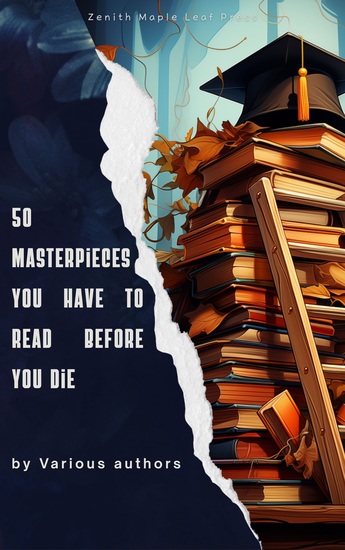
50 Masterpieces You Have to Read Before You Die - cover
LER

50 Masterpieces You Have to Read Before You Die

Jerome K. Jerome, James Joyce, Charles Kingsley, Rudyard Kipling, La Fayette, Pierre Choderlos de Laclos, D. H. Lawrence, Sheridan Le Fanu, Matthew Gregory Lewis, Sinclair Lewis, Jack London, H.P. Lovecraft, Thomas Mann, William Somerset Maugham

Editora: Zenith Maple Leaf Press

  • 0
  • 0
  • 0

Sinopse

Fifty books. Endless inspiration. One collection that will last a lifetime.

50 Masterpieces You Have to Read Before You Die gathers the world's greatest novels, plays, epics, and stories into a single volume. From ancient epics and Shakespearean drama to modern classics of love, tragedy, and adventure, this anthology offers a journey through the very best of world literature.

Inside this landmark collection you'll find:
✔ 50 complete works by legendary authors who defined culture and storytelling
✔ A wide range of genres: novels, poetry, drama, and philosophical works
✔ An essential guide to the masterpieces every reader should experience

Why readers love it:

Unparalleled value. Fifty complete books in one convenient edition.

A journey through time. Explore works spanning centuries and civilizations.

Perfect for collectors and learners. A must-have library of essential reading.

Celebrated across generations
This collection includes works by authors such as Homer, Dante, Shakespeare, Jane Austen, Charles Dickens, Leo Tolstoy, Fyodor Dostoevsky, and many others whose masterpieces continue to shape literature and thought today.

✨ Start your ultimate reading journey and discover the works that changed the world.

👉 Click "Buy Now" and claim 50 Masterpieces You Have to Read Before You Die—a definitive collection of the greatest classics ever written.
Disponível desde: 26/08/2025.
Comprimento de impressão: 12348 páginas.

Outros livros que poderiam interessá-lo

  • Aftermath of World War II The: The Political Legal and Technological Ramifications of History’s Deadliest Conflict - cover

    Aftermath of World War II The:...

    Charles River Editors

    • 0
    • 0
    • 0
    At the end of World War II, the world was faced with some sobering statistics. With over 50,000,000 deaths when both military and civilian losses had been accounted for, the death toll was devastating, and for many of those who lived in countries that had been ravaged by war, hunger and financial strain had become parts of daily life. Furthermore, beyond the physical damage was the growing knowledge of the atrocities that had been committed both before and during the war. In fact, the Allies were discussing how to dole out justice for Axis war crimes as early as 1943, and once the war was over, it was time for the nations to turn their attention towards determining the proper punishments.  
    	In the wake of the war, the European continent was devastated, and the conflict left the Soviet Union and the United States as uncontested superpowers. This ushered in over 45 years of Cold War, and a political alignment of Western democracies against the Communist Soviet bloc that produced conflicts pitting allies on each sides fighting, even as the American and Soviet militaries never engaged each other. Though it never truly got “hot” between the two superpowers directly, the Cold War was a tense era until the dissolution of the USSR, and nothing symbolized the split more than the division of Berlin.  
    	If anyone wondered whether the Cold War would dominate geopolitics, any hopes that it wouldn’t were dashed by the Soviets’ blockade of West Berlin in April 1948, ostensibly to protest the currency being used in West Berlin but unquestionably aiming to extend their control over Germany’s capital. By cutting off all access via roads, rail, and water, the Soviets hoped to force the Allies out, and at the same time, Stalin’s action would force a tense showdown that would test their mettle.
    Ver livro
  • Imperial Rome - From Augustus to the Fall - cover

    Imperial Rome - From Augustus to...

    Rogan Fish

    • 0
    • 0
    • 0
    The fall of the Roman Republic in the late first century BCE paved the way for a new era, one defined by the leadership of a single man: Augustus. Born Gaius Octavius, he emerged as the heir of Julius Caesar and transformed Rome from a state of political turmoil into a stable empire. His rise to power was marked by strategic alliances, military victories, and significant political reforms that laid the foundation for imperial rule. 
    The aftermath of the Republic’s collapse saw Rome in chaos. The assassination of Julius Caesar in 44 BCE triggered a power struggle between his supporters and those who sought to restore the old Republic. Octavian, as he was then known, capitalized on his status as Caesar’s adopted son and formed the Second Triumvirate with Mark Antony and Marcus Lepidus. Together, they pursued and defeated Caesar’s assassins, Brutus and Cassius, at the Battle of Philippi in 42 BCE. However, tensions among the triumvirs soon escalated. Lepidus was forced into retirement, and Octavian turned against Antony, who had allied himself with Cleopatra of Egypt. Their rivalry culminated in the Battle of Actium in 31 BCE, where Octavian’s naval forces decisively defeated Antony and Cleopatra, leading to their eventual suicides. With no remaining challengers, Octavian stood as the unopposed ruler of Rome. 
    Rather than seizing power as a dictator, Octavian carefully crafted his authority to appear as a restoration of Republican values. In 27 BCE, he formally returned power to the Senate, a move that won him widespread support and the honorary title "Augustus." However, this gesture was largely symbolic, as he retained control over the military and key provinces. His governance established the principate, a system in which the emperor ruled under the guise of republican traditions while holding ultimate authority.
    Ver livro
  • Travel Adventures of Harvey & Smudge The - In Dublin's Fair City - cover

    Travel Adventures of Harvey &...

    Martin Whelan

    • 0
    • 0
    • 0
    The Travel Adventures of Harvey & Smudge - In Dublin's Fair City, is part of a series of Audiobooks which follow two dogs as they visit Cities around the world. The stories are full of facts and amusing content, with the strap line 'Laugh & Learn through the Travel Adventures of Harvey & Smudge.' In Dublin's Fair City finds the friends visiting the famous Guinness Factory, the site of the Irish uprising, Oscar Wilde's school and the Garden of Remembrance, whilst learning to perform the art of Irish Dancing! Fans of the Audiobooks say they love the way the facts about the cities are interwoven into a funny story, with Harvey always getting into trouble and Smudge always trying to be the calming influence. Come along and join them on their crazy adventures.
    Ver livro
  • Daddy Boy - cover

    Daddy Boy

    Emerson Whitney

    • 0
    • 0
    • 0
    After a decade-long relationship with a dominatrix he called Daddy, Emerson Whitney had begun to crave something besides submission. It came as a full surprise‚ submission had been so central to his early adulthood, to his trans identity. Dizzied by new questions of control and aging, and living in a tent while his relationship ends, Emerson stumbles upon an advertisement for a storm-chasing tour. For thrill seekers, it says. Unsure what else to do, he signs up.Daddy Boy follows Emerson as he packs into a van full of strangers and drives up and down the country‚ staying in Days Inns and eating bags of carrots from Walmart and wanting nothing more than to surrender to the force of a colossal storm. We had no idea where we were going, Emerson writes, ‚ just waiting for one cloud to pop. Roaming the prairie landscape of his childhood, Emerson recalls his adoptive dad, Hank‚ unflinching and extremely Texan, and his biological dad, who was rarely around. From the van's trash-strewn back seat, and in the face of these looming figures, Emerson begins to wonder: Did he want to be Daddy now?
    Ver livro
  • The Illusionist - The True Story of the Man Who Fooled Hitler - cover

    The Illusionist - The True Story...

    Robert Hutton

    • 0
    • 0
    • 0
    Cairo, 1942: If you had asked a British officer who Colonel Clarke was, they would have been able to point him out. Always ready with a drink and a story, Clarke was a well-known figure in Cairo social circles and nightlife. If you then asked what he did, you would have less success. Those who knew didn't tell—and almost no one really knew at all. 


    Clarke thought of himself as developing a new kind of weapon. Its components? Rumor, stagecraft, a sense of fun. Its target? The mind of Erwin Rommel, Hitler's greatest general. Throughout history, military commanders have sought to mislead their opponents. Dudley Clarke set out to do it on a scale no one had imagined before. Even afterwards, almost no one understood the magnitude of his achievement. 


    Drawing on recently released documents and hugely expanding on the louche portrait of Clarke as seen in SAS: Rogue Warriors, journalist and historian Robert Hutton reveals the amazing story of Clarke's "A Force," the invention of the SAS and the Commandos, and the masterful hoodwinking of the Desert Fox at the battle of El Alamein. The Illusionist tells for the first time the dazzling tale of how, at a pivotal moment in the war, British eccentricity and imagination combined to thwart the Nazis and save innumerable lives—on both sides.
    Ver livro
  • Leadership by the Number - Using the Enneagram to Strengthen Educational Leadership - cover

    Leadership by the Number - Using...

    Jon E. Singletary

    • 0
    • 0
    • 0
    In Leadership by the Number: Using the Enneagram to Strengthen Educational Leadership, distinguished academic and leadership coach Dr. Jon Singletary walks you through how to use the ancient wisdom of the Enneagram of Personality with modern contemplative practices to transform how you lead your department, school, college, or university. You'll learn to effectively balance the conflicting demands of your role with greater patience, skill, and peace-of-mind by changing how you think, act, and feel every day. 


    In the book, the author provides: 


    ● Explanations of the benefits of self-aware leadership, including the identification of competing forces and understanding stakeholders' strengths and weaknesses 


    ● Insights into the critical role of self-awareness in educational leadership 


    ● Concrete strategies for strengthening university, college, unit, and departmental leadership 


    A can't-miss resource for higher education administrators and other school leaders, Leadership by the Number also belongs in the hands of students of education and leaders-in-training who wish to maximize the impact they can have on the institutions they'll one day lead.
    Ver livro