¡Acompáñanos a viajar por el mundo de los libros!
Añadir este libro a la estantería
Grey
Escribe un nuevo comentario Default profile 50px
Grey
Suscríbete para leer el libro completo o lee las primeras páginas gratis.
All characters reduced
High School Diploma Biology - Ready for Abitur Biology Guide for Upper Secondary School Master essential biology concepts for school with comprehensive coverage of cell biology genetics evolution physiology ecology and exam preparation techniques - cover

High School Diploma Biology - Ready for Abitur Biology Guide for Upper Secondary School Master essential biology concepts for school with comprehensive coverage of cell biology genetics evolution physiology ecology and exam preparation techniques

Cupido A.I. Saage

Traductor Cupido A.I. Saage

Editorial: Saage Media GmbH

  • 0
  • 0
  • 0

Sinopsis

"High School Diploma Biology: Ready for Abitur Biology Guide for Upper Secondary School" is a comprehensive educational resource designed specifically for students preparing for their final biology examinations in upper secondary education.
This meticulously structured guide covers all essential biology topics required for high school diploma biology success. Beginning with fundamental cell biology concepts, the book explores the intricate structures of eukaryotic cells, cellular transport mechanisms, and the cell cycle with clear explanations supported by visual aids. The genetics section builds a solid foundation in molecular inheritance, Mendelian principles, and modern concepts of gene regulation and epigenetics.
Evolutionary biology is presented through accessible explanations of evolutionary mechanisms, speciation processes, and human evolutionary history, making complex theories understandable for secondary school students. The physiology sections delve into metabolic processes, enzyme function, energy pathways, and the fascinating worlds of neurobiology and immunology.
For students interested in ecology, the book provides thorough coverage of ecosystem dynamics, population biology, and environmental conservation—topics increasingly relevant in today's biology for upper secondary school curricula.
What sets this guide apart is its dedicated examination preparation section, offering practical learning strategies, exam question analysis, and structured response techniques specifically tailored for biology assessments. The book includes numerous diagrams, charts, and visual representations that transform abstract concepts into tangible understanding.
Advanced topics such as molecular biology, behavioral studies, and human biology round out the content, ensuring students have access to both core curriculum requirements and enrichment material.
Written in clear, accessible language while maintaining scientific accuracy, this biology for school resource bridges the gap between classroom learning and independent study. Whether reviewing fundamental concepts or exploring advanced topics, students will find this guide an effective companion throughout their upper secondary biology education.
For this book, we relied on innovative technologies, including Artificial Intelligence and tailor-made software solutions. These supported us in numerous process steps: brainstorming and research, writing and editing, quality assurance, as well as the creation of decorative illustrations.
We aim to provide you with a reading experience that is particularly harmonious and contemporary.
Disponible desde: 23/05/2025.
Longitud de impresión: 245 páginas.


Otros libros que te pueden interesar

  • Sigma Male & Mental Toughness 2 BOOKS IN 1 - Ultimate Guidebook Of The Lonewolf Dating With Self-Confidence Enhanced Mental State - cover

    Sigma Male & Mental Toughness 2...

    CHARLES REMINGTON VIKRAM PATEL

    • 0
    • 0
    • 0
    By developing certain personality traits, a person can become a Sigma male. But to develop these skills and personality traits, one must be open to change and accept it. 
    Without an open mindset, it can become impossible for a person to learn new personality traits. 
    Nobody is born a natural leader. Leadership qualities are learned. Similarly, nobody is born as a Sigma male. These qualities have to be learned as one goes through life. While some people put in efforts to develop their personalities, most people don't. 
    Those who go the extra mile to develop their personality, end up being identified as a Sigma male, while the rest fall into the beta category. 
    Here is a brief summarized version incorporating all the vital points that are discussed in this particular book – 
    A brief discussion about the SMART goals method 
    Understanding why finding out your inner potential is essential for unlocking your mental toughness 
    Advantages of being self-aware 
    The reason behind celebrating minor victories 
    A better comprehension of the connection between full potential and success 
    Tips to prepare a to-do list 
    Advantages of keeping an achievement list 
    Gathering knowledge regarding the necessity of starting with baby steps 
    Several tips to look for your potential in the best possible way 
    Ways of reaching your full potential with the assistance of discipline and simplicity 
    Scroll up and click on the Buy Now button!
    Ver libro
  • Antisemitism - What Everyone Needs to Know(r) - cover

    Antisemitism - What Everyone...

    David Harris

    • 0
    • 0
    • 0
    History teaches that antisemitism is a disease which begins with the Jews but does not end with them. Once antisemitism is unleashed, it knows no bounds and can attack the very fabric of society. This deadly strain of hatred often turns against other minority groups too, not to mention foundational democratic values, beginning with equal rights and equal protection before the law. Therefore, antisemitism should be viewed as a universal human rights issue of importance to all, and not solely as a parochial Jewish or Israeli concern.Antisemitism: What Everyone Needs to Know® explores how, in the twenty-first century, antisemitism is once again resurgent. In recent years, the FBI reported that well over half of all religiously motivated hate crimes in the United States targeted Jews, even though Jews comprise just over two percent of the population. It is striking how little understood antisemitism, including the term itself, still is. This extends quite widely to political leaders, educational authorities, law enforcement and the judiciary, civic groups, and media outlets. Polls have also shown how knowledge of the Holocaust, which was widely considered to be a firewall against the resurgence of antisemitism, is declining, notwithstanding ongoing attention to the topic in education, museums and memorials, and culture.
    Ver libro
  • The Birth of Anarchism - 1849-1887 - cover

    The Birth of Anarchism - 1849-1887

    Pierre-Joseph Proudhon, Mikhail...

    • 0
    • 0
    • 0
    Mankind can rule itself without the force of top-down authority, and freedom is more than just choosing how to meet the needs and demands of capital. Inequality is structural and intentional, not inevitable and necessary.  
    It does not have to be this way. In solidarity, we are better. 
    Think for yourself, and question authority. 
    This is the essence of anarchism, which has a bad name and reputation because it attacks the necessity of centralised power and authority. The media archetype is Tyler Durden, filled with violence and nihilism – yet anarchism is the most positive of political philosophies, one that Jesus and Buddha both preached, stating that empathy and a rejection of authority were key to human flourishing. Neither would disagree with most early anarchists. 
    Proudhon, whose “property is robbery” is perhaps the most well-known anarchist slogan, lays out the conceptual foundation for key anarchist ideas. He argues that usury (charging interest) is a fundamental harm to society, that there is enough for everyone if we simply take other values to be higher than capital gain, that mutualism is inevitable, and that all governments and ideologies make the same mistake, in trying to change society from the top. Positive change must arise from the great masses of humanity, not from their rulers. 
    Bakunin's speeches are about solidarity arising from the masses, and the ground for a global reconfiguration. 
    Louis Lingg was convicted to death with six others, for being one of the ‘Chicago Anarchists’. They were executed to make a political point, based on corrupted evidence and perjury. His statement is one of contempt for the powers that be, and his belief that mankind should be free and should fight until it is. 
    We end with Kropotkin, who firmly believed in decentralized society. He believed that the greatest strength of mankind lies in the masses, not their rulers, and exhorts us to “Act for Yourselves”.
    Ver libro
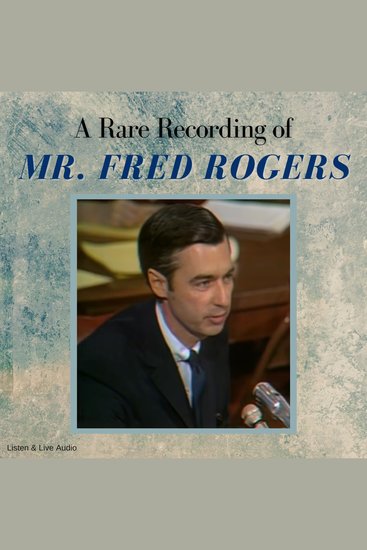
  • A Rare Recording of Mr Fred Rogers - cover

    A Rare Recording of Mr Fred Rogers

    Fred Rogers

    • 0
    • 0
    • 0
    On May 1, 1969, Fred Rogers, host of the (then) recently nationally syndicated children's television series, Mister Rogers' Neighborhood, testified before the Senate Committee on Commerce Subcommittee on Communications to defend $20 million in federal funding proposed for the newly formed non-profit Corporation for Public Broadcasting, which was at risk of being reduced to $10 million. Subcommittee chairman, Senator John Pastore (D-RI), unfamiliar with Fred Rogers, is initially indifferent towards him. Over the course of Rogers' 6 minutes of testimony, Pastore's demeanor gradually transitions to one of awe and admiration as Rogers speaks. 
     
    Fred McFeely Rogers (March 20, 1928 - February 27, 2003), better known as Mister Rogers, was an American television host, author, producer, and Presbyterian minister. He was the creator, showrunner, and host of the preschool television series Mister Rogers' Neighborhood, which ran from 1968 to 2001.
    Ver libro
  • Waterloo - cover

    Waterloo

    Thomas E. Watson

    • 0
    • 0
    • 0
    Excerpt from Chapter One 
    In 1815 the Emperor was no longer a lean, sinewy, tireless, eternally vigilant human tiger—the Napoleon of Rivoli and Marengo. He was no longer the consummate General-in-Chief of Austerlitz and Wagram. The mysterious lethargy which had overwhelmed him at the critical hour of Borodino, when he withheld the order for the Old Guard to charge and convert the Russian defeat into a decisive disaster, had been the first visit of the Evil Genius which was to come again. The strange loss of the power to decide between two totally different lines of action, which, at the Château Düben had kept him idle two days, lolling on a sofa, or sitting at his writing-table tracing on the paper big school-boy letters, was to become a recurrent calamity, puzzling all who knew him, and paralyzing the action of his lieutenants in the most critical emergencies'. 
    At Leipsic the reins had fallen from his hands; only one permanent bridge over the deep river in his rear had been provided to let him out of the death trap; and when the strong currents of the rout tore through the frantic city, the great Napoleon drifted with the furious tide, whistling vacantly. 
    The same unexplainable eclipse of genius, which General E. P. Alexander described as occurring to Stonewall Jackson, in the Malvern Hill movements of our Civil War, happened to the French Emperor, time and again, after that first collapse at Borodino. 
    In Spain he ordered a madly reckless charge of his Polish Light Cavalry against the heights of Sommo Sierra, where the Spanish army was entrenched and where the position easily admitted of successful flanking, got his best troops wastefully butchered—and could not afterward remember who gave the order to charge! 
    In Dresden, in 1813, he had won a brilliant victory which needed only to be ruthlessly pushed; and he was pushing it with all his tremendous driving power when, in the twinkle of an eye, his Evil Genius descended upon him, took his strength away...
    Ver libro
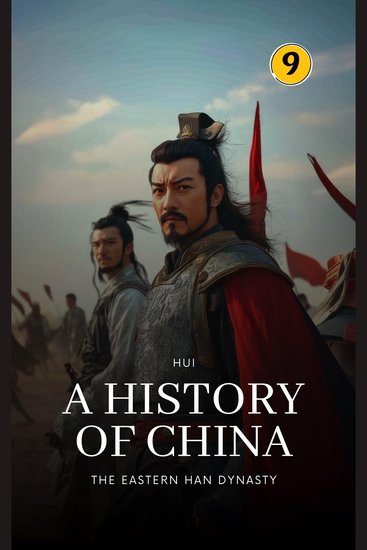
  • Eastern Han Dynasty The: A History of China - cover

    Eastern Han Dynasty The: A...

    Hui Wang

    • 0
    • 0
    • 0
    The Eastern Han Dynasty: A History of China, PART TWO takes you on a thrilling ride through one of China's most dramatic and chaotic eras. This book pulls you right into the palace, where figures like Empress Dou plot and scheme to secure power, even using poison and false charges to remove rivals. You'll watch the rise and fall of powerful families like the Dous and the Liang clan, who used their ties to the throne to control the empire — but always at a heavy cost. 
    You'll follow brave officials like Yuan An, Yue Hui, and Cai Yong, who risked everything to speak the truth and challenge corruption. These weren't dry, stiff scholars — they were real people caught in a deadly game of politics, facing off against terrifying figures like Liang Ji and the infamous Ten Regular Attendants, the emperor's most corrupt and dangerous eunuchs. 
    This book doesn't just tell you about emperors and generals; it shines a light on the students, rebels, and farmers, too. You'll see how the National Academy students stood up to the powerful, how the Yellow Turban Rebellion shook the empire, and how even everyday folk got tangled in the madness, whether they were sucked into fake "filial" shows or forced to pay crushing taxes to fund the emperor's endless luxuries. 
    You'll walk through lavish palace gardens, secret court meetings, bloody battlefields, and fake street markets set up inside the palace for the emperor's entertainment. From wild feasts to puppet rulers, from political assassinations to daring military campaigns, the Eastern Han was packed with stories that read like the best kind of historical drama — because they were real.
    Ver libro