Junte-se a nós em uma viagem ao mundo dos livros!
Adicionar este livro à prateleira
Grey
Deixe um novo comentário Default profile 50px
Grey
Assine para ler o livro completo ou leia as primeiras páginas de graça!
All characters reduced
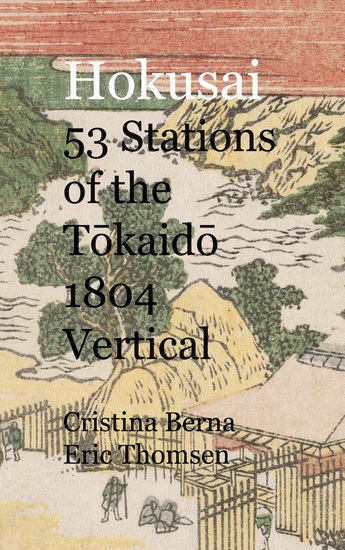
Hokusai 53 Stations of the Tokaido 1804 Vertical - cover

Sentimos muito, os direitos editoriais deste livro não permitem que o mesmo seja lido desde o pais que esta tentando se conectar.

Hokusai 53 Stations of the Tokaido 1804 Vertical

Cristina Berna, Eric Thomsen

Editora: BoD - Books on Demand

  • 0
  • 0
  • 0

Sinopse

Hokusai´s 53 Stations of the Tokaido 1804 Vertical is something completely different from his 1801 and 1802 series and from the 1804 horizontal.

It is different from his famous 36 Views of Mt Fuji 1832, which are sublime artistic expressions distilling a long life´s work.

This series shows his development of the themes based on the two first series, 1801 and 1802, and a transition to his 1804 horizontal series, which again is a precursor to his sublime 36 Views of Mt Fuji.

As the reader progresses through Hokusai´s Tokaido series it will become evident how Hokusai develops the concept, develops the format, the themes and then mixes them with true genius.

This series is different from the many other well known 53 Stations of the Tokaido in that Hokusai does not focus only on the landscape and the markers that Hiroshige and others showed.
Disponível desde: 21/08/2024.
Comprimento de impressão: 190 páginas.


Outros livros que poderiam interessá-lo

  • Mumbai - A Million Islands - cover

    Mumbai - A Million Islands

    Sidharth Bhatia

    • 0
    • 0
    • 0
    Since the East India Company merged seven islands into Bombay (now Mumbai), change has been constant-but now it is used as a weapon for displacement, disguised as development. Slums are erased overnight to make way for luxury towers priced in tens of crores. The working class is pushed to the margins-literally-and into distant housing projects with no infrastructure, transport or sanitation. Entire communities are uprooted while a new Mumbai is built for the privileged few, behind closed gates, inside glass walls. 
    Sidharth Bhatia's Mumbai: A Million Islands is a piercing look at a city in the throes of relentless transformation. What is vanishing is not just space, but memory, history and the very fabric of a living city. Mumbai's famed spirit of survival is being tested like never before. Where the original seven islands had symbolized a synergy, today they're multiplying as fractures-social, spatial and economic-splitting the city into a million islands, each more isolated than the other.
    Ver livro
  • Gateway for Kids: Say Hello! Greetings from Africa and Europe - cover

    Gateway for Kids: Say Hello!...

    Ken Lou

    • 0
    • 0
    • 0
    Say 'hello" and meet your international friends from 21 cultures across Africa and Europe! 
     
    Know how your friends greet and dress, and learn about their favorite festivals, costumes, food, music, dance, arts, folktales and traditional houses. As you take steps to appreciate and respect one another's way of life, you will become a well-loved friend. and grow as an ambassador of peace. 
     
    Don't put this book away until you know how to say thank you and 'I love you' in their languages. Then count the smiles that greet you when you say those nice words.  
     
    After all, friendship begins when you say 'hello'!
    Ver livro
  • The Kurds - History of a Forgotten Ethnic Minority - cover

    The Kurds - History of a...

    Kelly Mass

    • 0
    • 0
    • 0
    The Kurds are a distinct ethnic group native to the Middle East, primarily inhabiting the region known as Kurdistan, which stretches across parts of modern-day Turkey, Syria, Iraq, and Iran. They are an Iranian ethnic group with a history that spans thousands of years. The geographical area traditionally inhabited by the Kurds is marked by hilly terrain, particularly south of Lake Van and Lake Urmia. The majority of Kurds speak dialects of the Kurdish language, with Northern Kurdish (Kurmanji) and Sorani being the most widely spoken. 
    The origins of the Kurdish people are the subject of various speculations, one of the most prominent being that they are descendants of the ancient Carduchoi, a people mentioned in classical antiquity. Over the centuries, the Kurds have maintained a distinct cultural and linguistic identity, despite the multiple empires that have ruled over their lands. Notably, the Kurdish dynasties that governed parts of the region from the 10th to the 12th century—such as the Hasanwayhids, Marwanids, Rawadids, and Shaddadids—serve as the earliest recorded examples of Kurdish political power under Islamic rule. Following these dynasties, the Ayyubid dynasty, founded by the legendary Saladin, further entrenched Kurdish influence in the region, especially in the wider Islamic world.
    Ver livro
  • Viking History - The warrior the Merchant the Explorer the Settler - cover

    Viking History - The warrior the...

    Secrets of History

    • 0
    • 0
    • 0
    Join us on an epic journey through time as we explore Viking History! 
    Our book will take you back to a long-forgotten era where brave warriors embarked on daring raids, merchants traded exotic goods, explorers mapped uncharted lands, and settlers established new homes.  
    Get to know the remarkable viking culture like never before, discovering what drove them to such great heights and understanding why they left such a lasting legacy.  
    From King Harald in Norway to the discovery of Greenland and Iceland. Battles, disputes, and raids, this book includes it all.   
    Buy your copy now and be part of this legendary tale!
    Ver livro
  • Chesapeake Oysters - The Bay's Foundation and Future - cover

    Chesapeake Oysters - The Bay's...

    Kate Livie

    • 0
    • 0
    • 0
    Chesapeake oysters are part of the legacy of the area, history on the half-shell. Hear of their beginning (foot-long bivalves!) through cultivation today. 


    The eastern oyster, the humble bivalve and delicious treat, are the living bones of the Chesapeake, as well as the ecological and historical lifeblood of the region. When colonists first sailed these impossibly abundant shores, they described massive shoals of foot-long oysters but the bottomless appetite of the Gilded Age and great fleets of skipjacks took their toll. Disease, environmental pressures and overconsumption decimated the population by the end of the twentieth century. While Virginia turned to bottom-leasing, passionate debate continues in Maryland among scientists and oystermen whether aquaculture or wild harvesting is the better way forward. Today, boutique oyster farming in the Bay is sustainably meeting the culinary demand of a new generation of connoisseurs. With careful research and interviews with experts, author Kate Livie presents this dynamic story and a glimpse of what the future may hold.
    Ver livro
  • Edo Period - Tokugawa Rule Isolation and the Samurai Code - cover

    Edo Period - Tokugawa Rule...

    Rolf Hedger

    • 0
    • 0
    • 0
    The Edo period in Japan began with the dramatic rise of Tokugawa Ieyasu and the establishment of the Tokugawa Shogunate, which would bring over two centuries of relative peace and stability to the country. This transformation was not immediate but was set into motion by the pivotal Battle of Sekigahara in 1600. Ieyasu, a powerful daimyo and skilled strategist, emerged victorious in this decisive conflict, defeating rival factions and securing his dominance over the fractured Japanese landscape. This battle marked the end of the Warring States period, a time of nearly constant civil war, and laid the foundation for a new era of centralized feudal rule. 
    In 1603, Ieyasu was granted the title of shogun by the emperor, officially establishing the Tokugawa Shogunate. Although the emperor remained a symbolic figurehead, true political power rested with the shogun. Ieyasu’s government was based in Edo, a small fishing village that quickly developed into a sprawling political and economic center—modern-day Tokyo. From here, the Tokugawa clan implemented a system of governance that emphasized strict control, social hierarchy, and regional oversight. The shogunate devised a complex administrative structure that allowed it to maintain authority over hundreds of semi-autonomous domains ruled by daimyo, while ensuring loyalty through a combination of military strength, economic policy, and social regulation. 
    One of the key strategies used by Tokugawa Ieyasu to solidify his power was the creation of the han system. Under this arrangement, each daimyo governed a specific territory but was subject to strict oversight from the shogunate. The policy of sankin-kotai, or alternate attendance, required daimyo to spend alternating years in Edo, effectively draining their resources and keeping them under close surveillance. Their families were often kept in Edo as virtual hostages, ensuring obedience and discouraging rebellion.
    Ver livro