¡Acompáñanos a viajar por el mundo de los libros!
Añadir este libro a la estantería
Grey
Escribe un nuevo comentario Default profile 50px
Grey
Suscríbete para leer el libro completo o lee las primeras páginas gratis.
All characters reduced
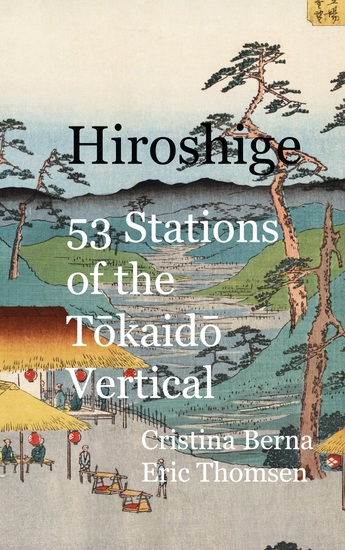
Hiroshige 53 Stations of the Tokaido Vertical - cover

Lo sentimos, pero por derechos de la editorial este libro no puede leerse desde el país desde el que te conectas.

Hiroshige 53 Stations of the Tokaido Vertical

Cristina Berna, Eric Thomsen

Editorial: BoD - Books on Demand

  • 0
  • 0
  • 0

Sinopsis

The official title for this work is "Pictures from the Famous Places of the Fifty-three Stations".

Hiroshige produced these prints in 1855 more than 20 years after his first horizontal Hoeido series published 1833-34, which is included as thumbnails for comparison.

It is instructive to see Hiroshiges use of his now mature experience as he develops the vertical format for the narrative. He does designs as he would do a photograph. He set the standard for landscape photography, without a camera.

The Tokaido series was the most popular print series ever made in Japan. Hiroshige returned to this theme again and again, with delightful results.

It is possible to travel the same road today and some villages are still looking quite like they did back then. The postal stations were constructed between 1601 and 1624.
Disponible desde: 05/08/2024.
Longitud de impresión: 298 páginas.

Otros libros que te pueden interesar

  • Little Witch: 60th Anniversay Edition - cover

    Little Witch: 60th Anniversay...

    Anna Elizabeth Bennett

    • 0
    • 0
    • 0
    “Miss Bennett…has a talent for mixing fantasy, realism, and comedy. She also includes a dash of pure sweetness, which makes the story even more appealing for young readers. It is an excellent choice to read [during the Halloween season].” — The New York Times 
    This audiobook edition of the classic Little Witch is sure to enchant fans of mythology and magic. It follows the adventures of nine-year-old Minx, a young witch who dreams of leaving her magical home to experience the world of school. One day, she finally sneaks away and joins a school for mortal children, where she faces both fun and challenges with her new classmates and teachers.
    Ver libro
  • Pen and Wash - An artist's guide to combining ink and watercolour - cover

    Pen and Wash - An artist's guide...

    John Harrison

    • 0
    • 0
    • 0
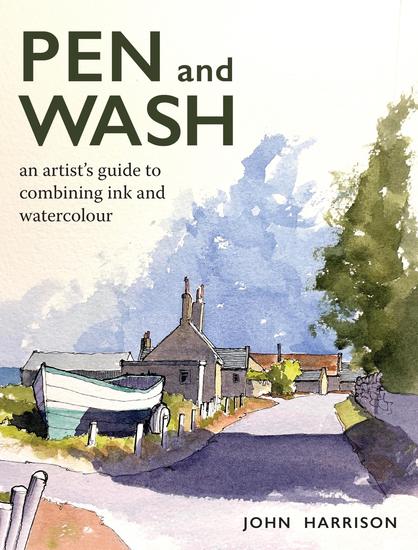
    Pen and Wash is a practical guide to creating a picture that captures the discipline of pen, along with the subtlety of watercolour. With clear instruction and inspirational examples throughout, it explains the conventional approach of drawing and then adding wash, but also explores alternative ideas and styles. The author's passion for the technique is evident in his examples and enthusiastic text, making the book a superb guide to this beautiful medium. Advise on the correct equipment, techniques, the unpredictable nature of watercolours and Step by step demonstrations of pen and wash techniques.
    Ver libro
  • Greatest Mystery Shows Volume 2 - Ten Classic Shows from the Golden Era of Radio - cover

    Greatest Mystery Shows Volume 2...

    Various Various

    • 0
    • 0
    • 0
    OASIS AUDIO CLASSIC RADIO SHOWCASE SERIES   Oasis Audio has gone into the vaults and dusted off the very earliest form of audio book, old time radio shows, for our listeners. Introduced episode by episode by Jim Engel, old time radio authority and board member of the Museum of Broadcast Communications in Chicago, this series of classic radio shows is sure to have something for everyone. Celebrity casts and top-notch writers made the 1920s through the early 1950s, the golden era of radio. The series features seven exciting themes with 100 episodes in each. That is 700 classic radio programs in all.   Greatest Mystery Shows   Before TV’s The Twilight Zone, there was radio’s The Inner Sanctum Mystery, Lights Out!, The Weird Circle, and so many other great mysteries starring Orson Welles, Jane Wyman, Dana Andrews, Edmond O’Brien, James Cagney and more. 100 great Mystery classics in ten volumes. Volume 2 The Black Museum 1950s The Canvas Bag with Orson WellesThe Black Museum 1950s The Gas Receipt with Orson WellesThe Black Museum 1950s The Notes with Orson WellesThe Black Museum 1950s The Old Wooden Mallet with Orson WellesThat Chase 2-8-53 Greedy Crockery with Arnold MossThe Chase 2-15-53 The Will with Ivor FrancisThe Chase 2-22-53 The Jailbreak with Larry HainesThe Chase 3-1-53 Framed for Murder with Paul McGrathCrime Classics 10-28-53 John Hayes, His Head, And How They Parted with Lou MerrillCrime Classics 11-11-53 Blackbeard’s 14th Wife and Why She Was No Good for Him with Lou Merrill
    Ver libro
  • How to Write a Screenplay: Step-by-Step | Essential Screenplay Format Scriptwriter and Modern Screenplay Writing Tricks Any Writer Can Learn - cover

    How to Write a Screenplay:...

    Sandy Marsh

    • 0
    • 0
    • 0
    Behind-the-Scenes Secrets to Publishing Screenplays 
    Whether you’ve got a completed script, or need help off the starting-blocks, getting a Screenplay formatted correctly to catch the eye of producers is no easy task. A little, professional advice goes a long way, and How to Write a Screenplay delivers large, for those with big screen aspirations! 
    Top Writing Tricks You Didn’t Know - for TV & Film 
    When writing for the movies, TV, video or computer games, there are essential elements you must get right to show professional competence, and avoid looking like an amateur. Marsh not only provides the answers but presents them in an easy to understand way that can be read in under a day to bring game-changing results fast. 
    By explaining the best formatting requirements for each genre, Marsh unveils the blueprints that experts use for Feature film and Television dramas & sitcoms. She examines the best ways to edit-on-a-budget and the 6 Tips for Success that can turn your script into must-have property. 
    Subjects Covered Include:Physical FormattingScreenplay FormatsAction ElementsWriting DialogueParenthetical InformationTransition ElementsTypes of Drama & How to Format for ThemNumber of Pages Expected for Each ActNarrative StructureExample formatting for Multicamera SitcomsTop 5 Tips for Writing Stronger CharactersCreating a Rough DraftEditing a ScreenplayExpert Tips for Success 
    Order Now!
    Ver libro
  • Called to Create - Dramatized Stories of Art and Faith - cover

    Called to Create - Dramatized...

    Adam Blanford, Tobias Hunter,...

    • 0
    • 0
    • 0
    Have you ever felt called to create something? Have you felt that nudge that becomes a desire? Then that desire becomes ambition, and then you’re almost compelled to complete what you started? 
    From the beginning of time, God has called His children to share the Good News. One group of individuals He especially loves to call is artists. Looking at the sweeping majesty of a fiery sunset, or the delicate perfection of a single flower, I know that God is an artist. He uses beauty to share His love, and He calls artists to create beauty through their many mediums to spread His Word. 
    Called to Create is a collection of audio dramas about artists throughout history who heeded God's call to use their talents to connect His children, share His love, and glorify His name.  
    When God calls, the artist listens. 
    Featuring stories based on the following artists: Genesius of Rome, James Tissot, Gabrielle Bossis, Sarah Fuller Flower Adams, Dorothea Sayers, and Tony Fontane. 
    Performed by a Full Cast: 
    Emma Faye,  
    Adam Skousen,  
    Ana Clements,  
    Richard Crossman,  
    A.J. Shuck,  
    Lillian Rachel,  
    Mike Lenz,  
    Lance Danton,  
    PJ Freebourn,  
    Lisa Negrón,  
    Judith Bareham,  
    Ian Lahlum,  
    Cutler Hollist,  
    Julie Hinton,  
    Ali Gifford,  
    Charlotte Chiew,  
    Riley Bishop,  
    Tucker Bishop,  
    Dane McLean,  
    Rocky McLean,  
    and Emma JoAnn
    Ver libro
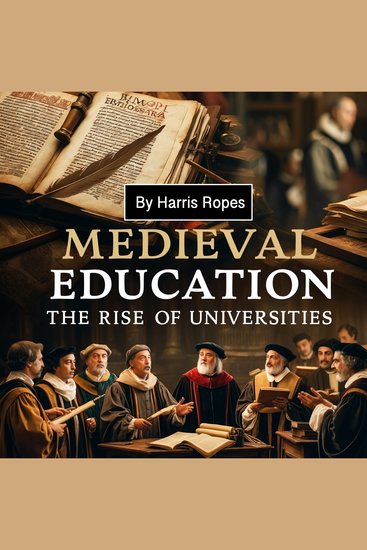
  • Medieval Education - The Rise of Universities - cover

    Medieval Education - The Rise of...

    Harris Ropes

    • 0
    • 0
    • 0
    During the early medieval period, education in Europe was primarily shaped by the influence of the Church. With the decline of the Western Roman Empire, formal education systems deteriorated, leaving monasteries and cathedral schools as the main centers of learning. These institutions preserved classical knowledge and played a crucial role in the intellectual revival of the Middle Ages. Monastic and cathedral schools provided education for clergy members and, over time, expanded their reach to include nobles and, in some cases, commoners. 
    Monastic schools were among the earliest centers of learning, with monks serving as teachers and scribes. These schools focused on religious instruction, teaching Latin, biblical texts, and theological commentaries. The goal was to prepare future clergy members for service in the Church. Monastic scriptoria were responsible for copying and preserving important texts, ensuring the transmission of classical and Christian knowledge. While most students in monastic schools were destined for religious life, some noble families sent their sons for education in literacy and administration, as the Church held significant political influence. 
    Cathedral schools emerged as a response to the growing demand for education beyond monastic settings. They were often attached to large churches or bishoprics and provided instruction to a wider audience, including future clergymen, royal officials, and scholars. These schools offered a more structured curriculum, covering subjects such as grammar, rhetoric, and logic, which formed the foundation of medieval education. Over time, cathedral schools developed into important intellectual hubs, attracting students from various regions. The presence of prominent teachers and scholars helped establish certain cathedral schools as precursors to medieval universities.
    Ver libro