Junte-se a nós em uma viagem ao mundo dos livros!
Adicionar este livro à prateleira
Grey
Deixe um novo comentário Default profile 50px
Grey
Assine para ler o livro completo ou leia as primeiras páginas de graça!
All characters reduced
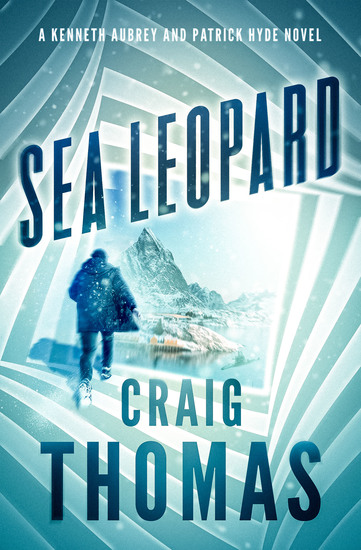
Sea Leopard - cover
LER

Sea Leopard

Craig Thomas

Editora: MysteriousPress.com

  • 0
  • 0
  • 0

Sinopse

New York Times–Bestselling Author: A captured submarine must be retrieved from the Russians before they can decode its cutting-edge technology . . .   The Royal Navy is testing Sea Leopard, an anti-sonar device that can make its subs virtually undetectable. But before the work can be completed, their nuclear submarine Proteus is targeted and trapped by the Soviet Union—whose military is determined to figure out, and steal, this new technology.   Spymaster Kenneth Aubrey sends SIS agent Patrick Hyde to locate the device’s inventor before the KGB gets to him first. In the meantime, a US Navy officer is on his way to Russia in hopes of fixing Sea Leopard and getting Proteus out of drydock before it’s too late . . .  Praise for Craig Thomas’s thrillers   “Will have you sweating bullets. Thomas misses no tricks, and tension is sustained from first page to last.” —The New York Times Book Review   “High-octane.” —Daily Express
Disponível desde: 28/02/2023.
Comprimento de impressão: 505 páginas.


Outros livros que poderiam interessá-lo

  • A Society - From their pens to your ears genius in every story - cover

    A Society - From their pens to...

    Virginia Woolf

    • 0
    • 0
    • 0
    Adeline Virginia Woolf was born on the 25th January 1882 in South Kensington in London. 
    Although lauded as a founder of modernist writing with such classics as ‘Orlando’, ‘Mrs Dalloway’ and ‘To the Lighthouse’ and, of course, many classic short stories, her background is filled with elements of tragedy that she somehow overcame to become such a revered writer.   Her mother died when she was 13, her half-sister Stella two years later and with it her first of several nervous breakdowns.  Appallingly it was later found that three of her half-brothers had sexually abused her so darkness must have seemed ever present.   
    She began writing professionally at age 20 but her father’s death two years later brought a complete mental collapse and she was briefly institutionalised.  Somehow she found within herself a literary career and with it great innovations in writing; she was a pioneer of “stream of consciousness”.    
    Her tight circle of friends were the founders of the Bloomsbury Group, a movement whose legacy still influences across the arts and society in many way to this day.   
    Whilst the dark periods continued to interrupt her emotional state her rate of work never ceased.  Until, on 28th March 1941, Woolf put on her overcoat, filled up its pockets with stones, and walked into the River Ouse, in Lewes, East Sussex and drowned herself.  Her body was not recovered until the 18th April.  She was 59. 
    She left behind a note which read in part “Dearest, I feel certain that I am going mad again.  I feel we can't go through another of those terrible times.  And I shan't recover this time.  I begin to hear voices, and I can't concentrate.  So I am doing what seems the best thing to do”.
    Ver livro
  • A Chameleon - From their pens to your ears genius in every story - cover

    A Chameleon - From their pens to...

    Anton Chekhov

    • 0
    • 0
    • 0
    Anton Pavlovich Chekhov was born on 29th January 1860 in Taganrog, on the south coast of Russia.  
    His family life was difficult; his father was strict and over-bearing but his mother was a passionate story-teller, a subject Chekhov warmed to. As he later said; ‘our talents we got from our father, but our soul from our mother’.  
    At school Chekhov was distinctly average. At 16 his father mis-managed his finances and was declared bankrupt. His family fled to Moscow. Chekhov remained and eked out a living by various means, including writing and selling short sketches to newspapers, to finish his schooling. That completed and with a scholarship to Moscow University obtained he rejoined his family. 
    He was able to help support them by selling satirical sketches and vignettes of Russian lifestyles and gradually obtained further commissions. In 1884, he qualified as a physician and, although it earned him little, he often treated the poor for free, he was fond of saying ‘Medicine is my lawful wife, and literature is my mistress.’ 
    His own health was now an issue as he began to cough up blood, a symptom of tuberculosis.  Despite this his writing success enabled him to move the family into more comfortable accommodation.  
    Chekhov wrote over 500 short stories which included many, many classics including ‘The Kiss’ and ‘The Lady with a Dog’.  His collection ‘At Dusk’ won him the coveted Pushkin Prize when was only 26.  
    He was also a major playwright beginning with the huge success of ‘Ivanov’ in 1887.   
    In 1892 Chekhov bought a country estate north of Moscow. Here his medical skills and money helped the peasants tackle outbreaks of cholera and bouts of famine. He also built three schools, a fire station and a clinic.  It left him with less time for writing but the interactions with real people gained him detailed knowledge about the peasantry and their living conditions for his stories.  
    His most famous work, ‘The Seagull’ was received disastrously at its premiere in St Petersburg. It was later restaged in Moscow to highlight its psychological aspects and was a huge success. It led to ‘Uncle Vanya’, ‘The Three Sisters’ and ‘The Cherry Orchard’.  
    Chekhov suffered a major lung hemorrhage in 1897 while visiting Moscow. A formal diagnosis confirmed tuberculosis and the doctors ordered changes to his lifestyle.  
    Despite a dread of weddings the elusive literary bachelor quietly married the actress Olga Knipper, whom he had met at rehearsals for ‘The Seagull’, on 25th May 1901. 
    By May 1904 with his tuberculosis worsening and death imminent he set off for the German town of Badenweiler writing cheerful, witty letters to his family and assuring them his health was improving.  
    On 15th July 1904 Anton Chekhov died at Badenweiler.  He was 44.
    Ver livro
  • Short Stories About Abuse - Stories of characters having to deal with terrible pain caused by others - cover

    Short Stories About Abuse -...

    Anton Chekhov

    • 0
    • 0
    • 0
    Equality is one of the great and lauded aims of a just society.  It is rarely achieved.  The system is there to be exploited by those with too much money and too many resources.  Or maybe just a grudge.  Our classic authors including Anton Chekhov, O Henry, Susan Glaspell, Arthur Morrison and others turn their pens to the nature of abuse.  It may be gentle or laced with searing pain but always told with the sharpest of pens. 
     
    1 - Short Stories about Abuse - An Introduction 
    2 - Hop Frog by Edgar Allan Poe 
    3 - Aloysha the Pot by Leo Tolstoy 
    4 - A Harlem Tragedy by O Henry 
    5 - Vanka by Anton Chekhov 
    6 - A Jury of Her Peers by Susan Glaspell 
    7 - Gentle Breathing by Ivan Bunin 
    8 - Tony's Wife by Alice Dunbar Nelson 
    9 - The Bishop of Hell by Marjorie Bowen 
    10 - A Dark Brown Dog by Stephen Crane 
    11 - The Black Cat by Edgar Allan Poe 
    12 - Tales of Mean Streets. Lizerunt by Arthur Morrison
    Ver livro
  • A Psychological Experiment - From their pens to your ears genius in every story - cover

    A Psychological Experiment -...

    Richard Marsh

    • 0
    • 0
    • 0
    Richard Bernard Heldmann was born on 12th October 1857, in St Johns Wood, North London.  
    By his early 20’s Heldmann began publishing fiction for the myriad magazine publications that had sprung up and were eager for good well-written content.  
    In October 1882, Heldmann was promoted to co-editor of Union Jack, a popular magazine, but his association with the publication ended suddenly in June 1883. It appears Heldman was prone to issuing forged cheques to finance his lifestyle.  In April 1884 He was sentenced to 18 months hard labour.  
    In order to be well away from the scandal and damage this had caused to his reputation Heldmann adopted a pseudonym on his release from jail. Shortly thereafter the name ‘Richard Marsh’ began to appear in the literary periodicals. The use of his mother’s maiden name as part of it seems both a release and a lifeline. 
    A stroke of very good fortune arrived with his novel The Beetle published in 1897.  This would turn out to be his greatest commercial success and added some much-needed gravitas to his literary reputation.   
    Marsh was a prolific writer and wrote almost 80 volumes of fiction as well as many short stories, across many genres from horror and crime to romance and humour.
    Ver livro
  • Selected Ghost Stories from Kwaidan - cover

    Selected Ghost Stories from Kwaidan

    Lafcadio Hearn

    • 0
    • 0
    • 0
    A haunting collection of Japanese folktales, translated and interpreted by the acclaimed Irish-Greek author and Japanophile. In 1904, Lafcadio Hearn introduced Western readers to the world of Japanese folklore with his collection of ghost stories, Kwaidan: Stories and Studies of Strange Things. His hauntingly lyrical and complex translations, in which he often put his own twist on the traditional tale, are now regarded as preeminent classics in Japan.  This volume presents seventeen of Hearn’s unforgettable stories. A blind performer plays for an audience of ghosts. A maiden reincarnates to search for her beloved. A nurse offers the ultimate sacrifice for her young charge. And a group of rokurokubi plot to end the life of a noble samurai. Whether you’re in the mood for phantoms, demons, ghouls, or ghosts, these otherworldly tales will haunt you long after you’ve finished reading.
    Ver livro
  • Sevastopol Sketches - cover

    Sevastopol Sketches

    Leo Tolstoy

    • 0
    • 0
    • 0
    In the winter of 1854 Tolstoy, then an officer in the Russian army, arranged to be transferred to the besieged town of Sebastopol. Wishing to see at first hand the action of what would become known as the Crimean War, he was spurred on by a fierce patriotism, but also by an equally fierce desire to alert the authorities to appalling conditions in the army.
    
    The three Sebastopol Sketches - 'December', 'May' and 'August' - re-create what happened during different phases of the siege and its effect on the ordinary men around him. Writing with the truth as his utmost aim, he brought home to Russia's entire literate public the atrocities of war. In doing so, he realized his own vocation as a writer and established his literary reputation.
    Ver livro